Fire Extinguisher Service Sydney – AS 1851 Servicing & Compliance
Quick Answer: Under AS 1851-2012, portable fire extinguishers in Sydney require visual inspections every 6 months, full servicing annually, and complete overhaul with hydrostatic pressure testing every 5 years. Servicing must be performed by an accredited technician and documented with updated service tags and reports to satisfy SafeWork NSW, NSW Fair Trading, and insurer requirements. Kord Fire Protection, based in Granville, NSW, provides AS 1851-compliant fire extinguisher servicing across Sydney — including inspections, maintenance, recharging, and full documentation for audits and Annual Fire Safety Statements (AFSS).
Fire safety is one of those topics that people only take seriously after something goes wrong. Yet the right process, performed on schedule, prevents a lot of “we’ll deal with it later” chaos. In Sydney, Sydney fire extinguisher compliance sets the expectation that extinguishers get inspected and serviced by qualified people, with records kept where decision makers can find them. This article explains what local businesses should know, how servicing actually works in the real world, and why a partner like kord fire protection becomes a vital part of the system, not just another supplier.
If your team is also reviewing broader fire equipment obligations, it helps to understand how related compliance tasks fit together across a site, especially when assets, access routes, and documentation all need to line up at the same time.
Why extinguisher maintenance matters for business continuity
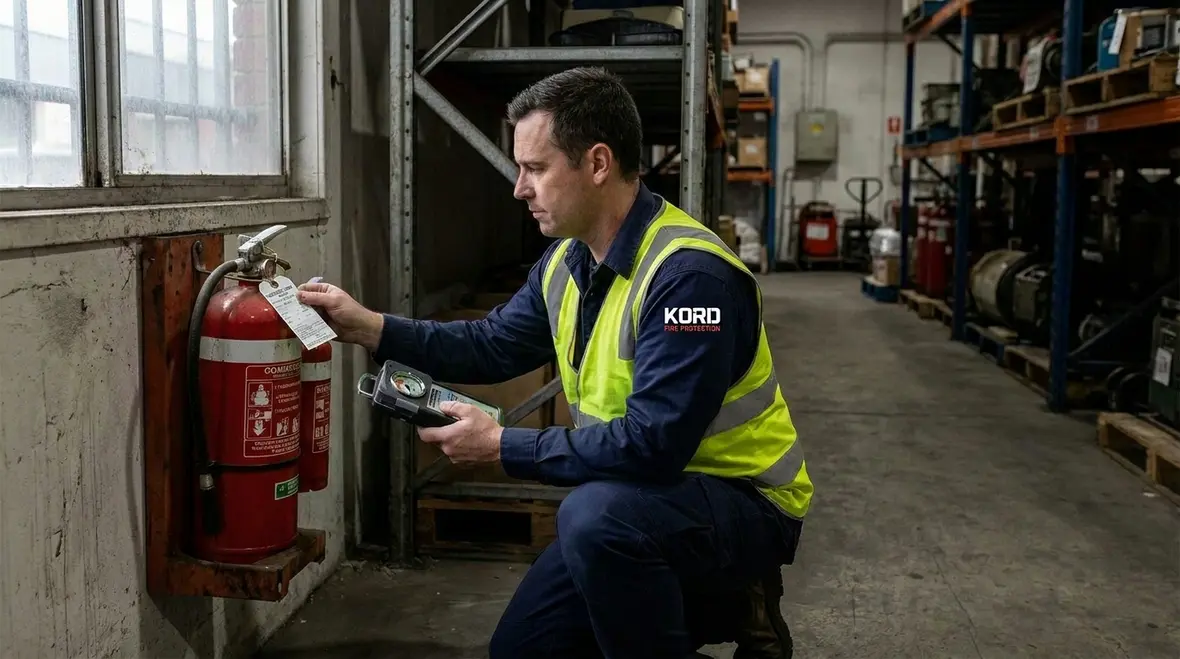
Fire extinguisher servicing is not a box to tick once a year. It is a reliability practice. When an extinguisher sits in the same place for months, it gets tested by vibration, temperature swings, dust, corrosion, and the occasional “someone leaned it against a pallet” incident. Then, during an emergency, the extinguisher must work on demand.
Detailed breakdown with AS 1851 references
In industrial, retail, and facility environments across Australia, the goal is simple: reduce risk while keeping operations moving. Therefore, servicing supports business continuity by lowering the chance of a failed discharge, a blocked valve, or a pressure issue. Also, audits and insurer reviews often ask to see service history, test evidence, and location coverage. If the paperwork is missing, the device does not magically become compliant. It just becomes a liability with a motivational poster nearby.
AS 1851 Service Intervals for Portable Fire Extinguishers
Australian Standard AS 1851-2012 specifies three distinct service levels for portable fire extinguishers. Understanding these intervals is essential for maintaining compliance across Sydney facilities:
| Service Level | Frequency | Key Activities | Who Performs It |
|---|---|---|---|
| Level 1 — Six-Monthly Inspection | Every 6 months | Visual inspection, pressure gauge check, safety pin and seal verification, tag update, accessibility confirmation | AS 1851-accredited technician |
| Level 2 — Annual Service | Every 12 months | All Level 1 checks plus internal inspection, valve operation test, physical damage assessment, parts replacement if needed, documentation for AFSS | AS 1851-accredited technician |
| Level 5 — Five-Yearly Overhaul | Every 5 years | Complete disassembly, hydrostatic pressure testing, full internal examination, agent replacement, cylinder integrity verification, re-certification | AS 1851-accredited technician with hydrostatic testing capability |
Additional requirement: Any extinguisher that has been discharged must be recharged and serviced immediately, regardless of the service schedule
Pressure & Component Testing
That is why smart businesses treat extinguisher maintenance as part of operational resilience, not just a safety chore. A site may have forklifts moving nonstop, contractors cycling through access points, or storage layouts changing more often than the lunch roster. Without a dependable servicing routine, small issues can quietly pile up until the one time equipment is needed most. Nobody wants their emergency plan to hinge on wishful thinking and an old tag hanging on for dear life.
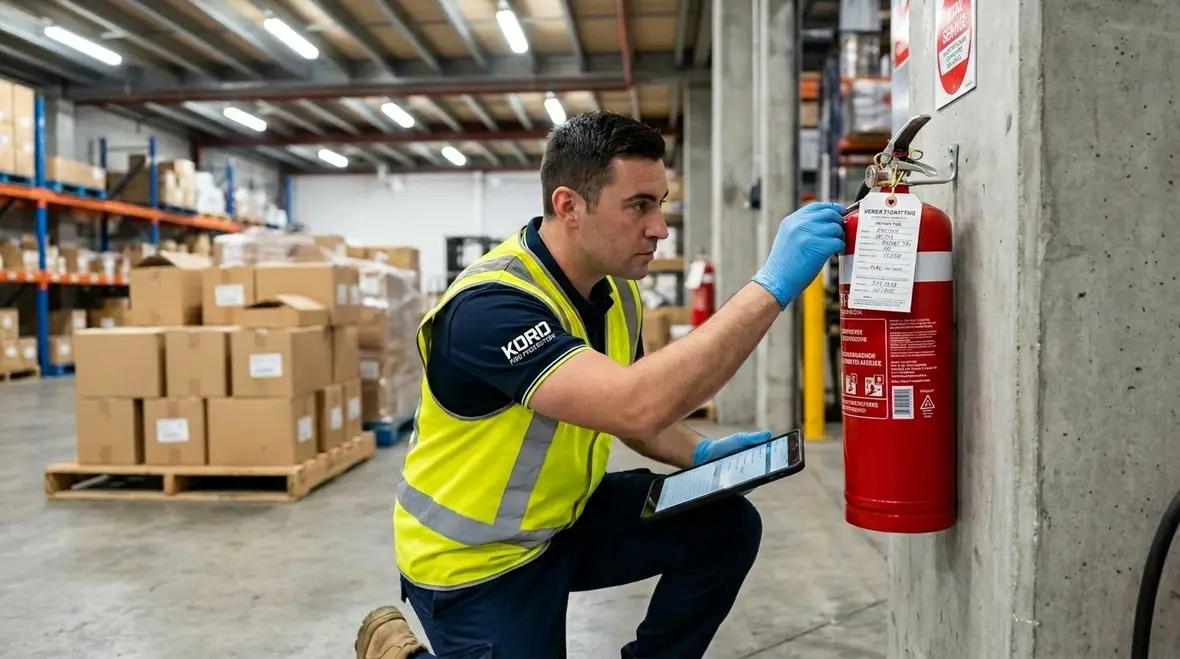
Tagging & Documentation
For most commercial and industrial businesses, continuity means more than avoiding a dramatic event. It also means reducing unnecessary downtime, keeping auditors satisfied, and ensuring teams know equipment is where it should be. A serviced extinguisher program supports all three. It gives management confidence that assets are current, reachable, and appropriate for the area they protect. It also means the business is less likely to scramble through scattered records every time someone asks, “When was this last checked?”
What Sydney fire extinguisher servicing includes (beyond “a check”)
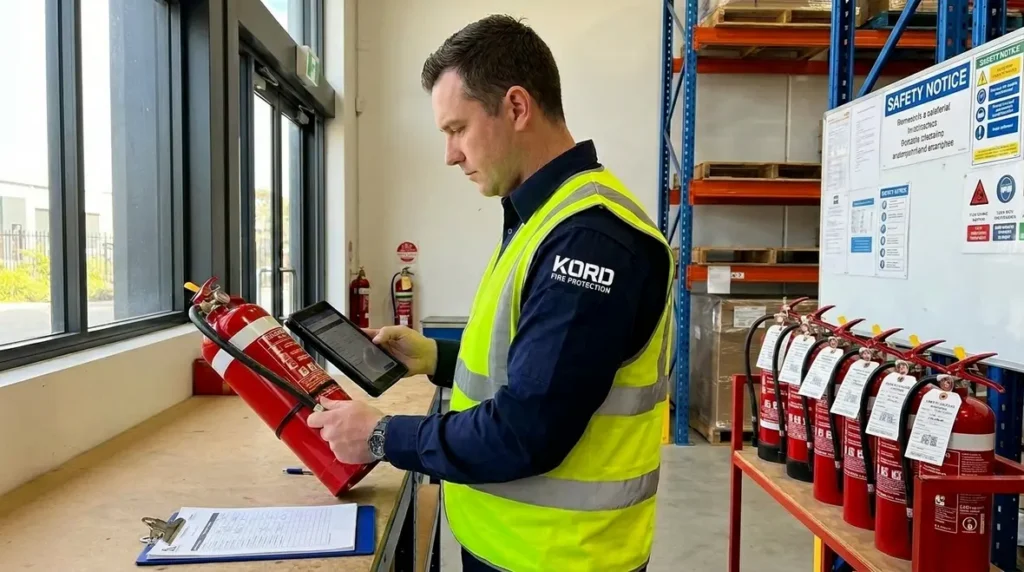
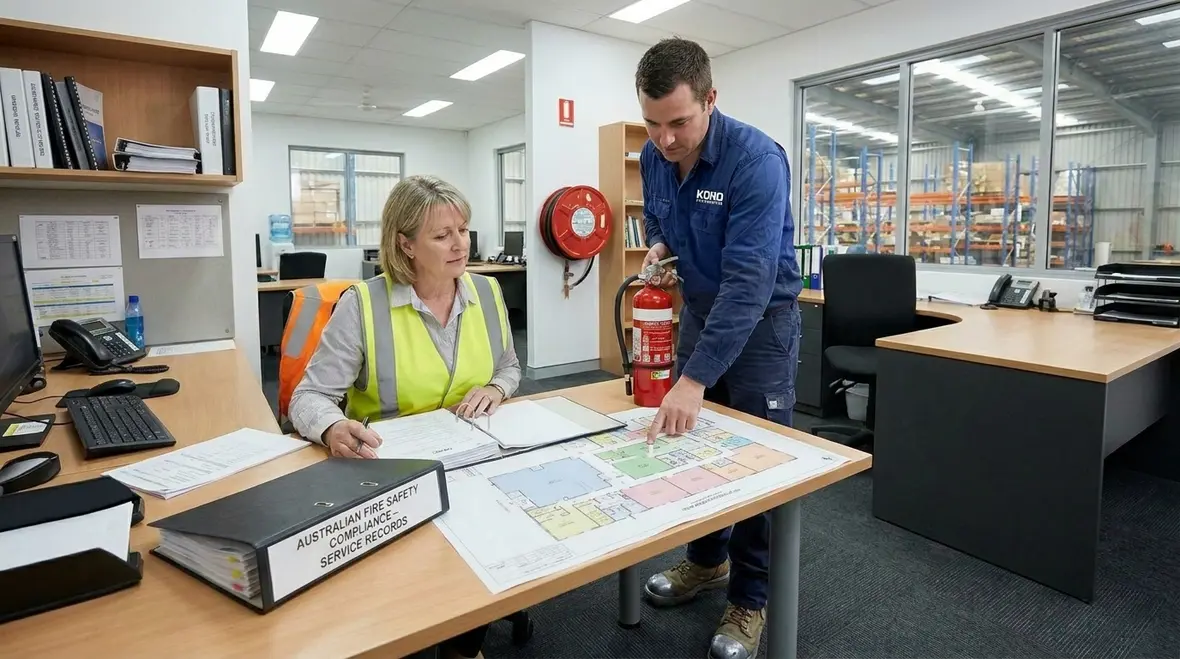
Servicing usually follows a structured process. First, qualified technicians inspect the physical condition, confirm the extinguisher type and rating, and check key components like the pin, seal, hose, and nozzle. Next, they verify pressure readings against the manufacturer’s requirements. After that, they determine whether the unit needs internal inspection, parts replacement, or a discharge test depending on the extinguisher model and regulatory expectations.
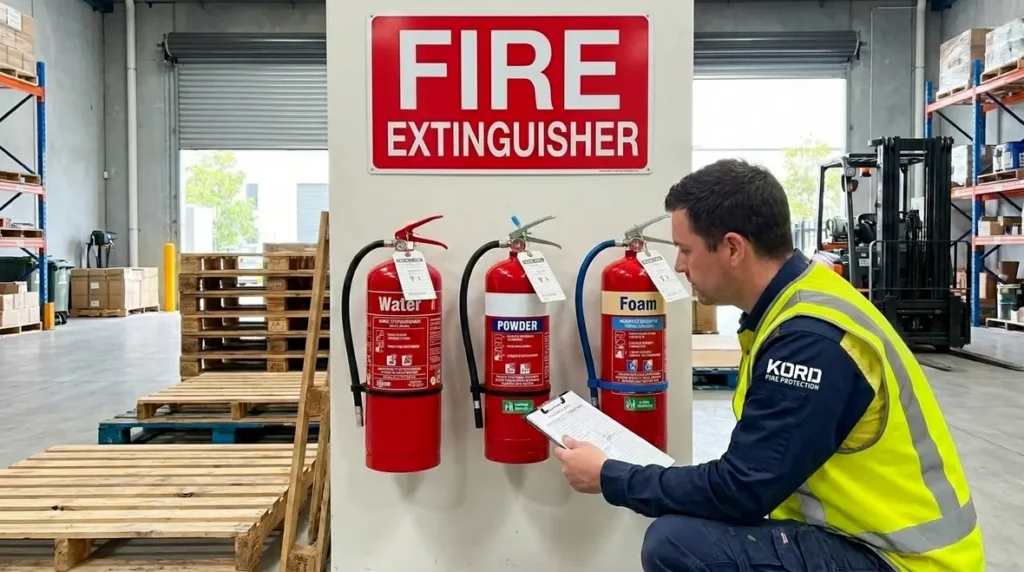
Understanding which extinguisher type is appropriate for each hazard area is critical. Using the wrong extinguisher can worsen a fire rather than suppress it. The table below outlines the fire classes recognized in Australia and the extinguisher types suitable for each:
Australian Fire Classes and Extinguisher Types
| Fire Class | Fuel Type | Suitable Extinguisher Types | Common Locations |
|---|---|---|---|
| Class A | Ordinary combustibles (wood, paper, fabric, plastics) | Water, Foam, Dry Chemical Powder, Clean Agent | Offices, warehouses, retail spaces |
| Class B | Flammable liquids (petrol, oil, paint, solvents) | Dry Chemical Powder, Foam, CO₂, Clean Agent | Workshops, garages, chemical storage, kitchens |
| Class C | Flammable gases (LPG, natural gas, acetylene) | Dry Chemical Powder, Clean Agent | Gas storage areas, industrial plant rooms, forklift refuelling stations |
| Class D | Combustible metals (magnesium, titanium, sodium, potassium) | Dry Powder (specialist Class D agent) | Metal fabrication workshops, foundries, laboratories |
| Class E (Live Electrical) | Electrical equipment (switchboards, servers, transformers) | CO₂, Clean Agent, Dry Chemical Powder (with caution) | Server rooms, electrical rooms, switchboard areas |
| Class F | Cooking oils and fats | Wet Chemical | Commercial kitchens, restaurant cooking areas |
Key note for Sydney businesses: Facilities with multiple hazard types must ensure the correct extinguisher type is positioned near each risk area. A water extinguisher near a kitchen or electrical room creates a compliance failure and a safety hazard. For detailed guidance on extinguisher classification, see the AS/NZS 1841 compliance guide and AS/NZS 1850 classification standard.
To keep things clear, businesses should expect two outcomes every time: the unit is safe to operate, and the records show what was done, when, and where. Furthermore, proper servicing includes addressing signs of damage or corrosion early, before they turn into a “surprise” during an emergency. In some sites, units sit in harsh zones like loading docks, kitchens, plant areas, or warehouse corners that collect dust like it is paying rent.
Dual column overview to help local businesses plan what to ask for
| Servicing activity | What the business should verify |
| Visual inspection | Correct rating, condition, access, and signage |
| Pressure and indicator check | Readings within manufacturer limits |
| Internal inspection and maintenance (when required) | Valve condition, blockage risk, parts replacement |
| Records and tagging | Service date, technician details, location mapping |
A strong service visit also considers how the extinguisher functions within the site, not just whether the cylinder looks tidy enough to pass a glance test. Is it clearly visible. Is signage obvious. Can staff reach it without shifting stock, squeezing past equipment, or asking where someone left the key. These practical questions matter because emergencies are not known for giving people extra time to think things through.
Businesses that want a cleaner, more organized process often benefit from working with a provider that handles both technical servicing and documentation standards. That is one reason many sites build their maintenance plan around a dedicated fire extinguisher services program instead of trying to juggle reminders, records, and asset history manually.
Fire Extinguisher Service Intervals in Sydney (AS 1851 Schedule)
Local businesses often ask, “Do we really need a schedule?” Yes. Without one, service drifts, units go untracked, and deadlines sneak up like a coworker who always says they will “just finish this one thing” and then disappears. The right approach links extinguishers to the risk profile and how the site changes over time. Fire extinguisher servicing in Sydney must be performed by an AS 1851-accredited technician to satisfy NSW regulatory and insurance requirements.
For example, industrial facilities experience more wear from vibration and dust. Retail sites face different challenges like obstruction from seasonal displays. Facilities teams may manage multiple buildings and rely on consistent documentation across assets.
Therefore, businesses should map extinguisher locations, confirm coverage on each floor and hazard area, and schedule servicing based on regulatory requirements and manufacturer guidance. Then they should assign internal ownership for compliance: a facilities manager, safety lead, or operations contact who can provide access and site updates. When the schedule is clear, the service work runs smoother and downtime stays minimal.
Simple habits that keep schedules from drifting
Keep an up to date location list for every extinguisher across the site or portfolio.
Record moves, renovations, storage changes, and hazard updates as they happen.
Nominate one internal owner so service visits do not depend on six people replying to one email.
Store reports somewhere obvious instead of in the digital equivalent of a mystery drawer.
Common Mistakes That Put Sydney Businesses at Risk
Even responsible teams can slip into poor habits. First, some businesses rely on “best effort” instead of documented service history. They may remember that a technician attended last year, but nobody can produce the record. Audits do not accept vibes. Next, other teams ignore relocation and renovations. If a unit moves or a hazard changes, the extinguisher may no longer match the risk level, or it might be hidden behind a new shelving run.
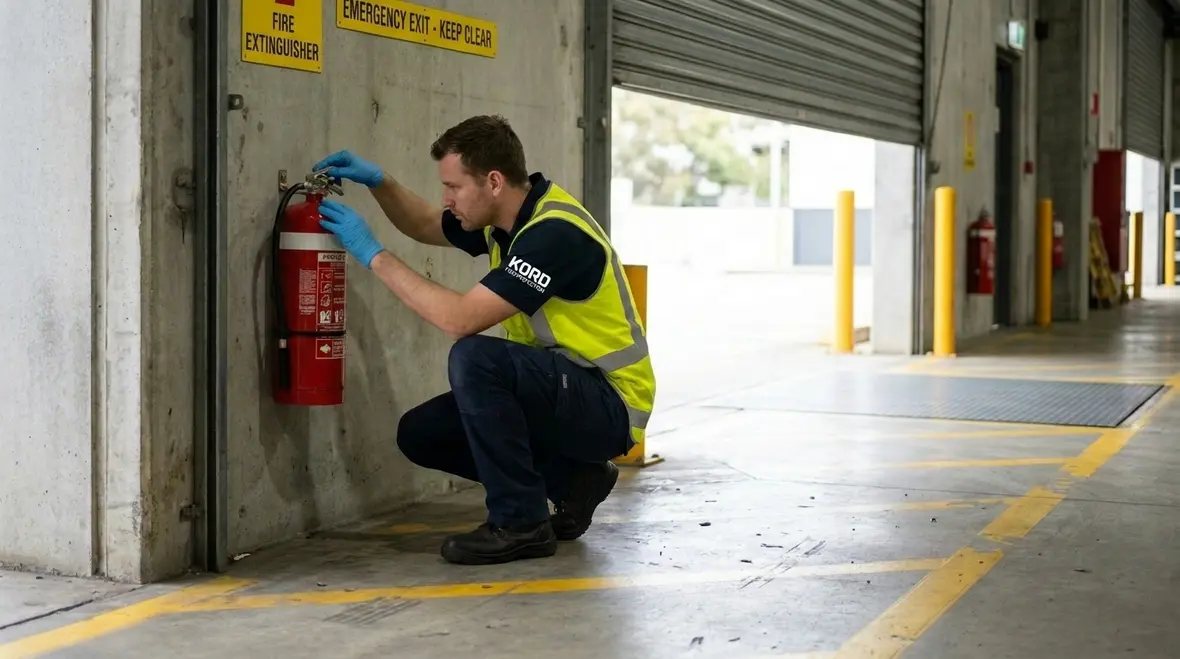
Another common issue is poor accessibility. Extinguishers get blocked by pallets, stacked stock, or locked doors that require a key no one can find after hours. Additionally, businesses sometimes use the wrong extinguisher type for the hazard area, which can lead to ineffective response during an incident. While servicing focuses on the device condition, the business must also confirm the right selection for the environment.
Finally, some organizations treat service as a one off event instead of a system. However, safety programs work best when inspection, maintenance, staff training, and signage all align. Kord Fire Protection supports this approach by helping businesses maintain accurate coverage and keep assets ready, not just “checked.”
The small oversights that create big headaches
A missing tag here, a blocked extinguisher there, a moved unit no one updated on the site plan, and suddenly the program is harder to trust. None of these problems sound dramatic on their own. Together, they chip away at readiness. The good news is that most of them are preventable with a clear service routine, a competent provider, and someone internally who treats compliance records like they may one day need to impress an auditor with very little patience.
How to Choose a Fire Extinguisher Service Provider in Sydney
When a business selects a technician, it should look beyond the cheapest quote. A strong partner communicates clearly, arrives prepared, and provides consistent reporting that makes compliance easy to manage. Also, the service team should understand the operational realities of industrial and commercial sites, including access requirements, scheduling constraints, and how to minimize disruption.
Why Choose Kord Fire Protection for Extinguisher Service?
That is where kord fire protection becomes valuable. We can act as a vital partner by coordinating servicing activities across multiple locations, maintaining organized documentation, and ensuring teams know what is due and what has been completed. In other words, they help businesses avoid the “where is that tag from last time” scavenger hunt. Kord Fire Protection is a fire extinguisher servicing provider based in Granville, NSW, offering AS 1851-compliant inspections, maintenance, and testing for commercial and industrial sites across Sydney.
Furthermore, a local partner in Sydney should be able to support businesses with practical advice on record management and asset coverage. When the business can quickly see which extinguishers are current, which are approaching service dates, and which need attention, the entire safety program runs with less stress and fewer surprises.
What to look for before signing off
Clear communication before and after the visit.
Consistent records that are easy to store and retrieve.
Technicians who understand active industrial and commercial environments.
A process for tracking due dates across one site or many.
Practical advice instead of vague comments and paperwork that solves nothing.
Fire Extinguisher Servicing Costs in Sydney
Understanding the investment required for fire extinguisher servicing helps businesses budget accurately and avoid compliance surprises. Costs vary based on several factors:
Factors That Influence Servicing Costs
| Cost Factor | Impact on Price | Typical Range (Per Unit) |
|---|---|---|
| Service Level | Six-monthly inspections are less intensive than annual services, which are less intensive than five-yearly overhauls | Six-monthly: $10–$30 | Annual: $20–$50 | Five-yearly: $80–$200+ |
| Extinguisher Type | CO₂ and clean agent extinguishers require more complex servicing than water or dry powder units | Standard types: lower end | Specialist types: higher end |
| Number of Units | Bulk servicing across multiple units reduces per-unit cost through economies of scale | Single unit: full rate | 10+ units: volume discount |
| Site Access Complexity | Difficult access (heights, restricted areas, multiple floors) increases labour time | Standard access: base rate | Complex access: 1.2x–2x |
| Location Within Sydney | Travel distance from the service provider’s base affects mobilisation costs | Inner Sydney/WSW: lower | Outer suburbs/regional: higher |
What to Expect from a Quote
A comprehensive fire extinguisher servicing quote from a Sydney provider should include:
- Per-unit service rates for each service level required
- Travel and mobilisation charges
- Tag replacement costs
- Recharge rates (if any units have been discharged)
- Documentation and reporting fees
- Annual contract options versus per-visit pricing
Budgeting tip: Facilities should budget for servicing as a recurring operational expense rather than a one-off purchase. Annual servicing contracts typically provide cost predictability and priority scheduling compared to ad-hoc bookings.
For businesses evaluating whether to repair or replace older extinguishers, understanding the cost comparison between repair and replacement can help optimize the asset lifecycle.
How businesses should prepare for servicing day
Preparation reduces delays and keeps operations safe. First, the business should provide access to each extinguisher location, including any areas that require keys or escort. Next, they should confirm any site changes since the last service, such as moved equipment or updated storage zones. Then they should ensure walkways remain clear so technicians can work safely and inspect properly.
Also, facilities teams should nominate a point of contact who can answer questions on the day. If a technician finds a unit in an unusual position, damaged mount, or hard to access area, quick decisions prevent extended downtime. After service, businesses should review the provided records and tagging details, then store documentation in a place that is easy to retrieve during audits.
And yes, it helps to remind staff that extinguishers are not furniture. They are safety equipment, not a convenient hand trolley. Pop culture has taught people to “just find a way,” but fire safety does not work on improvisation.
A quick pre service checklist
Confirm access to all extinguisher points.
Advise the technician of any new layouts, hazards, or restricted areas.
Clear obstructions from walkways and equipment locations.
Nominate a site contact for questions and approvals.
File completed records promptly after the visit.
FAQ: Fire extinguisher servicing and compliance
Conclusion: Make compliance easier with the right partner
Fire extinguisher servicing in Sydney keeps industrial and commercial sites ready for emergencies, while also reducing audit risk and costly downtime. When businesses plan schedules, maintain access, and track service records, safety becomes predictable instead of stressful. And when they work with a trusted team like kord fire protection, they gain a vital partner who helps manage compliance across assets. If the goal is fewer surprises and stronger readiness, now is the time to arrange a site review.