Types of Fire Extinguishers in Australia Guide by Kord
Quick Answer: The right extinguisher depends on what your business stores, how you work, and where fires can start. In Australia, sites usually need a mix of Water, Foam, Dry Chemical Powder, CO2, and Wet Chemical. Kord Fire Protection helps select, install, and maintain the correct unit so staff don’t gamble with safety.
In the real world, types of fire extinguishers in Australia never show up as a single, perfect solution. They arrive like a team roster: each unit has a job, a limit, and a specific fire type it can control. And while a business might want one extinguisher that “does everything,” that is usually the same logic as using a butter knife as a firebreak. Fun story, bad outcome.
So this guide explains how businesses in Australia pick the right extinguisher for their risk profile, with practical detail for industrial, retail, and commercial facilities. Then it shows why Kord Fire Protection becomes a vital partner for your inspections, servicing, and compliance routines. If you are also reviewing broader obligations around equipment upkeep, it makes sense to explore fire extinguisher services early, because the right unit on paper still needs the right maintenance in real life.
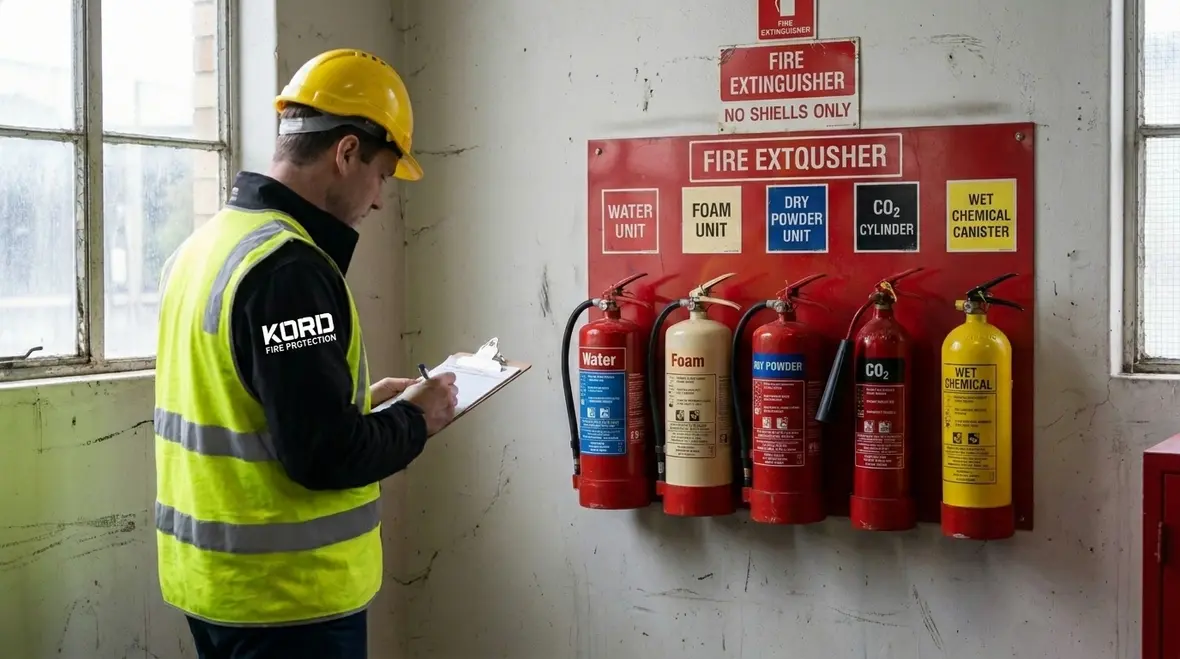
Types of fire extinguishers and how they match real hazards
In any workplace, fires usually start from fuel, heat, oxygen, and the specific process that creates ignition. Therefore, choosing extinguishers means mapping likely fire classes to what your facility actually has. That sounds obvious until somebody stores flammable liquids beside general packaging, puts battery charging nearby, and then acts surprised when one extinguisher type suddenly looks very underqualified.
The core extinguisher options used across Australian businesses each solve different problems. The trick is not memorising names like you are cramming for trivia night. The trick is understanding what can burn, how it will burn, and what happens after the extinguisher is discharged.
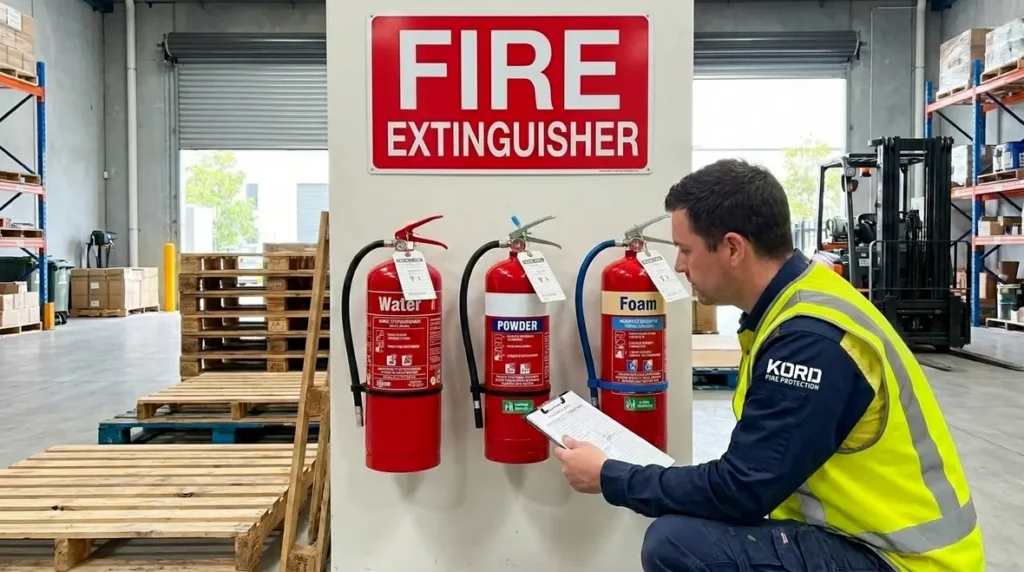
- Water and water mist suit ordinary combustibles like timber, paper, and some plastics when conditions fit. They cool the fire and reduce spread. However, they are not a universal hero for electrical or flammable liquid incidents.
- Foam targets flammable liquids such as solvents, fuels, oils, and some chemical spills. Foam forms a blanket that helps stop vapours reaching the flame.
- Dry chemical powder works across many classes. It smothers and interrupts the chemical reaction. Yet it leaves residue, which can damage equipment and complicate cleanup after use.
- CO2 is common around electrical hazards and areas where you want minimal residue. It displaces oxygen and reduces heat, though it does not “fix” the fuel source.
- Wet chemical is designed for cooking oils and fats, so it matters for kitchens, food production, and certain retail food areas.
Next, businesses also consider where the extinguisher will sit. A plant room, a loading dock, and an office corridor all have different risks. As a result, extinguisher layout and travel distances influence whether staff can reach the unit in time. A perfectly selected extinguisher that lives in the wrong location is still a bad choice. It just looks more professional while being unhelpful.
Why one extinguisher rarely does the whole job
A mixed use site often needs more than one extinguisher type because real fire risk is messy. Warehouses have cartons and pallets, workshops have heat and machinery, kitchens have oils, and electrical spaces have equipment that does not appreciate being blasted with the wrong agent. When Kord Fire Protection helps assess a site, the practical question is not “What extinguisher do we like?” It is “What hazards actually live here, and how fast can they get ugly?”
How businesses decide what to install on site
When a company chooses types of fire extinguishers in Australia, it should follow a deliberate process rather than a last minute shopping trip. First, assess fire risks by activity, storage, and ignition sources. Then, review building features such as fire compartments, exit routes, and signage. This is where businesses save themselves from the classic “we bought what the last tenant left behind” strategy, which is not so much planning as archaeology.
Key inputs for this decision typically include:
- What materials you store and handle, including fuels, chemicals, packaging, and cleaning agents
- Where ignition sources exist, like power boards, machinery, heaters, battery charging, and hot work areas
- How fires can grow, including ventilation, spill potential, and line-of-sight access
- Staff capabilities, because the best extinguisher in the world still fails if people cannot operate it confidently
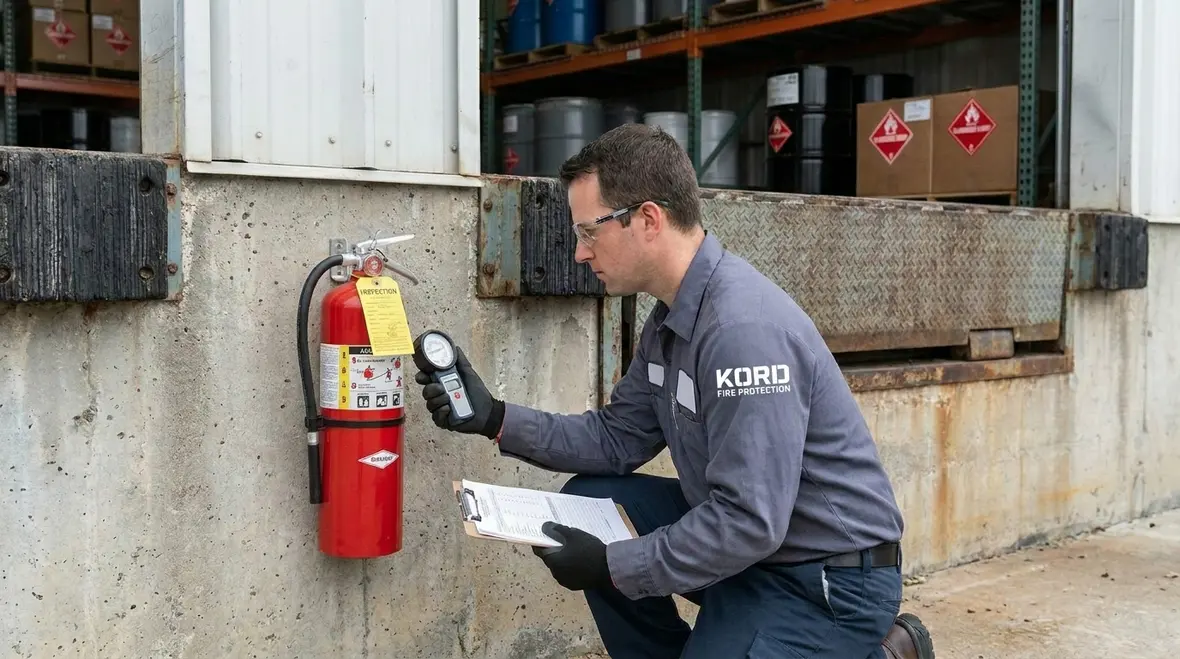
Then the facility maps extinguisher types to locations. For example, a loading bay often needs protection aligned with flammable liquids and transfer risks, while a switchboard area tends to require an approach that limits conductive risk and residue. Meanwhile, food production spaces need extinguisher solutions that handle cooking oils safely and effectively.
Now, here is the pop culture truth: even the most capable extinguisher cannot replace good housekeeping. If spills sit for days, and rags pile up like they are auditioning for a reality show, no “best unit” will save you. Equipment selection and day to day site discipline have to work together, or one ends up doing interpretive dance while the other handles actual risk.
Risk assessment beats guesswork every time
A proper assessment looks at operations as they really happen, not as they appear in a tidy policy folder. Deliveries arrive, waste accumulates, maintenance teams use tools, chargers stay plugged in, and cleaners move chemicals around after hours. The extinguisher plan has to account for the site you actually operate, not the one you imagine on your best behaviour.
Choosing by fire class and practical workplace scenarios
Many businesses fail by treating extinguishers like interchangeable tools. In reality, the fire class and the heat and fuel conditions determine effectiveness. Therefore, the smarter method uses scenario based planning. It is less glamorous than guessing and dramatically better at not turning a minor incident into a memorable insurance conversation.
Consider these workplace situations:
- Industrial workshops often combine general combustibles with machinery related heat. Foam may suit certain flammable liquid risks, while water mist can support ordinary combustibles in the right setting.
- Retail back of house includes cartons, adhesives, and cleaning chemicals. Powder extinguishers can provide coverage where multiple risks overlap, but businesses must plan for residue cleanup and secure handling of staff training.
- Commercial kitchens require wet chemical protection for deep fryers and grease laden vapours. Powder can work in some cases, but wet chemical gives a more targeted approach for fats and oils.
- Electrical rooms call for CO2 solutions in many cases, because businesses want to reduce residue while targeting electrical hazard scenarios.
However, scenario planning also includes what happens after discharge. For example, powder can coat sensors and sensitive equipment, and that means a post incident process must exist. Likewise, a foam application requires safe ventilation and cleanup so the area does not restart the problem.
In short, the selection should match both fire control and business continuity. Kord Fire Protection helps clients think through these real operational impacts, not just the label on the cylinder. That matters because getting the fire out is only one part of the story. Getting back to work without spreading contamination, damaging electronics, or losing half a day to preventable cleanup is the other half.
Scenario planning that mirrors real business use
A workshop with solvents near machinery has a different response need than a front office with paper stock and power boards. A cafe kitchen with fryers is not the same as a storeroom with cartons and cleaning agents. Once the business treats each area as its own risk zone, extinguisher selection becomes far more logical and far less based on wishful thinking.
Installation, placement, and signage that actually work
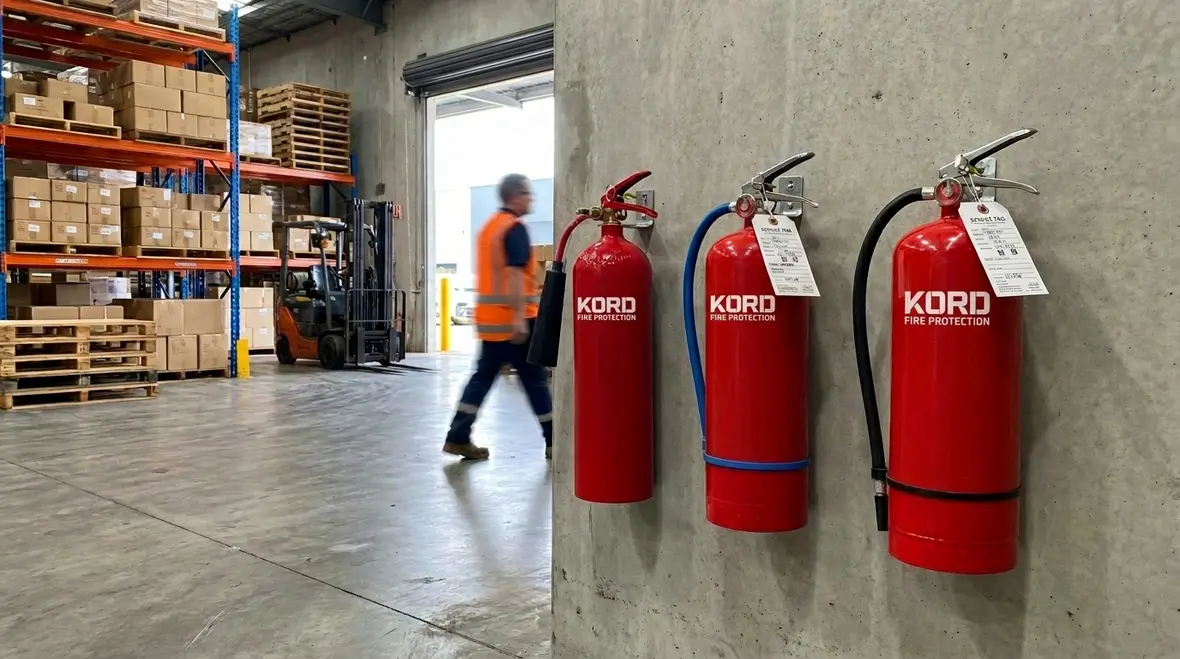
Even the correct types of fire extinguishers in Australia can underperform if the placement fails. Staff need to find equipment quickly, reach it safely, and operate it without obstacles. So facilities should review travel paths, obstructions, and visibility, especially in high traffic areas.
Placement considerations usually include:
- Mounting height that suits typical staff access while keeping the unit protected
- Clear walkways and no storage blocking the extinguisher location
- Consistent signage that matches the building layout and staff training
- Distribution in line with risk concentration, not just equal spacing across the site
Next, businesses should check that extinguisher locations align with evacuation planning. If an extinguisher sits behind a locked door or in a stairwell that becomes unsafe during heat, it is not a safety asset. It is just decoration. And nobody builds a safety program to look good on inspection day.
Kord Fire Protection supports clients with compliant installation practices and practical guidance so equipment sits where people can actually use it when seconds matter. That means thinking beyond floor plans and into human behaviour: what people will see first, which path they will take, and whether they can act without stepping deeper into danger.
Maintenance, servicing, and compliance across Australia
Extinguishers do not stay ready by hope alone. Therefore, businesses must schedule ongoing servicing, inspections, and record keeping. In many workplaces, compliance and audit readiness depend on consistent maintenance rather than occasional fixes.
Typical maintenance tasks include:
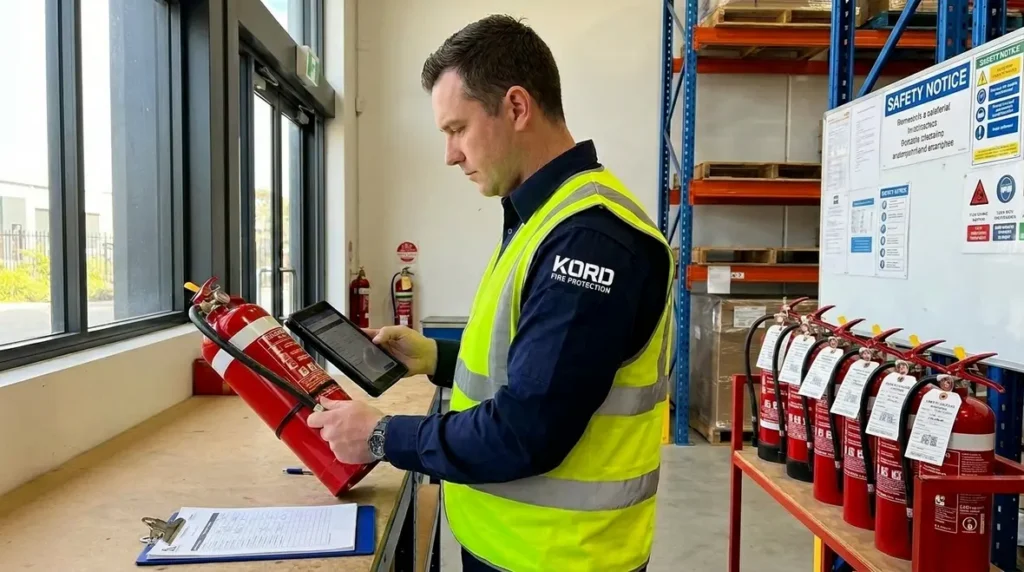
- Periodic inspection for physical condition, correct pressure indicators, and tamper seal integrity
- Service routines carried out by qualified technicians, based on the extinguisher type and local requirements
- Replacement of units that fail checks, reach service intervals, or show signs of corrosion and damage
- Documentation that supports audits and internal governance
Then there is staff readiness. A maintenance plan should connect with practical training, so staff recognize risks, understand extinguisher selection, and feel calm under pressure. Training reduces hesitation, and hesitation is the silent enemy of fire response.
This is where Kord Fire Protection becomes a vital partner. They help organisations across multiple facets of industry and commercial life coordinate service schedules, maintain consistent compliance records, and ensure the right extinguisher remains available when it matters. It is the difference between a system that passes inspections because it is genuinely maintained and a system that survives on crossed fingers and selective optimism.
| Business area | Common hazard profile | Extinguisher selection focus |
|---|---|---|
| Loading docks and storage | Flammable liquids, packaging, spill risk | Foam or powder, based on materials and layout |
| Switchboards and electrical rooms | Electrical faults, equipment heat | CO2 or suitable alternatives to reduce residue risk |
| Kitchens and food production | Cooking oils and fats, vapour laden grease | Wet chemical for targeted oil and fat risk |
| Offices and retail back of house | Paper, cartons, general combustibles | Water mist where suitable, plus powder where risks overlap |
Documentation matters just as much as the hardware
A site can own the right extinguishers and still create headaches if servicing records are scattered, outdated, or impossible to locate during an audit. Good compliance is visible, scheduled, and documented. That is why a reliable service partner is not just maintaining cylinders. They are helping the business keep its fire protection program coherent, defensible, and much less stressful when inspections arrive uninvited.
FAQ about extinguisher types and business selection
Final word: build a fire protection plan that you can trust
Choosing the right extinguisher is not a “buy it and forget it” task. It needs a clear risk assessment, correct placement, and dependable servicing, so your team can act fast and safely. Kord Fire Protection helps businesses across Australia select suitable types of fire extinguishers in Australia, coordinate installation, and maintain compliance with calm, professional support. If you want fewer surprises at audit time, reach out to Kord Fire Protection today.