Vehicle Fire Suppression Australia for Fleet Safety
Quick Answer: Vehicle fire suppression systems protect fleets, buses, trucks, service vehicles, and transport plants by detecting fire fast and knocking it down before flames spread. In Australia, the right design, installation, and servicing help businesses reduce downtime, protect staff, and meet safety expectations. Kord Fire Protection can partner on inspections, upgrades, and compliance.
Fleet operators looking at wider facility risk management often also review fire suppression systems across workshops, depots, and supporting infrastructure, because vehicle protection works best when it is part of a bigger safety picture.
Vehicle fire suppression Australia for fleet and transport safety
Fire does not politely wait its turn. In industrial sites, retail distribution, and commercial transport yards, a single engine bay incident can grow into major damage in minutes. That is why vehicle fire suppression Australia matters for operators who move stock, tools, and people across the country.
In this guide, our third person looks at how these systems work in real fleet environments, where risks come from, and how businesses keep protection reliable over time. Along the way, Kord Fire Protection is positioned as a practical partner, because buying a system and then forgetting it is how legends are born. And not the good kind.
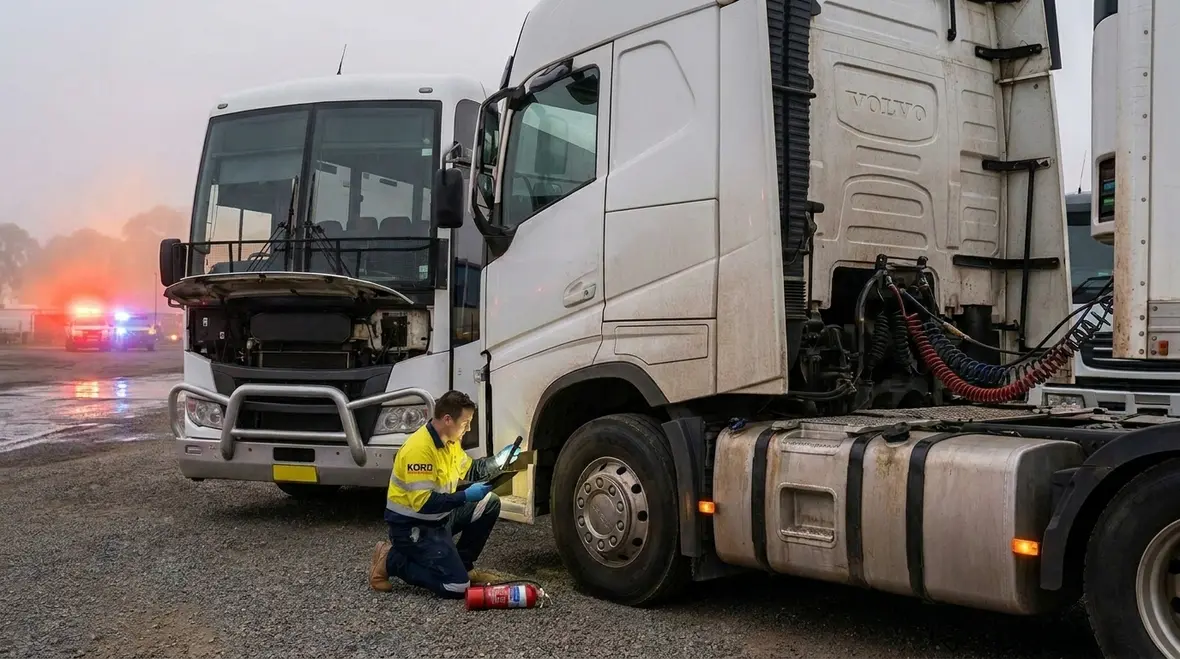
Where vehicle risk starts getting expensive
The problem with vehicle fires is not just the flames. It is the chain reaction that follows. A truck off the road affects deliveries. A bus out of service affects schedules. A service vehicle down can delay maintenance crews, site attendance, and customer work. By the time someone finishes saying “we thought it was minor,” the downtime cost has usually become very real.
That is why suppression has moved into serious fleet planning. Businesses are not simply trying to replace extinguishers or tick a procurement box. They are trying to reduce the chance that one hidden ignition point turns into asset loss, operational disruption, and a very bad day for whoever gets the incident report.
Why transport fleets need suppression, not just extinguishers
Many facilities rely on portable extinguishers and good training. However, vehicle fires often start in hidden spaces: engine compartments, battery areas, fuel lines, wiring looms, and undercarriage components. While extinguishers can help early, they depend on someone spotting the fire immediately, getting access safely, and aiming correctly under stress.
In contrast, a properly designed suppression system triggers automatically, usually with fast detection and a discharge that targets the hazard area. That means the response is not left to luck. And yes, luck runs out. Reality then shows up, wearing steel boots.
For fleets across Australia, vehicle fire suppression Australia supports several outcomes businesses care about. It helps limit fire growth, reduces heat exposure to nearby vehicles, and can improve safety for drivers and ground staff who would otherwise face higher risk.
This matters even more in depots where vehicles are parked close together or cycled through service bays all day. In those settings, fire is not only a vehicle problem. It can quickly become a site problem, a workflow problem, and a property problem. Suppression gives operators a chance to interrupt that progression before it gathers momentum.
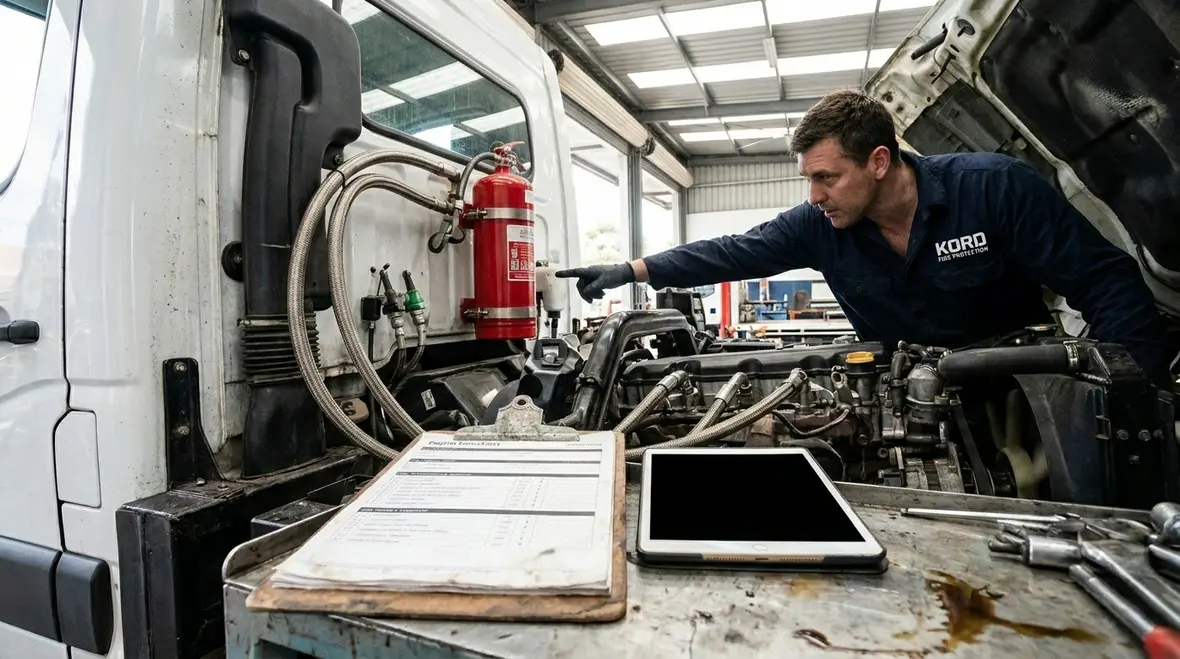
Extinguishers still matter, but they are not magicians
Portable extinguishers remain an important part of fleet safety. They support manual response when conditions are safe and staff are trained. But a hidden engine bay fire does not always present itself with excellent timing and polite visibility. Often, by the time someone notices smoke, the heat has already built up in places no handheld extinguisher can reach easily.
Common ignition sources across industrial and retail operations
Fleet risks vary by role. Still, many businesses see repeat patterns. First, mechanical failures can lead to oil or fuel leaks that contact hot surfaces. Second, electrical faults can ignite wiring or components, especially in vehicles that run long hours, carry heavy loads, or operate in dusty conditions.
Third, battery incidents have become more common as facilities adopt different power setups and auxiliary systems. Even without getting into rumors, damaged batteries and charging issues can create intense heat and rapid flame development.
Additionally, distribution yards and retail logistics move vehicles near each other. Therefore, one vehicle incident can expose others through radiant heat, smoke contamination, and delayed spread. Suppression can help break that chain.
Kord Fire Protection helps operators map these ignition points to the correct system layout, because a generic approach works about as well as a single key for every lock in the building.
Other risk factors show up during ordinary fleet life rather than dramatic failure. Friction from worn components, poor housekeeping in engine compartments, debris build-up, degraded insulation, and modifications to auxiliary gear can all increase fire potential over time. The point is not to assume every vehicle is moments from combustion. It is to recognise that the fire load builds quietly, and quietly is exactly how expensive problems sneak in.
How the system actually protects a vehicle in the real world
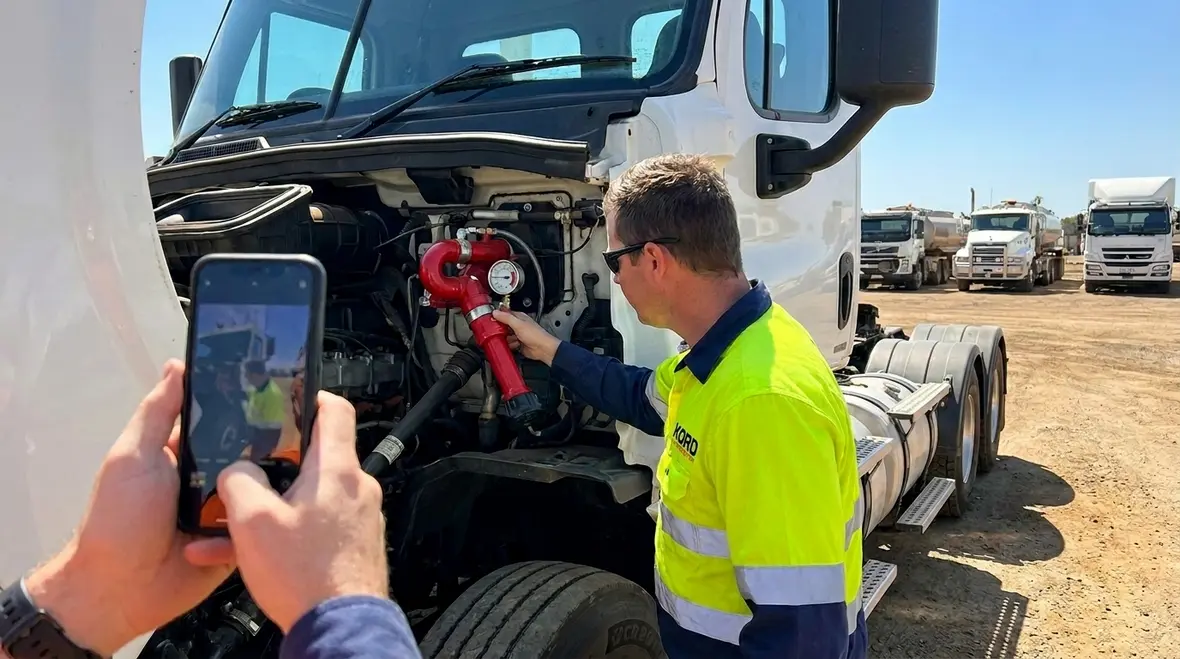
A reliable system uses detection and suppression as one coordinated process. Typically, it includes sensors, a control method, and extinguishing agent nozzles placed to cover the hazard spaces. When detection criteria are met, the system releases the agent quickly enough to suppress flames and reduce heat.
Importantly, the design must match the vehicle. Engine bay geometry, compartment openings, ventilation patterns, hose routing, and access panels change between truck types, buses, service vans, and specialty units. Therefore, installers must consider how the agent reaches the fire zone rather than only where the control box sits.
Also, many operators need to protect more than one area. For example, a vehicle can carry both an engine bay hazard and a separate compartment for tools or auxiliary systems. In those cases, the system design should handle multiple risks without creating dead zones.
Finally, maintenance affects performance. Components such as detection devices, release mechanisms, and pressure components depend on correct service intervals. A system that looks fine but fails a sensor test is like a smoke alarm with good intentions. It will still not save the day.
Why layout matters more than brochure promises
In real fleet environments, the effectiveness of suppression depends on placement, access, and maintenance discipline. Nozzle direction, detector location, compartment airflow, and physical obstructions all affect how well the system responds. A vehicle that has been repaired, upgraded, or repurposed may no longer match its original protection layout. That is one reason inspections should be practical, not ceremonial.
Choosing a compliant setup across Australian fleet environments
Across Australia, the challenge is consistency. Fleets operate in different states, service schedules differ, and vehicle types vary from day to day. So, businesses need a setup that supports predictable inspection and clear documentation.
To choose well, operators should look at these practical points. First, the system needs suitable coverage for the specific compartment risks. Second, the agent type and discharge performance must suit the vehicle space. Third, the service plan must fit the fleet’s downtime windows so the vehicles can return to work quickly.
Next, documentation matters. Facilities often request compliance records, service history, and installation details for internal safety reviews and contractor management. Then there is staff training, because even with suppression, people still need to follow safe shutdown steps and emergency procedures.
Kord Fire Protection can become a vital partner here by supporting end to end service. They can help assess coverage, coordinate installation planning, and maintain the systems through inspections and servicing. In other words, they do not just install and disappear like a magician who refuses to answer questions.
| What fleets should confirm | How Kord Fire Protection can help |
| Vehicle risk mapping for each compartment | Site and vehicle assessment with practical coverage planning |
| System design that matches vehicle geometry | Installation support and verification for correct nozzle and detection placement |
| Documented inspections and service history | Service scheduling, reporting, and keep the paperwork calm |
| Maintenance that fits operational downtime | Service coordination to reduce disruption |
What good documentation really does
Good records are not glamorous, but they save time and arguments. When a fleet can show what was installed, what was checked, what changed, and when servicing happened, safety reviews become easier and budget planning gets more grounded. Documentation also helps avoid that awkward moment where everyone is certain the system was inspected recently, yet no one can prove it with anything stronger than optimistic memory.
Maintenance and inspections that keep protection dependable
A suppression system is not a one off purchase. It is an operational safety asset. Over time, vibration, heat cycling, compartment contamination, and repairs to wiring or panels can affect performance. Therefore, fleets should treat inspections as a planned routine, not a reaction to a near miss.
During maintenance, technicians typically check key parts such as detection components, piping or tubing where fitted, the release mechanism, and external condition of nozzles. They also verify the system status and ensure nothing blocks the hazard coverage areas. If a compartment gets modified, the system placement may need review.
Just as important, fleets should keep a clear service log. That helps safety officers track patterns, justify budget decisions, and plan vehicle rotations for servicing. When a business can explain what was checked and when, internal reporting becomes smoother. External audits can also become less… drama filled.
Kord Fire Protection supports these goals by delivering servicing that keeps vehicle fire suppression Australia reliable across the life of the fleet. They help businesses stay ready, even when the schedule is not.
Routine attention also gives operators a chance to catch unrelated problems while they are still manageable. A loose panel, a contaminated compartment, a modified cable path, or a blocked discharge point may not look dramatic during a quick glance, but these details shape real-world performance. Dependable protection is usually the result of many small things being handled properly, not one heroic service visit.
FAQ: vehicle fire suppression for fleets in Australia
Partner with Kord Fire Protection for fleet safety
For industrial and commercial fleets, fire protection must stay reliable, not just installed. Kord Fire Protection can help businesses select the right approach, coordinate servicing, and keep documentation clear for ongoing transport safety. If a fleet operator wants less downtime, safer yards, and stronger risk control, it starts with a practical partner. Contact Kord Fire Protection to review current systems and plan dependable vehicle fire suppression support across Australia.