AS 5000 Commercial Kitchen Fire Suppression Compliance Guide
Quick answer: In Australia, commercial kitchen fire suppression systems must meet AS 5000 requirements to reduce the risk of fire spread, protect people, and support insurance and safety outcomes. This guide explains key design, installation, testing, and ongoing maintenance steps, and shows how Kord Fire Protection helps businesses stay compliant and calm under pressure.
Commercial kitchen fires do not wait for paperwork. They start fast, spread quickly, and turn a busy shift into a very expensive moment. That is why restaurant fire suppression Australian compliance matters in real life, not just on a certificate wall. For industrial, retail, and facility operations across Australia, the right suppression system, correctly designed and maintained, can protect staff, assets, and business continuity. And yes, a fire suppression system is like a spare tyre: you hope you never use it, but you will be glad it is there when you need it.
If you are reviewing the broader picture of fire suppression systems, it helps to understand how kitchen compliance fits into the wider protection strategy before small gaps become expensive surprises.
Why AS 5000 sets the pace for kitchen protection
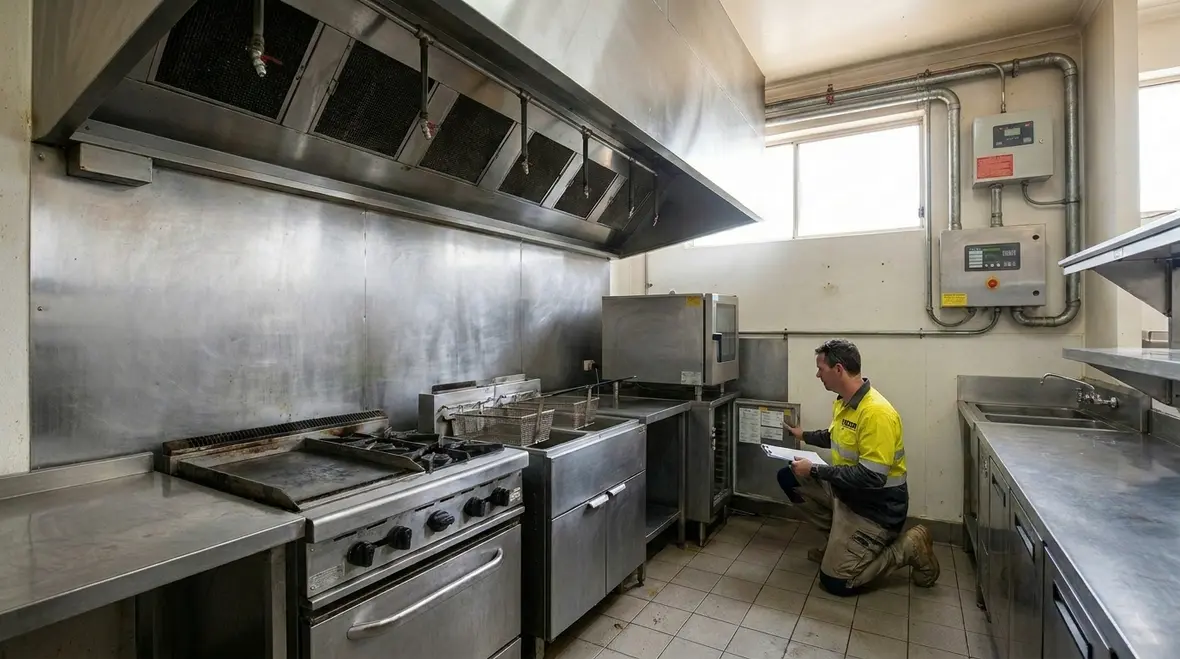
AS 5000 works like a clear rulebook for installing and maintaining fire suppression in commercial cooking areas. When a system follows the standard, it supports safe discharge, correct system components, and proper performance checks. As a result, the design does not rely on guesses or “it should be fine.”
In practice, a compliant system reduces the chance that flames outrun the protection. Therefore, facilities that handle high heat loads, grease vapours, or multiple cooking appliances need a plan that fits their actual kitchen layout. This means the suppression design considers the cooking equipment, hood design, piping routes, and the likely fire size and growth. Ultimately, compliance becomes an operational tool, not just a compliance exercise.
Transitioning from theory to reality, the main question becomes: can the system detect and suppress in the time window that matters? If the answer is no, the business faces risk. If the answer is yes, the business can manage disruption better when the unexpected happens.
Compliance is about performance, not paperwork
That distinction matters because busy kitchens are messy, hot, and constantly changing. A system that looked tidy on day one can drift out of alignment after equipment swaps, hood adjustments, or years of grease build-up. Compliance only means something when the hardware, controls, and coverage still match the real kitchen on the day they are needed. Certificates are helpful. Effective suppression is better.
What a compliant system must cover before installation
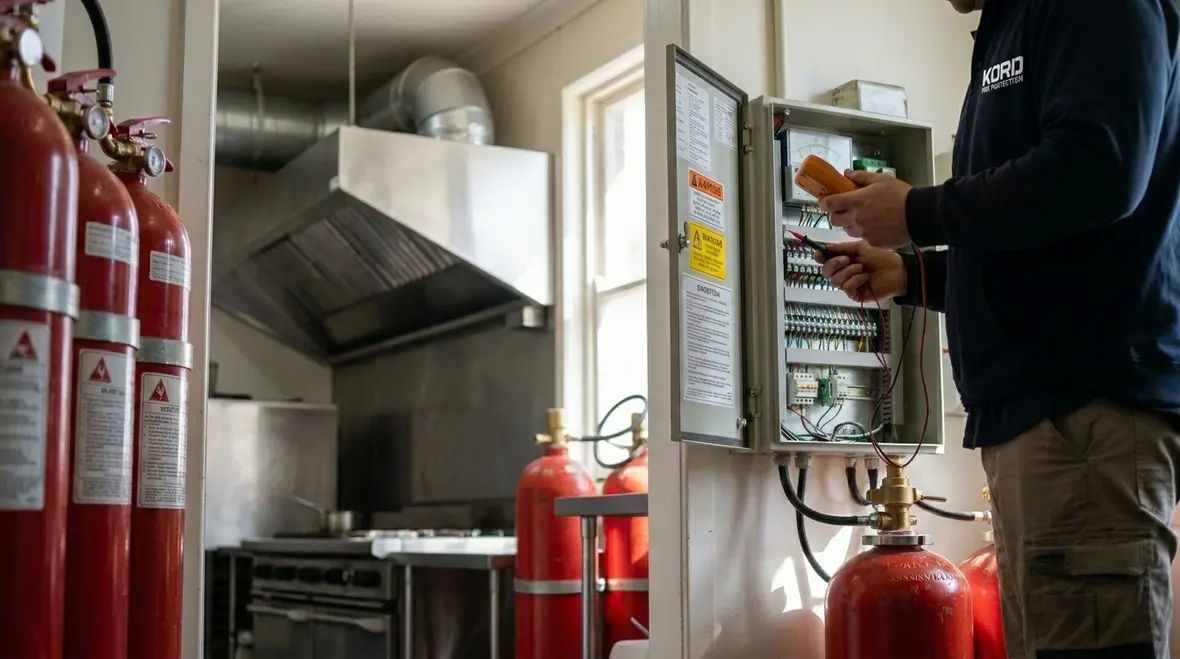
Before anyone touches a wrench, Kord Fire Protection starts with site understanding. That is important because kitchen conditions vary widely across Australia, from coastal humidity to tenant fit-outs and equipment upgrades. Accordingly, the design process must account for real hazards, not generic templates.
A compliant kitchen suppression scope usually includes these core elements:
- Hazard assessment: identifying cooking types, grease load potential, and appliance layout
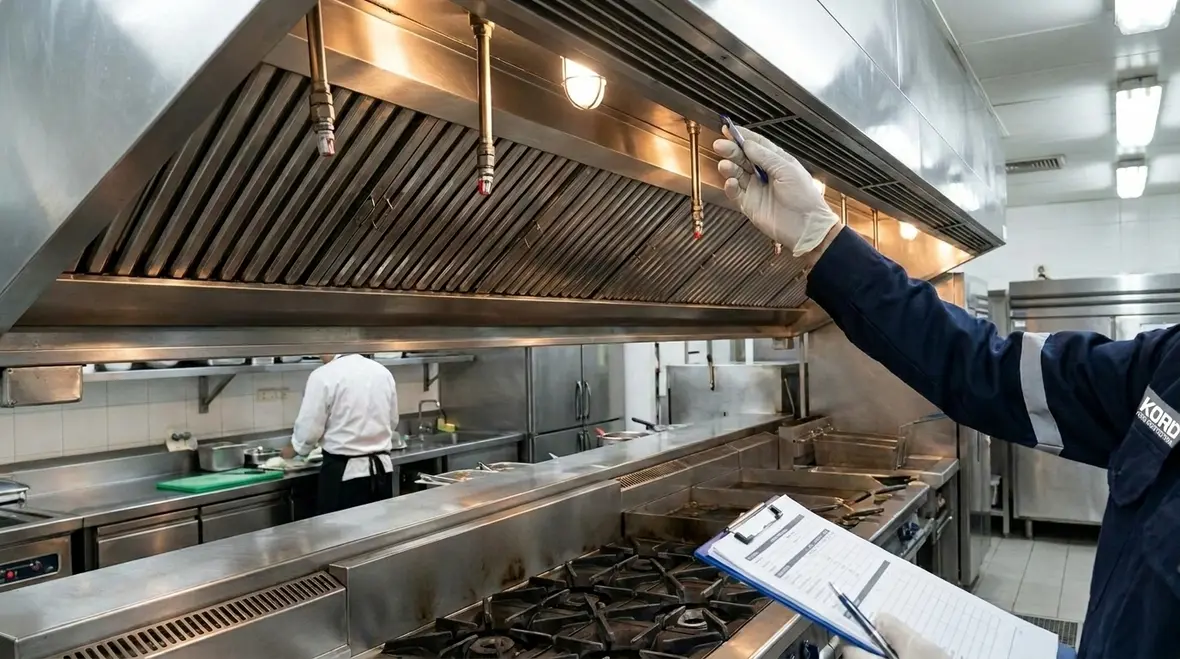
- System design: nozzle placement, pipe sizing, discharge coverage, and cylinder or agent selection
- Detection and activation: heat or fire detection devices and the actuation method
- Kitchen interface: linking system discharge to shutdown controls where required
- Control panels and labeling: clear wiring, readable signage, and correct function mapping
- Discharge and drainage considerations: managing agent release safely and planning cleanup reality
Now for a practical truth: a perfect design on paper can still fail if it is installed in the wrong way or tuned poorly. Therefore, the job requires competent workmanship, correct component selection, and commissioning that checks real operation, not just “we flipped the switch.”
The pre-install review saves future headaches
This is the point where smart operators slow down just enough to avoid rework later. Reviewing appliance locations, gas and electrical interfaces, hood geometry, and access for service may feel less exciting than opening day, but it prevents coverage blind spots and awkward retrofits. It is much easier to fix a drawing than to relocate installed pipework after the ceiling is closed up.
Design and installation steps that reduce future failure
Once the design locks in, installation quality becomes the difference between a system that performs and one that merely exists. Kord Fire Protection focuses on steps that reduce common failure paths, such as blocked discharge, incorrect nozzle orientation, or wiring issues.
Typically, the work follows a logical sequence:
- Confirm hood and duct configuration: ensure the suppression coverage matches the actual cooking canopy
- Install piping with correct supports: prevent movement, strain, and misalignment over time
- Fit and position nozzles accurately: verify coverage for each cooking zone
- Set detection and activation devices: align with the hood and cooking heat characteristics
- Wire control interfaces: ensure safe activation logic and required shutdown connections
- Commission the system: test functions and confirm readiness
Here is the business angle. When facilities run multiple trades, tenants change equipment, and renovations happen, systems get quietly “edited” by the real world. However, Kord Fire Protection helps keep control of those changes through documentation and handover that teams can actually use. Think of it as giving future technicians the map instead of just a GPS pin that leads to a dead end.
Good installation also respects the fact that kitchens are not static environments. Vibrations, cleaning chemicals, steam, heat cycling, and rushed maintenance can all nudge a poorly installed system toward failure. That is why details matter: proper supports, protected routing, clearly labelled controls, and enough access for inspection and servicing. None of that is glamorous, but it is exactly what makes reliability boring in the best possible way.
Testing, servicing, and how inspections protect the bottom line
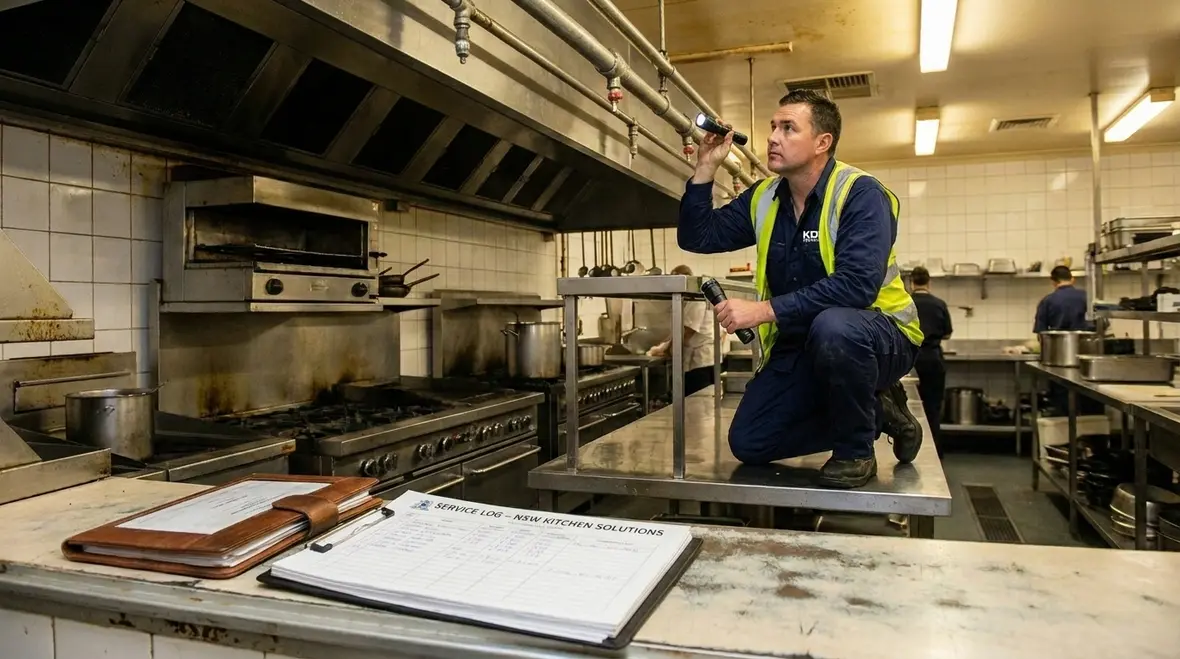
Even a strong system will only work when it stays in specification. That is where restaurant fire suppression Australian compliance turns into repeatable maintenance. In other words, the system must be inspected, serviced, and tested so it can perform when it matters most.
Effective servicing usually includes:
- Verification of mechanical components: checking cylinders, valves, nozzles, and piping condition
- Control system checks: confirming sensor status, panel operation, and alarm pathways
- Discharge readiness: ensuring release mechanisms respond correctly
- Clean and restore performance: preventing grease, dust, and duct contamination from interfering
- Record keeping: maintaining service logs that support compliance and audits
Transition words matter here because the reality is sequential. First, the system gets inspected. Then, faults get fixed. After that, the team confirms the system still performs as designed. Finally, documentation supports ongoing assurance for managers, facility owners, and risk teams.
Also, it helps to remember that kitchens do not slow down for maintenance windows. So, Kord Fire Protection plans work with operational scheduling in mind, helping businesses keep cooking, while still doing the job properly. Nobody wants to close the kitchen because someone forgot a small part. That is the kind of “small problem” that becomes a big headline.
Why records matter more than people think
Service logs and commissioning records are not just paperwork for a dusty folder. They create traceability. They help facility managers spot recurring faults, show insurers that systems are being maintained properly, and make audits far less painful. Clear records also save time when contractors return to site because they can see what changed, what was tested, and what still needs attention instead of starting from scratch every single visit.
Common compliance gaps in commercial kitchens and how to prevent them
Many issues do not start with bad intent. They start with missed handovers, late modifications, or equipment changes that were never communicated to the suppression team. As a result, even established businesses can fall out of alignment over time.
Common gaps include these:
- Unreviewed equipment changes: new grills, fryers, or cooking methods increase hazard levels
- Hood modifications: duct reroutes or canopy changes affect suppression coverage
- Inaccurate records: missing documentation creates uncertainty during audits
- Deferred servicing: small faults go unnoticed and then compound
- Incorrect commissioning: systems run without confirming full functional readiness
Kord Fire Protection prevents these gaps by staying involved beyond first installation. Because facilities evolve, the service partnership matters. When the suppression provider understands the kitchen workflow and tracks changes, compliance becomes easier to sustain. In turn, managers gain confidence, and maintenance teams avoid guesswork.
And yes, the system should not be treated like a “set and forget” appliance. It is closer to a well rehearsed play: it only works when it gets rehearsed again and again.
Built-in partnership: why Kord Fire Protection matters to facility managers
Facility and business leaders need more than a one-off install. They need a partner who understands Australian site realities across industrial, retail, and commercial operations. Kord Fire Protection brings that practical capability to the full lifecycle: assessment, design, installation, commissioning, and ongoing service.
Transitioning smoothly through each stage helps teams avoid the most costly outcome: discovering issues after an inspection or after an incident. Additionally, Kord Fire Protection supports consistent documentation and practical guidance so that operations teams can keep kitchens running while staying compliant.
When compliance is handled properly, the benefits show up everywhere. Staff feel safer. Asset protection improves. Insurer conversations become clearer. And the business avoids shutdown chaos that nobody budgets for. That is not just technical work. It is risk management that makes sense.
FAQ: Commercial kitchen suppression and AS 5000
Final thoughts and next step
Commercial kitchen fires do not wait for delays. Therefore, facilities across Australia should treat suppression as a managed risk system, designed and maintained to meet AS 5000. Kord Fire Protection helps industrial, retail, and commercial operators stay aligned with restaurant fire suppression Australian compliance through proper design, commissioning, and ongoing service. If your system is aging, a renovation happened, or records feel unclear, contact Kord Fire Protection today for an assessment and a compliance-ready plan.