Warehouse Fire Extinguisher Placement Australia Compliance Tips
Quick Answer: Proper warehouse fire extinguisher placement in Australia means mounting units so staff can reach them fast, keeping routes clear, and matching the risk in each zone. Compliance depends on location, travel distance, signage, and inspections. Kord Fire Protection helps sites document and maintain this properly, not just “install and hope.”
In warehouses and large facilities across Australia, industrial fire extinguisher needs show up fast when a fire starts small and spreads faster than a WhatsApp group from 2016. Facilities teams juggle clear access, busy aisles, changing stock, and safety plans that must still work in real life. That is why the placement and compliance rules for extinguishers matter.
Strong warehouse fire safety is easier to manage when extinguisher planning sits alongside broader site protection thinking. Kord Fire Protection supports facilities that need practical, risk-based guidance, especially when operations evolve faster than the paperwork likes to admit. Teams also benefit from reviewing related site protection priorities early, including fire extinguisher services, so placement, servicing, and documentation stay connected instead of living in separate universes.
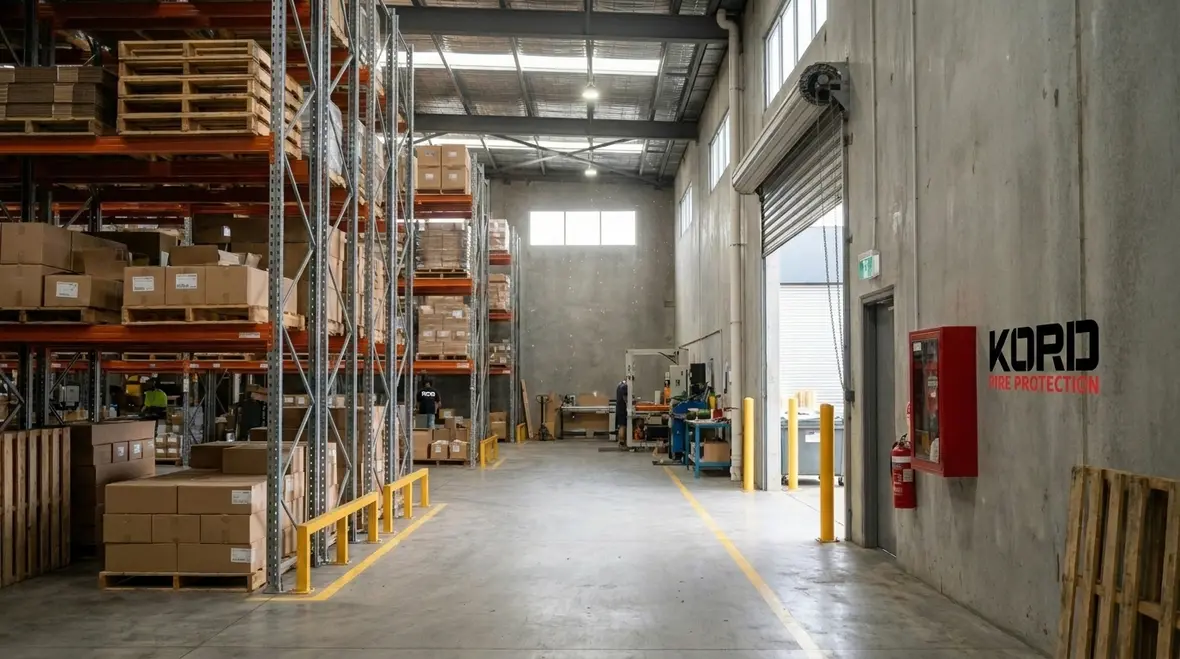
Third person guidance should be simple and practical. First, it should help teams place the right units in the right spots. Next, it should explain how compliance checks actually get done. Then, it should show how Kord Fire Protection acts as a reliable partner for these services across industrial, retail, and commercial sites.
1. Define the hazard and the extinguisher type
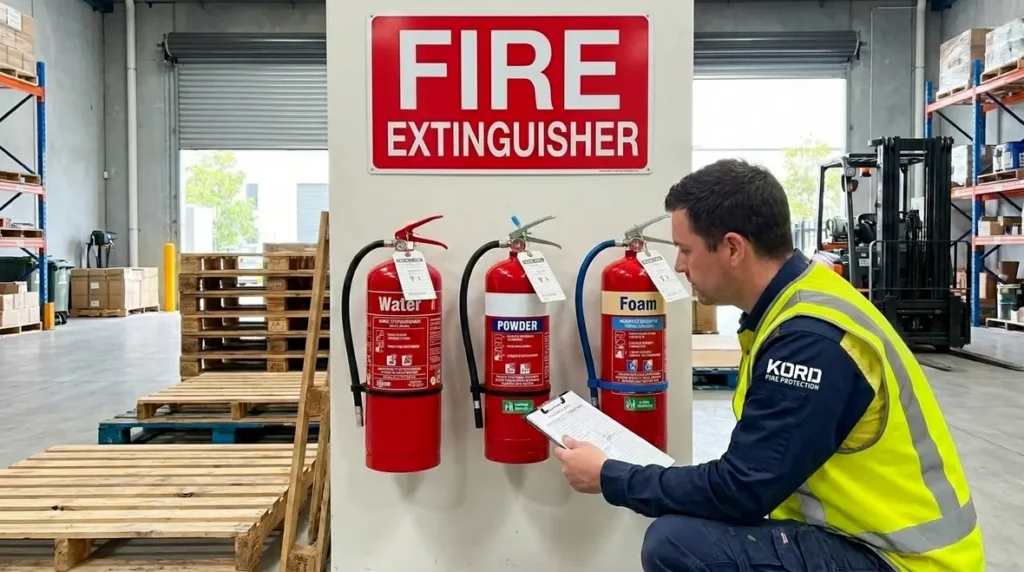
Before any extinguisher gets mounted, a facility needs to understand what might burn and how. In a warehouse, risks often include packaging materials, pallet timber, plastics, racking, solvents, batteries, and even dust in some storage areas. Therefore, the site must match extinguisher selection to the likely fire class and the operating environment.
For example, if the warehouse includes flammable liquids or machinery with electrical hazards, the extinguisher selection changes. If staff deal with oil mist or machining fluids, the hazard profile shifts again. In other words, placement alone cannot save the day if the extinguisher is the wrong tool. And yes, putting a water extinguisher near electrical equipment is like using a chainsaw to cut birthday cake. It looks decisive, but it does not end well.
Once the hazard picture is clear, Kord Fire Protection can help a facility align extinguisher type and location to real risks. They support industrial, retail, and commercial needs across multiple facets, including walkthrough reviews, risk-focused recommendations, and practical documentation that fits operational schedules. This is the stage where good planning prevents future headaches, awkward audit conversations, and the classic warehouse problem of discovering something important was hidden behind three pallets and a ladder.
How hazard mapping improves placement
Hazard mapping works best when teams break the warehouse into active zones instead of treating the building as one giant box with shelves. Receiving areas, battery charging stations, dispatch points, workshop corners, and office-adjacent storage may all need different extinguisher types or positioning. That approach helps the site avoid lazy one-size-fits-all placement and creates a more logical, defensible compliance story.
2. Placement rules that keep access fast
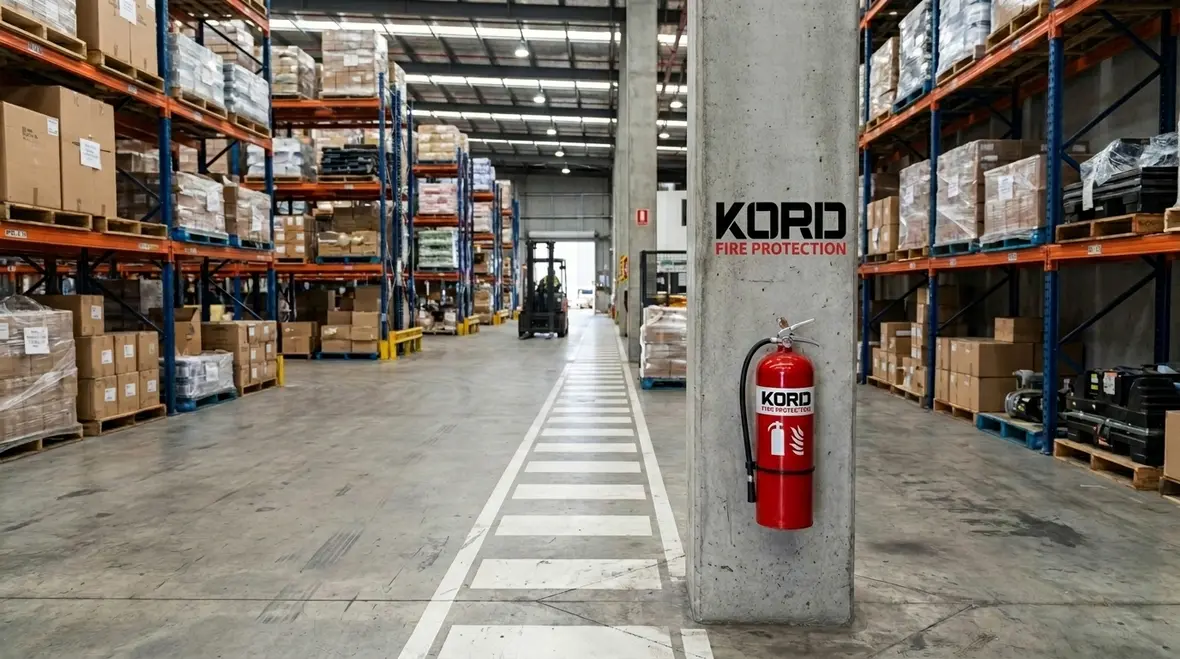
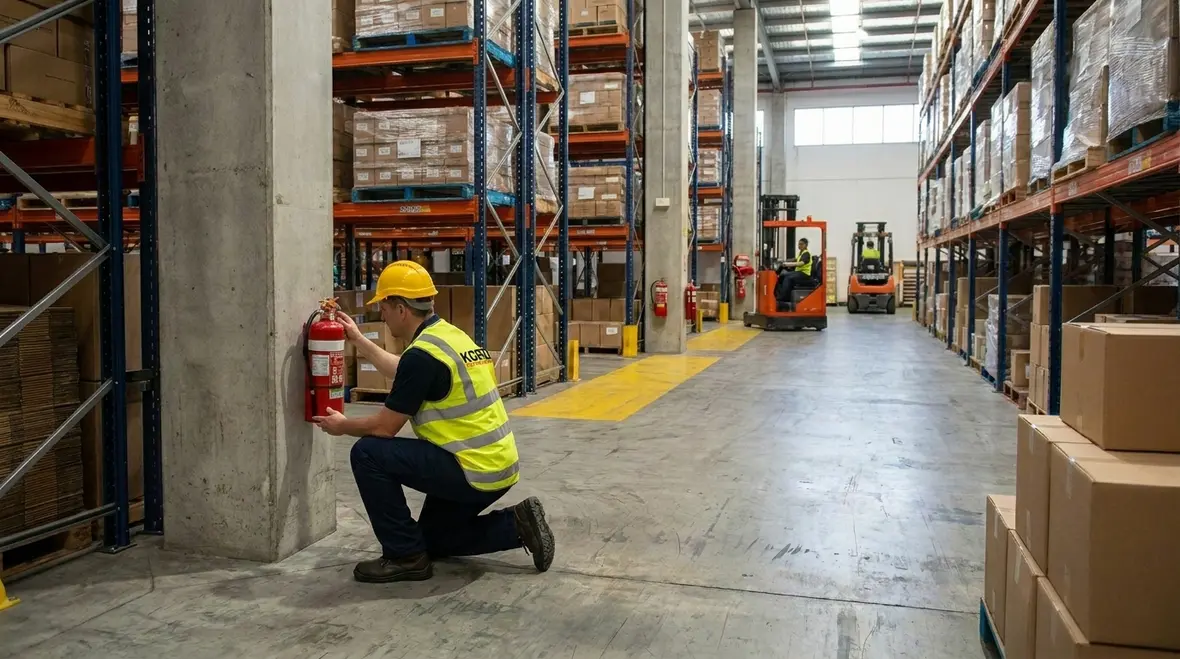
Good placement means staff can grab an extinguisher quickly, without squeezing past pallets or stepping into a trip hazard. Therefore, the facility should plan locations along safe routes and near likely ignition points.
Key placement practices typically include these ideas:
- Mount near exits and escape routes so staff can fight small fires while maintaining safe egress.
- Place near high risk zones such as loading bays, maintenance areas, battery charging rooms, and areas with flammable storage.
- Keep travel paths clear so wheeled or handheld units stay reachable even when racks and stock shift.
- Consider visibility and signage so the extinguisher can be found in smoke or stress.
- Avoid placing units behind locked gates unless there is a rapid access arrangement that staff can use immediately.
Also, placement height and mounting stability matter. If an extinguisher sits too high, staff cannot reach it under pressure. If it sits at a location where it swings or gets bumped by forklift activity, the mount becomes an operational problem. Consequently, placement planning must respect forklift lanes, turning radii, and the way staff actually move during a shift.
A useful way to test this is embarrassingly simple: walk the route as if an alarm has just gone off. If someone needs to zigzag around stock cages, dodge parked pallet jacks, or play hide-and-seek with a red cylinder, the location is not doing its job. Fast access should feel obvious, not theoretical.
Visibility beats wishful thinking
In a busy warehouse, “everyone knows where it is” is not a compliance strategy. Signage, sightlines, and consistent positioning matter because stress does weird things to memory. People who can quote forklift battery specs from memory will still blank on extinguisher locations if the unit is tucked behind shrink wrap and seasonal stock. Good placement works for new staff, contractors, and tired humans at the end of a long shift.
3. Compliance planning for warehouses: layout, travel, and inspections
Warehouse compliance focuses on more than “having extinguishers.” It centers on whether people can access them within a reasonable distance and whether the site can prove the system remains ready.
To plan this correctly, a facility can treat the warehouse like a map with three layers. First, it marks escape routes and exits. Next, it marks hazard zones and ignition sources. Then, it places extinguishers so they support both response and safe movement.
Compliance planning also involves:
- Documented placement decisions linked to risk assessment outcomes.
- Clear signage and consistent extinguisher numbering or labeling.
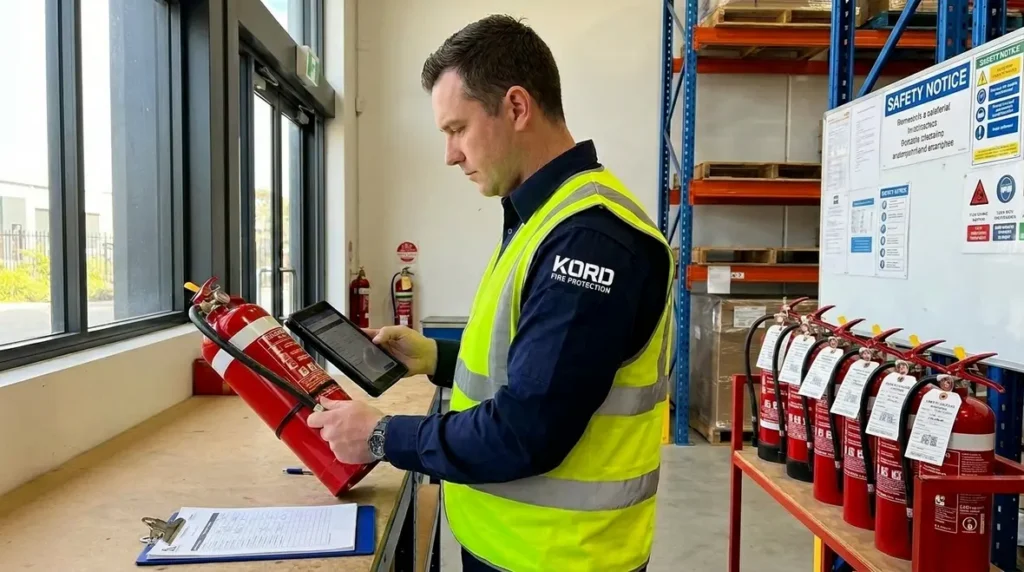
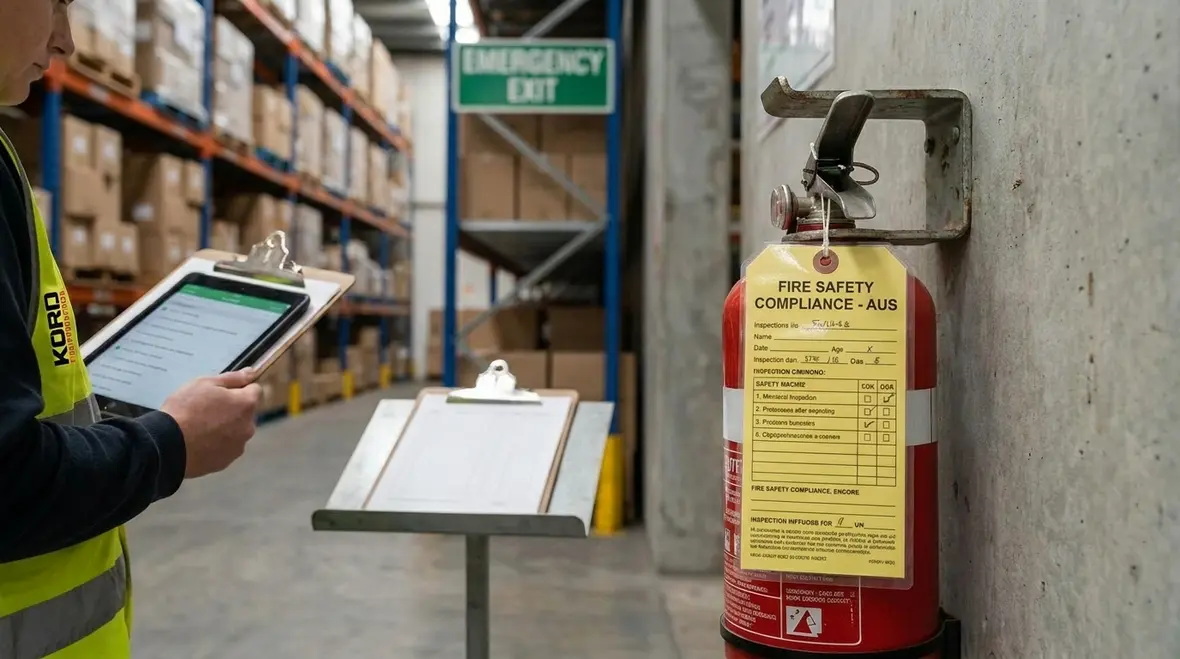
- Regular inspections that check pressure indicators, seals, hoses, and physical condition.
- Maintenance records that show service dates, refills, and any replacements.
Moreover, warehouses change. New racking goes in, pallets get re-stacked, and seasonal products shift the hazard pattern. Therefore, a compliance plan should include a review trigger when layout changes occur. Without this, a site can end up meeting standards on paper while missing real-world access.
This is where Kord Fire Protection becomes a vital partner. They help facilities in Australia keep extinguisher placement aligned with evolving operations, and they maintain the service trail so compliance is easier during audits. For many sites, the biggest improvement is not dramatic. It is simply having a repeatable system that survives staff turnover, stock changes, and the occasional brilliant idea to put temporary storage exactly where emergency equipment should be.
4. Extinguisher spacing and distribution across floors and sections
A single extinguisher does not “cover” a whole warehouse, and spacing should reflect how staff reach it. So, distribution matters across departments like receiving, dispatch, storage aisles, packaging bays, and office-adjacent areas.
To get distribution right, facilities should account for these realities:
- Corridor design affects how quickly staff can walk to a unit.
- Open-plan racks require thoughtful placement so extinguishers do not sit behind a wall of pallets.
- Multiple access points such as roller doors and internal exits influence extinguisher locations.
- Different floor levels need attention, especially with stairwells and mezzanine areas.
Additionally, workplaces often mix activities. A warehouse may include retail storage, commercial storage, and even light workshop activities. Hence, the distribution plan needs to match mixed-use risks. A unit that helps in a clean storage bay may not help in a maintenance corner, even if the layout seems similar.
Under pressure, the best extinguisher is the one staff can reach. Therefore, Kord Fire Protection supports distribution decisions that fit actual movement patterns, forklift routes, and operational zones, so the system works when it gets tested in real conditions. Sensible distribution also reduces the temptation to move equipment around casually, which is how a carefully planned system quietly turns into “we think one used to be here.”
Mixed-use spaces need mixed-up assumptions removed
If a warehouse contains admin rooms, amenities, light workshop functions, charging points, and storage with different combustibles, the extinguisher layout should reflect those differences clearly. Facilities that build around actual use patterns usually end up with better spacing, cleaner records, and fewer annoying surprises when someone reviews the site with fresh eyes.
5. Keep placement compliant with ongoing service and training
Once the extinguishers get installed, the work does not stop. A compliance program needs routine checks, plus staff awareness that makes the response calmer and faster.
Ongoing service should include:
- Monthly or scheduled visual checks for damage, obstruction, and missing units.
- Annual servicing as required, including pressure checks, inspections, and any component replacement.
- Hydrotesting or replacement where required by extinguisher type and age.
- Record management so audits show a consistent history.
Training also matters. Staff should know which extinguisher matches the hazard, how to operate it, and when to evacuate instead of fighting a fire. Because no one wants a hero moment that turns into a safety report. Pop culture has trained people to think fire is a dramatic scene. Real life is about speed, safety, and sensible action.
Kord Fire Protection can assist facilities by coordinating service schedules around business operations, reducing disruption and keeping records complete. They also help sites maintain the practicality of warehouse fire extinguisher placement as stock and layouts shift. That consistency matters because even the best installation can slowly drift off course if nobody owns the checks, updates the maps, or notices the extinguisher is now sharing space with a suspicious tower of cartons.

6. Audits, documentation, and clear accountability
Audits go smoother when documentation is organised and placement decisions tie back to risk. So, facilities should store service reports, inspection logs, and any relevant drawings or placement maps.
Good audit-ready documentation typically includes:
- Extinguisher inventory by location, type, and tag or serial details.
- Inspection and service records with dates and outcomes.
- Maintenance history including replacements and any corrective actions.
- Notes on changes whenever layout adjustments affect access.
Accountability also matters. A facility should assign responsibility for checks and escalation if anything fails. Then, it should ensure staff know where to find documentation quickly. Otherwise, compliance becomes a scavenger hunt, and nobody wants that during a stressful day.
For industrial, retail, and commercial facilities across Australia, Kord Fire Protection can act as a steady co-pilot. They support the full process from placement planning to ongoing compliance service, so teams can focus on operations instead of paperwork chaos. When audits arrive, the goal is not to perform interpretive dance with folders and vague memories. The goal is to show a clean, current trail that proves the warehouse is managed with intent.
FAQs
Conclusion
Warehouse fire safety does not live in a binder. It lives at the point where a staff member can reach an extinguisher fast, use the right type, and keep everyone safe. Kord Fire Protection helps industrial, retail, and commercial facilities across Australia plan placement, maintain service schedules, and keep records audit-ready. If the warehouse is evolving, your compliance should evolve too. Reach out to Kord Fire Protection and get a plan that works on day one and day two hundred.