Mining Vehicle Fire Suppression Requirements Australia
Quick Answer
Mining and heavy commercial vehicles face unique fire risks from fuel leaks, hot brakes, electrical faults, and harsh vibration. Proper fire suppression systems reduce ignition growth and protect operators, equipment, and mission timelines. For compliant installation and ongoing service, Kord Fire Protection can manage design, commissioning, and inspections across Australia.
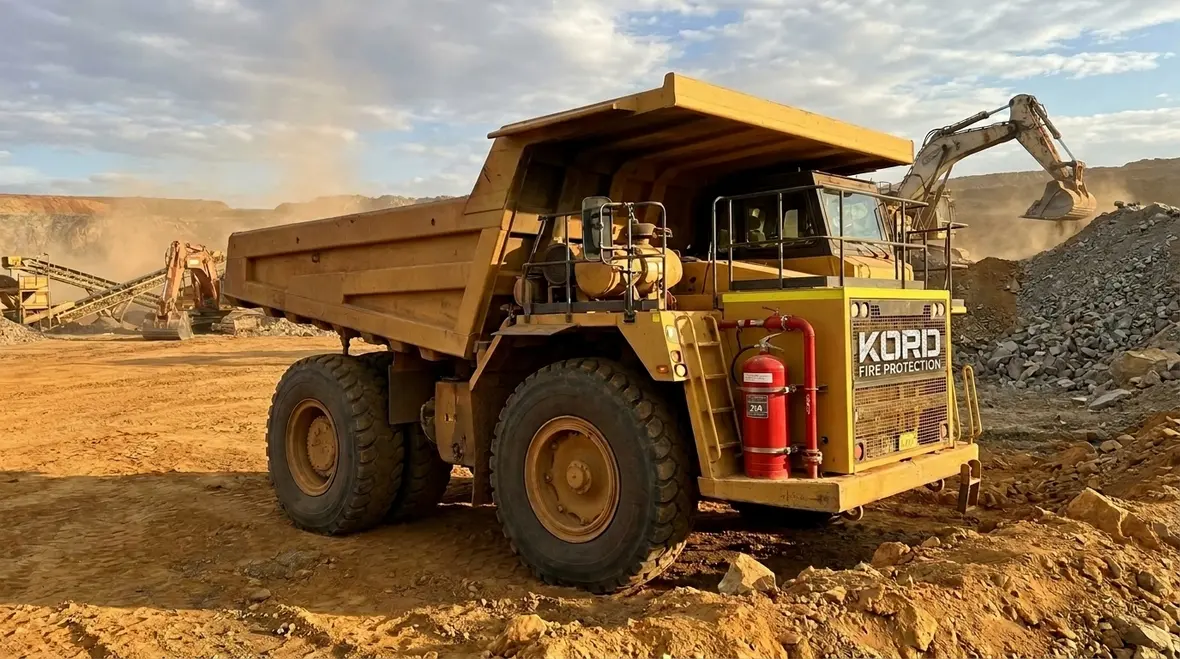
When a mining vehicle carries fuel, hydraulics, and high loads across dusty, remote terrain, the stakes rise fast. That is why mining vehicle fire suppression is not a “nice-to-have” add-on. It is a core part of risk control for fleets that operate under heat, vibration, and long shift cycles. In the real world, a small event can escalate quickly, and response time is often limited. Therefore, companies that run industrial and commercial assets need systems that activate reliably, discharge effectively, and stay serviceable over time. And yes, the goal is to keep downtime from turning into a full season finale.
For broader context on tailored extinguishing solutions, see fire suppression systems and how engineered protection supports different high-risk environments.
Mining and heavy vehicle fire suppression requirements
Fire suppression on heavy commercial and mining assets must match the vehicle’s hazards, duty cycle, and environment. As a result, requirements typically focus on three outcomes: detect early, suppress the fire fast, and confirm system readiness. Moreover, the system must consider where fires start. On many vehicles, ignition sources include diesel fuel spray, hydraulic leaks, electrical wiring faults, overheated brakes, and engine bay heat build-up. In addition, dust and debris can spread heat and fuel vapours, which means suppression needs to reach the right compartment quickly.
To meet these expectations, teams often build around engineered layouts and verified discharge performance. For example, suppression agents must cover hazard zones such as engine compartments, battery areas, and critical machinery spaces. Also, detection placement matters. If detection sits in the wrong location, it will react late. So, manufacturers, integrators, and service providers typically base designs on vehicle geometry, airflow, and heat signatures. In many operations, this same design discipline is mirrored in fixed-site protection too, especially where plant rooms and enclosed risk areas need dependable response under pressure.
Why early intervention matters in remote operations
Remote fleets do not enjoy the luxury of instant backup. A fire that starts in an engine bay can become a major equipment loss before external responders are anywhere near the scene. That changes the design brief. Systems need to identify heat quickly, release agent decisively, and limit spread while the operator follows shutdown and evacuation procedures. In practical terms, that means the suppression system is not merely supporting operations. It is buying time, reducing loss escalation, and helping prevent one mechanical failure from becoming a serious safety event.
What hazards drive the design of mining suppression systems
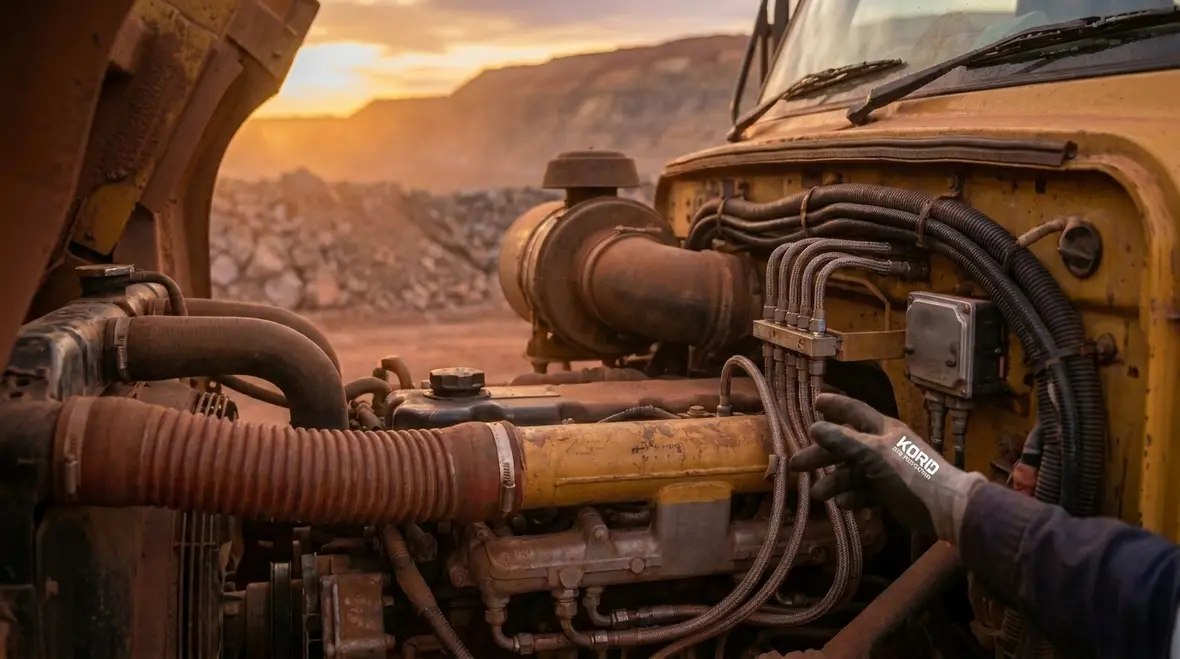
Vehicle fire scenarios rarely stay tidy. Instead, they follow the physics of fuel, oxygen, and heat. Therefore, suppression design starts with hazard mapping. Kord Fire Protection, for instance, considers how a fire could travel from the source to adjacent compartments, and how suppression should interrupt that path. Then, the system components get aligned to those hazard zones.
Key hazards include:
- Fuel and hydraulic leaks: Diesel vapours and atomised hydraulic fluid ignite easily when exposed to heat or sparks.
- Electrical faults: Corrosion, vibration, and frayed harnesses can cause short circuits, arcing, and heat build-up.
- Hot surfaces and brakes: Prolonged braking on grades can raise temperatures beyond safe limits.
- Compressed air and exhaust heat: Exhaust radiation can preheat surrounding materials, especially in enclosed engine bays.
- Dust and contamination: Dust can act like a heat blanket and can also block airflow and sensor performance.
From there, the engineering choice usually balances agent type, discharge pattern, and activation method. After all, a system that suppresses one compartment but leaves another to flare is like installing a seatbelt but skipping the anchor point. It might look fine, but it will not protect the way it should.
Hazard mapping is not guesswork
Good suppression design looks at how the vehicle is actually used, not how it appears in a brochure. Long idle periods, repeated climbs, operator cleaning habits, aftermarket modifications, and dust loading all influence where heat accumulates and where sensors should sit. A design that ignores these realities may still look tidy on paper, but field conditions are wonderfully ruthless when it comes to exposing lazy assumptions. That is why hazard mapping, nozzle targeting, and protected cable routing need to reflect service conditions rather than wishful thinking.
How compliance and inspections protect fleets across Australia
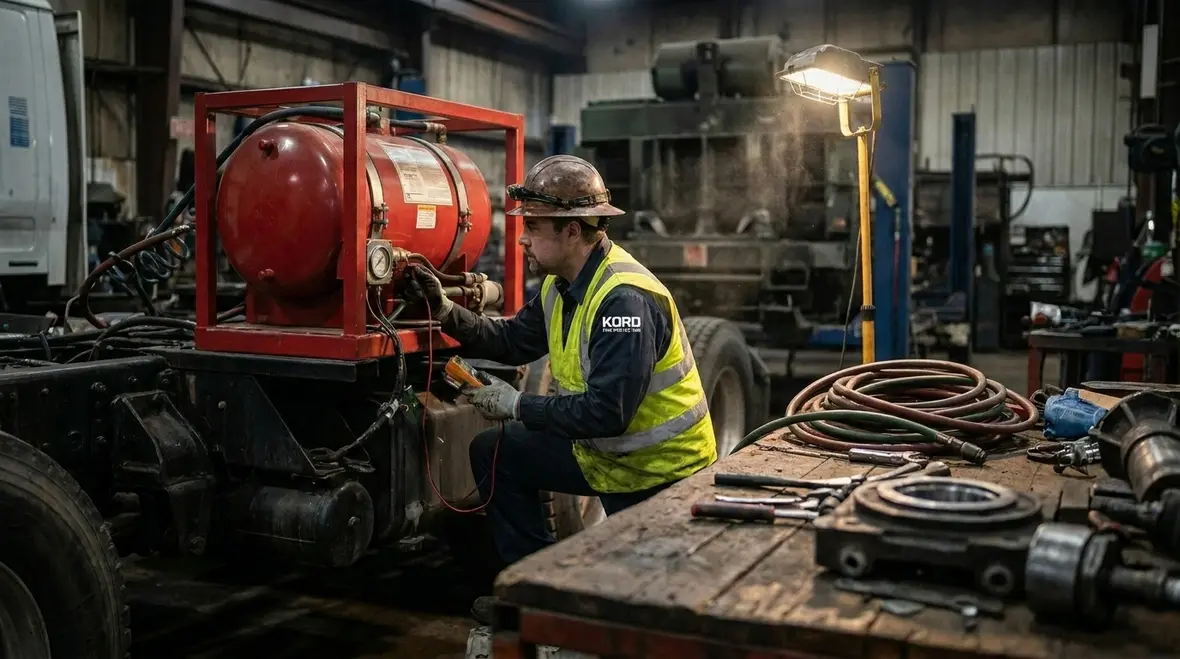
Industrial operators across multiple sectors in Australia run different asset types, but they often share the same practical challenge: keeping suppression systems reliable under harsh conditions. Consequently, compliance involves more than installation. It includes commissioning, documentation, and periodic inspection and maintenance so that the system performs when it matters most.
In practice, compliance work often covers:
- System verification: Checks that detection, activation, release, and control circuits operate as designed.
- Agent and pressure condition: Confirming that stored agent and operating parameters remain within spec.
- Inspection of hazards and mounting points: Ensuring wiring runs, nozzles, brackets, and cabling remain secure after wear and repairs.
- Labeling and documentation: Keeping manuals, maintenance records, and service labels current for audits and internal governance.
- Operator awareness: Training that clarifies what the alarms mean and how crews respond.
Next, consider the operational reality. Heavy commercial vehicles change over time due to repairs, part replacements, and upgrades. Each change can shift risk. Therefore, ongoing service should treat every modification as a potential impact to mining vehicle fire suppression effectiveness, not as a routine mechanical task.
What inspections should actually catch
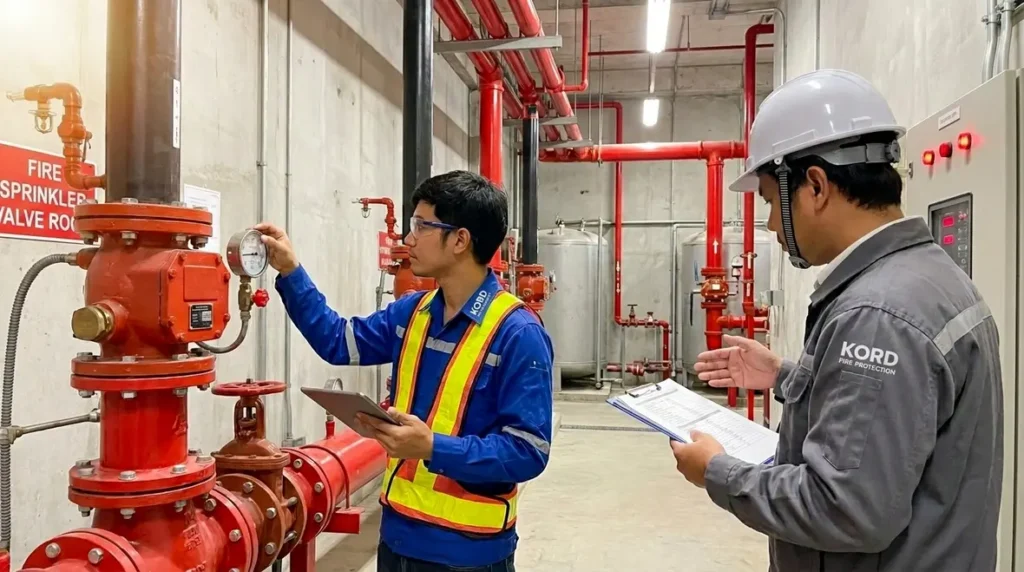
An inspection is only useful if it catches the things most likely to undermine performance. That includes damaged tubing, blocked nozzles, worn clamps, compromised wiring insulation, shifted detection lines, and evidence that previous repairs changed airflow or compartment access. It should also confirm that labels remain legible, service dates are current, and activation controls are where operators expect them to be. If a system looks fine from two metres away but fails under vibration or contamination, the inspection did not do its job. It just held a clipboard near the problem.
System components that must work together
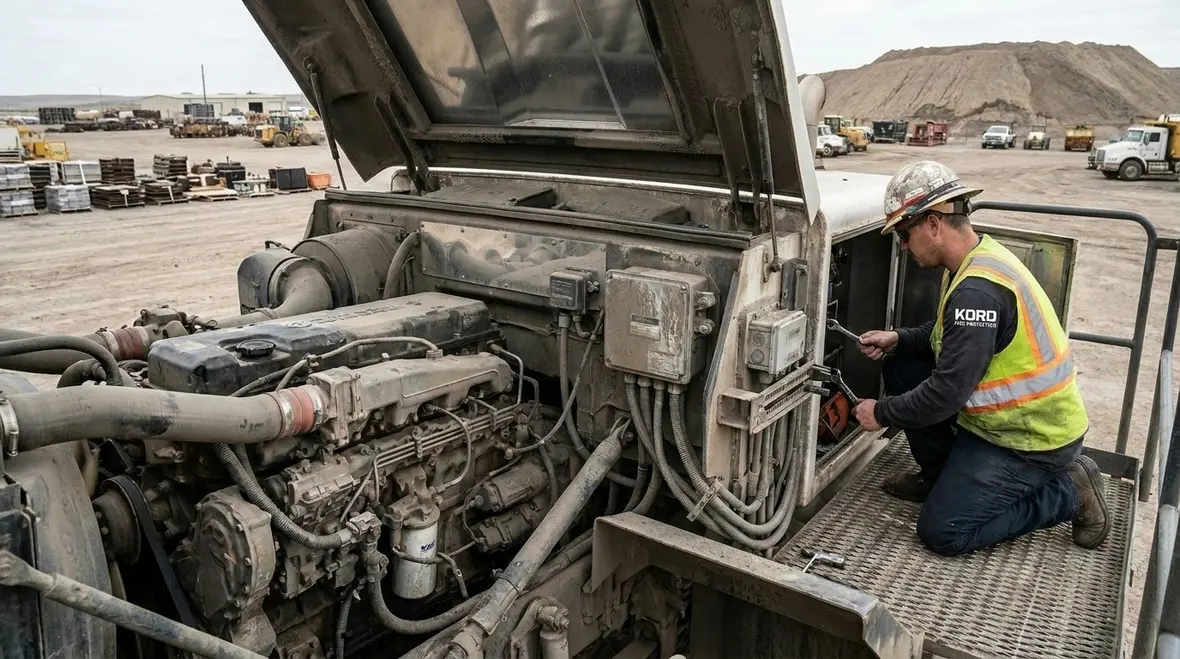
A suppression system does not succeed because one part is good. It succeeds because all parts cooperate. As a result, a strong design treats detection, control, and discharge as a single safety system. Then, the installer ensures the system matches the vehicle’s actual layouts rather than a generic template.
Typical components include:
- Detection: Heat or flame detection suited to the compartment and operating temperature range.
- Control panel or activation logic: Interprets signals and triggers release without nuisance activation.
- Release mechanism: Ensures timely deployment when thresholds are reached.
- Nozzles and piping: Directs agent to the targeted zones with stable routing and correct coverage.
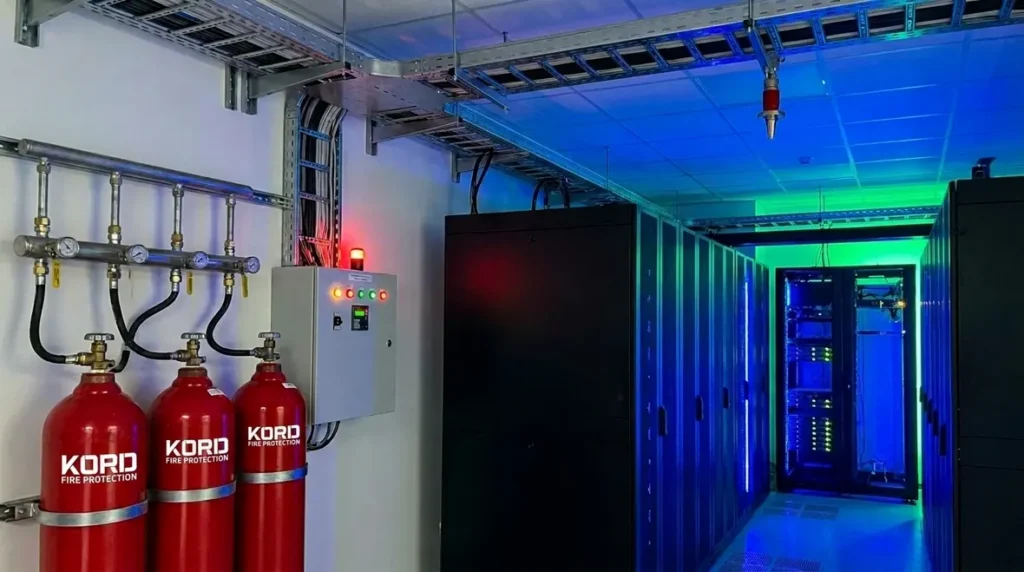
- Agent storage and cylinders: Maintains readiness and discharge performance over the service life.
- Warning devices: Alerts operators so they can act while suppression engages.
Here is where Kord Fire Protection earns its keep. During integration, the company focuses on fit, protection from vibration damage, and correct placement. Also, it plans for accessibility so inspections do not become a two week scavenger hunt. Nobody wants to pull half a machine apart just to check a component. That is not safety, that is budgeting for misery.
Integration matters as much as equipment choice
Even a strong suppression package can underperform if it is routed badly, mounted poorly, or installed where maintenance teams cannot reasonably access it. Integration decisions affect longevity, inspection quality, and confidence during an emergency. Practical layouts reduce wear, protect vulnerable components from vibration and impact, and make future servicing less painful. That last point deserves respect. A system that nobody wants to inspect properly tends to become a system that surprises everybody at the worst possible moment.
Choosing the right partner for installation and service
For industrial, retail, and commercial facilities managing fleets, a partner must handle both engineering and real-world maintenance. That means consistent service plans, fast turnaround, and clear reporting. Equally important, the partner must communicate in a way that operations teams can use, not just a way that technical teams can admire.
Kord Fire Protection can become a vital partner by supporting the full lifecycle. First, it can help assess hazard zones and align system design choices to vehicle compartments. Then, it can manage installation or upgrades so the system fits the asset and performs as intended. After that, it can deliver inspections and service that keep suppression ready, documented, and audit-friendly.
Additionally, a partner with fleet experience understands how vehicles get used. Therefore, it can account for heat cycles, dust exposure, vibration, and maintenance practices in the plan. In short, Kord Fire Protection helps operators reduce uncertainty, not just add equipment. And if the fire suppression system ever activates, the goal is that it activates correctly, not like a pop quiz nobody studied for.
FAQ about fire suppression for mining and heavy vehicles
Conclusion
Mining and heavy commercial vehicle fire suppression requirements demand more than equipment on a parts list. They require correct design, reliable activation, and disciplined inspection across the vehicle lifecycle. When fleets in Australia need a partner who understands harsh operating conditions and keeps systems audit-ready, Kord Fire Protection stands ready. Reach out to discuss hazard mapping, installation support, and ongoing service for your assets, because prevention is cheaper than replacing a machine and losing a shift.