Clean Agent Fire Suppression for Data Centres in Australia
Quick Answer: Clean agent fire suppression protects data centres and server rooms without leaving messy residue. It quickly pulls a room toward extinguishment by interrupting the fire chemistry, which helps safeguard electronics and uptime. Kord Fire Protection supports these systems as a reliable partner, from design checks to commissioning and service across Australia.
In a data centre, a fire is not just a bad day. It is a shutdown, a rebuild, and sometimes a long apology tour. That is why server room suppression with clean agent solutions matters. Clean agents control flames and heat while leaving little to no residue, which helps protect servers, cabling, and storage.
Even so, success does not come from buying equipment and hoping for the best. It comes from correct system selection, sound engineering, clean installation, and steady maintenance. Our company, Kord Fire Protection, helps organizations across Australia treat this like the serious life safety and business continuity work it is, not like a late-night “we will deal with it later” problem.
Facilities planning upgrades often also review broader fire suppression systems across the site, because server room protection works best when it fits the bigger strategy rather than living in a lonely technical corner nobody visits until there is smoke.
Clean agent systems for data centres: why electronics stay safer
Clean agent systems use stored agents that discharge into an enclosed space. Instead of flooding with water, they work by stopping the fire from sustaining itself and cooling hot spots. Consequently, sensitive equipment suffers less damage than it would with wet systems.
In practice, these systems support high-value environments. A server room is packed with power supplies, switches, and critical storage. Therefore, the fire risk is not only flames. It is also smoke, corrosive byproducts, and the cleanup burden. Clean agent solutions reduce residue, so restoration teams do not spend weeks scraping sticky mess off fans and circuit boards.
Also, clean agent systems can help facilities meet stricter operational requirements. For example, some businesses need areas kept clean for audit trails, compliance records, or just plain sanity. If someone has ever watched a custodial crew mop up a “surprise incident,” they understand why residue matters.
Why residue is such a problem in IT spaces
Residue is not just ugly. It can get into fan assemblies, connectors, and boards, then turn a small fire event into a drawn-out troubleshooting marathon. One fried component is bad enough. Hunting invisible contamination across a room full of critical infrastructure is the kind of task that makes even calm technical teams stare into the middle distance.
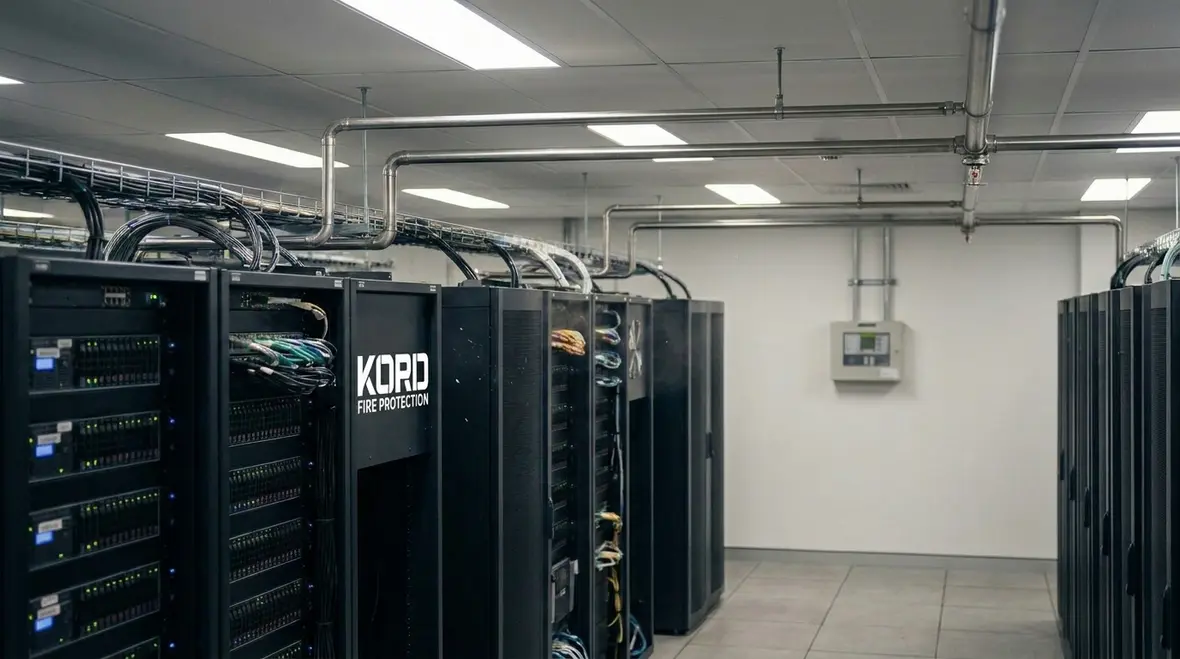
How a fire detection and discharge sequence protects uptime
A reliable system follows a sequence, and that sequence needs to be right the first time. First, detection triggers early warning. Next, the system confirms conditions based on the programmed logic, such as time delays and alarm levels. Then, it releases the agent when the risk reaches a point where action is required.
However, many failures happen before discharge. For instance, bad detector placement can miss a fast flame, and poor compartment design can allow agent to escape. So, Kord Fire Protection focuses on the entire chain: detection design, zoning logic, and discharge considerations that match how the room is built and used.
Transitioning to operations, the system also supports safe evacuation and controlled shutdown. In modern facilities, that means coordination with managed power-down, HVAC interlocks, and door control. In other words, the system does not just put out a fire. It helps the facility respond like it practiced.
Getting detection logic right before things get expensive
This is where smart planning earns its keep. Alerting too early can create needless disruption. Alerting too late can create a very memorable board meeting. Cross-zoned detection, clear alarm stages, and well-tested delays help teams react properly without turning every stray puff of dust into a full drama production.
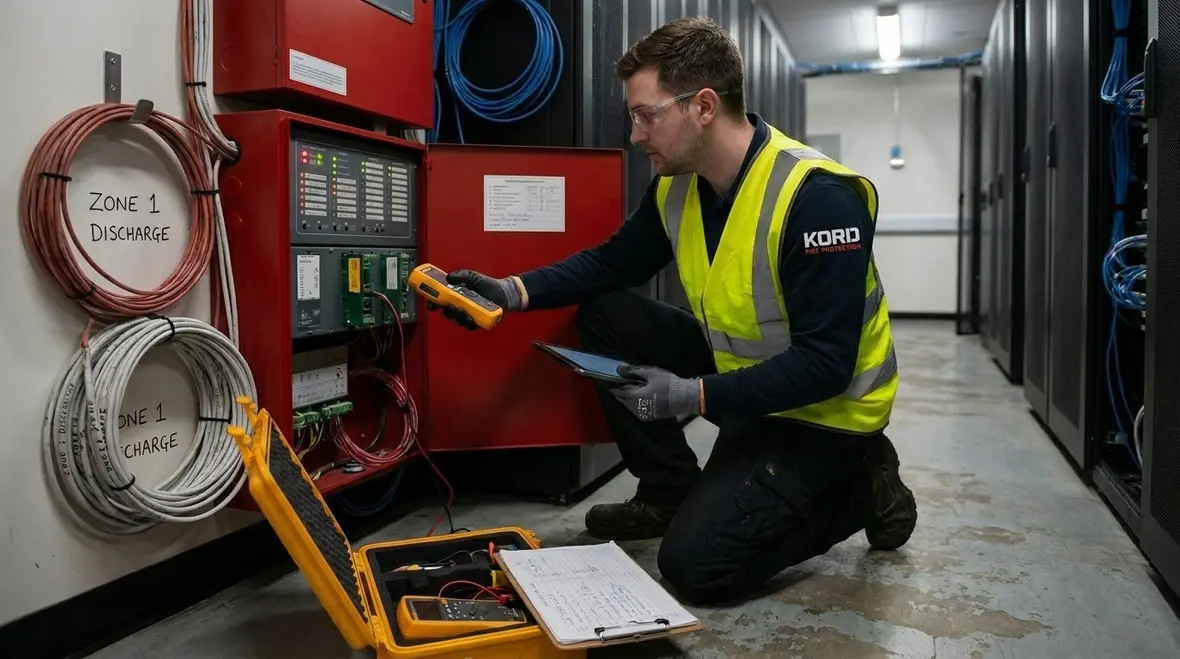
Choosing the right clean agent: not all rooms are the same
Different clean agents exist, and each has its own design considerations. Therefore, engineers must match the agent approach to the space volume, leakage characteristics, occupancy, and risk profile. They also consider how the room behaves during discharge, such as airflow paths and door status.
For data centres in Australia, common real world factors include ceiling voids, cable trays that create airflow channels, and retrofits where ducting has changed over time. Consequently, a “standard” plan can underperform if the room has evolved since the last survey.
Kord Fire Protection supports teams by verifying assumptions during site visits. They typically review hazards, room boundaries, and potential leakage points. Then, they help align the design with the practical layout. Because yes, a room that looks enclosed on paper can behave like a leaky bucket in the field. Fire suppression does not deserve guesswork, and neither does the business.
Why retrofits deserve extra suspicion
Retrofit rooms often carry years of hidden changes. Added cabling, patched penetrations, shifted airflow, and undocumented works can all affect performance. On a drawing, everything may look tidy. In the ceiling void, it may look like three contractors had three different opinions and nobody cleaned up the evidence.
Design details that matter: room integrity, leak paths, and zoning
Clean agent performance depends on maintaining conditions long enough for extinguishment. As a result, compartment integrity becomes a major factor. The system design must account for how air moves, where doors open, and how services penetrate walls.
Key elements include sealing penetrations around cables, assessing air leakage, and ensuring correct isolation of ventilation. Additionally, zoning may be needed when a facility separates racks, aisles, or equipment bays. If engineers ignore these details, the agent may not achieve the required concentration where it needs to be.
From a job perspective, these points can make or break outcomes. Kord Fire Protection approaches design verification with attention to details that often get skimmed during fast procurement cycles. For facilities, that means fewer surprises at commissioning and fewer “why did the performance test fail?” meetings that drain everyone’s time and budget.
The practical value of room integrity checks
A room integrity issue can quietly undermine an otherwise well-designed installation. Tiny leakage paths around cable entries, doors, dampers, and service penetrations can add up fast. That is why design review and field verification matter so much. A room does not care what the paperwork intended. It only responds to how it is actually built on the day the system discharges.
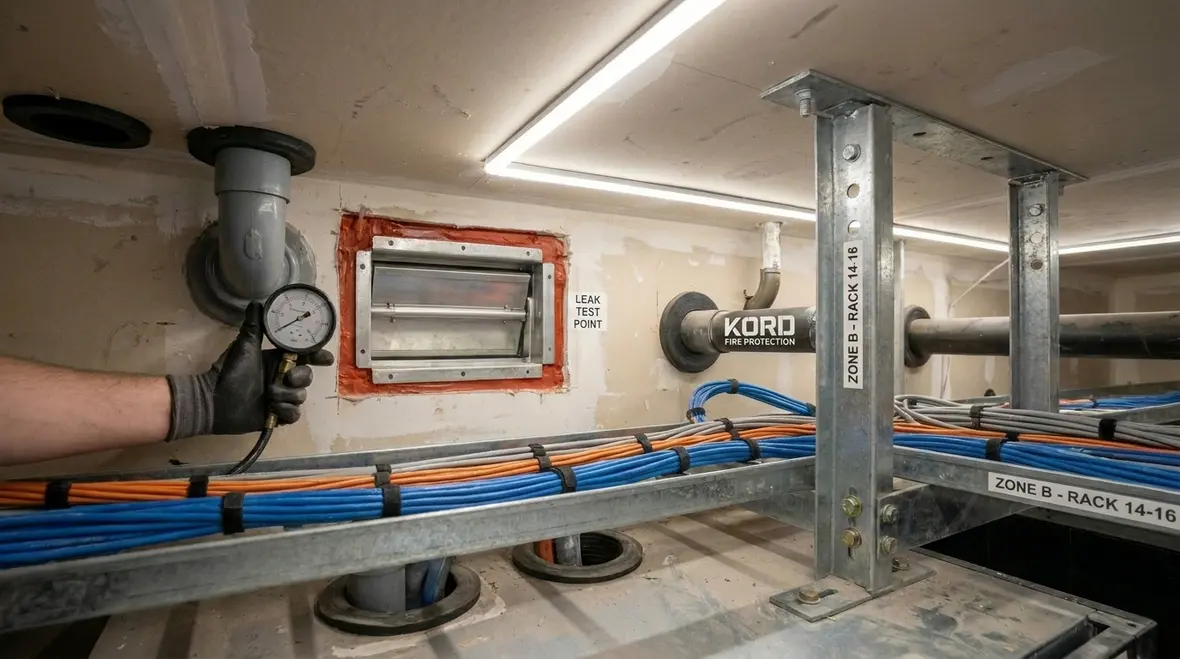
Installation and commissioning: where projects succeed or get spicy
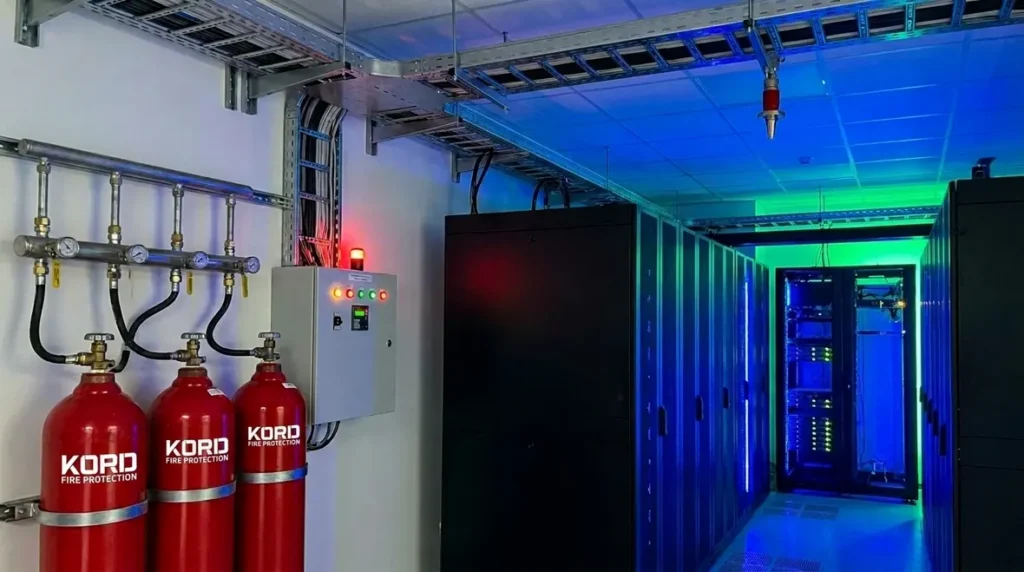
Installation quality determines whether the system behaves exactly as designed. This includes correct cylinder placement, pipework routing, nozzle orientation, and clean agent discharge paths. It also includes correct labelling, documentation, and verification of all interlocks.
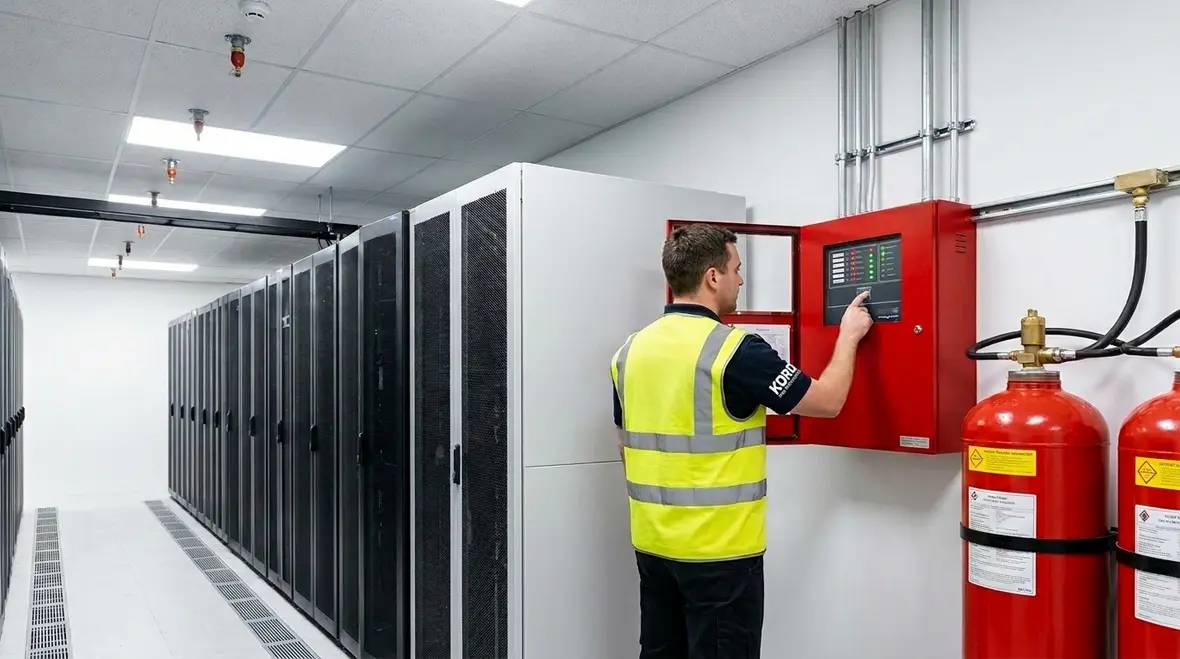
Commissioning then proves the system. Technicians confirm detector response, alarm signals, control panel logic, and the timing of release sequences. They also check that ventilation shutdown and door control operate as intended. Moreover, they verify that the room reaches the expected discharge conditions.
Here is a practical reality: some facilities rush commissioning because leadership wants “a green tick.” However, real assurance comes from proper testing, trend checks, and repeat verification. Kord Fire Protection supports this disciplined approach, so teams can move forward with confidence rather than crossing fingers like it is a sports final.
Commissioning is where paper meets reality
Drawings and specifications are important, but commissioning is where the system has to prove itself in the real world. That means checking signals, delays, shutdowns, interfaces, and sequence behavior under controlled conditions. If something is off, better to find it during testing than during an incident when everyone suddenly becomes very interested in whether the contractor was thorough.
Service and maintenance: keeping clean agent readiness year after year
A system is not a one-time purchase. Over time, rooms change, doors get modified, new cabling gets added, and maintenance work can affect settings. So, ongoing service protects the system’s effectiveness and compliance status.
Maintenance typically includes inspection of detection devices, panel checks, cylinder and valve condition reviews, and verification of alarms and interlocks. In addition, facilities should plan for periodic checks of room integrity impacts, especially after renovations or layout changes.
Kord Fire Protection becomes a vital partner by staying close to how the site runs. That means they help facilities develop practical maintenance schedules, respond to fault reports quickly, and document findings clearly. In short, they help protect the investment and reduce downtime risk.
Maintenance keeps small changes from becoming big failures
Most underperformance problems do not arrive with a marching band. They creep in through unnoticed changes, skipped checks, and assumptions that yesterday’s settings still suit today’s room. Regular service is what keeps a good system ready instead of merely installed.
FAQ
Final thoughts and call to action
Clean agent fire suppression helps data centres protect people, electronics, and uptime without the cleanup headaches of wet methods. Still, the real value shows up in design verification, correct installation, and ongoing service that matches how the site actually operates. Kord Fire Protection can act as your partner across Australia, guiding the project and keeping systems ready when it counts. If you want dependable server room protection, contact Kord Fire Protection today.