WHS Fire Suppression Requirements in Australia
Quick answer: In Australia, WHS fire suppression requirements help reduce the risk of harm, property loss, and non-compliance. Regulators expect suppression systems to match the hazards on site, be installed correctly, and then tested and maintained. Kord Fire Protection can guide sites through that whole lifecycle, end to end.
In many workplaces across Australia, the WHS fire suppression requirements sit at the center of a duty to protect people and keep operations running. That means suppression systems are not a “nice to have” for industrial, retail, and commercial facilities. Instead, they become a practical legal obligation under WHS laws and state building and fire safety frameworks. When businesses get this wrong, they can pay in more than money, because safety failures escalate fast. And yes, fire tends to follow the one rule nobody wants: it shows up uninvited, usually at the worst possible time.
If your site is reviewing broader protection responsibilities, it also helps to understand how fire suppression systems fit into day-to-day compliance, servicing, and long-term risk reduction.
How WHS compliance turns suppression into a legal duty
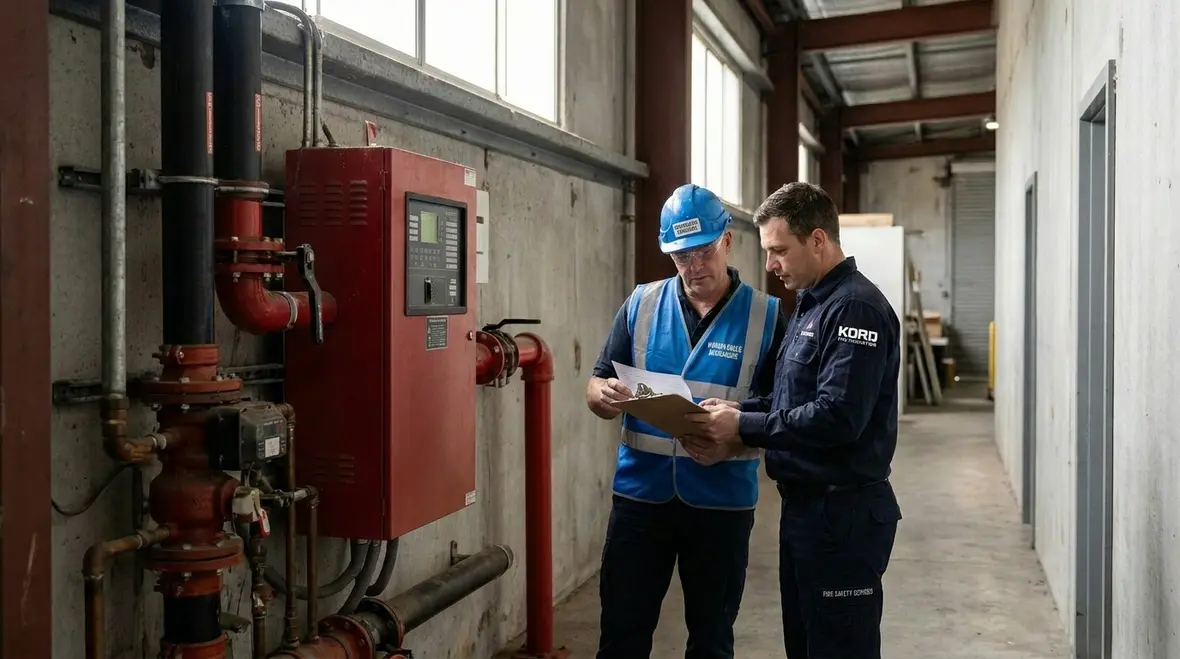
Third parties and regulators assess safety through the lens of risk. Therefore, if a facility’s hazard profile shows that fire could spread quickly, then a suppression system often becomes part of the risk controls. In practice, the WHS framework expects a site to identify hazards, implement controls, and ensure those controls stay effective.
So, how does that connect to legal compliance? Because regulators do not just ask whether a company has “a fire plan.” They expect evidence that suppression solutions were selected based on risk, designed for the specific environment, installed to the right standard, and maintained over time. Likewise, insurers often look for the same proof when assessing underwriting and claims.
And because safety records tend to disappear faster than a sponge in a cafe sink, businesses need a system that documents everything clearly and consistently. That usually means clear service histories, easy access to reports, and the ability to show what was done, when it was done, and why it mattered.
Why risk evidence matters
A policy on paper is not enough if the physical controls on site cannot support it. The real test comes when a regulator, insurer, landlord, or client asks for evidence. At that point, the conversation shifts from intention to proof. Businesses that understand this early usually have a much smoother time during audits, renewals, and contract reviews.
Where insurance and WHS expectations overlap
Insurance teams rarely use vague language. They usually want to see that suppression systems are appropriate for the site hazards and that the business can prove operational readiness. This is where WHS compliance and insurance expectations align.
For example, consider typical commercial realities:
- Industrial areas generate heat loads, dust, flammable liquids, or high energy risks.
- Retail facilities store combustible finishes, packaging, and high-density stock.
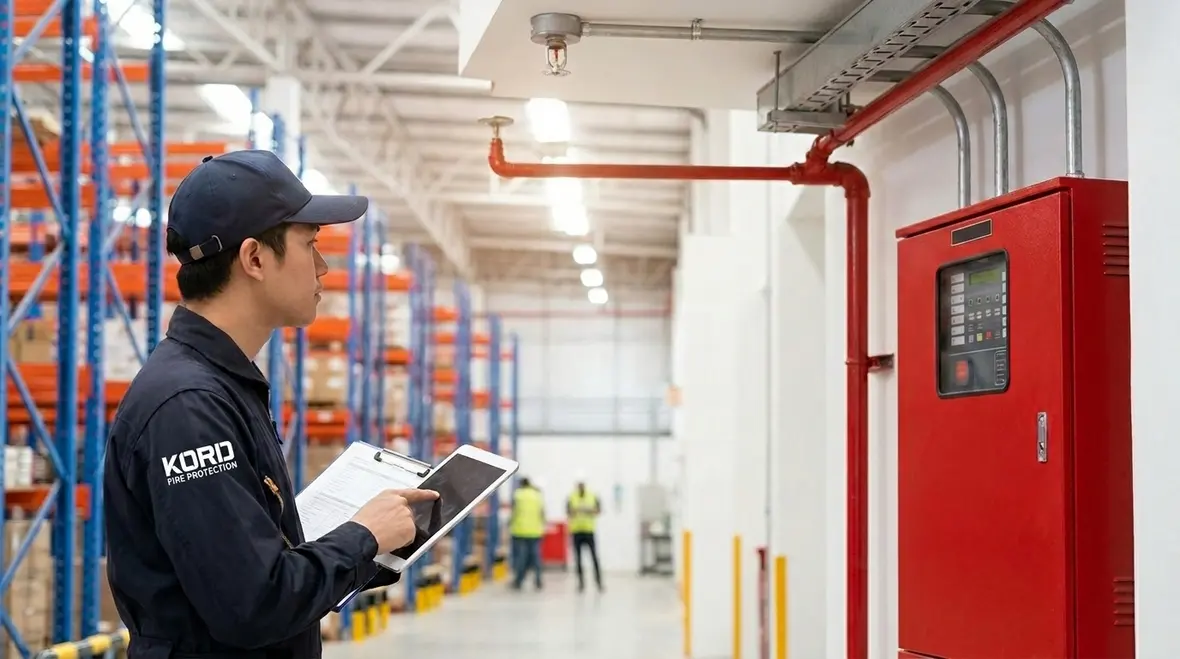
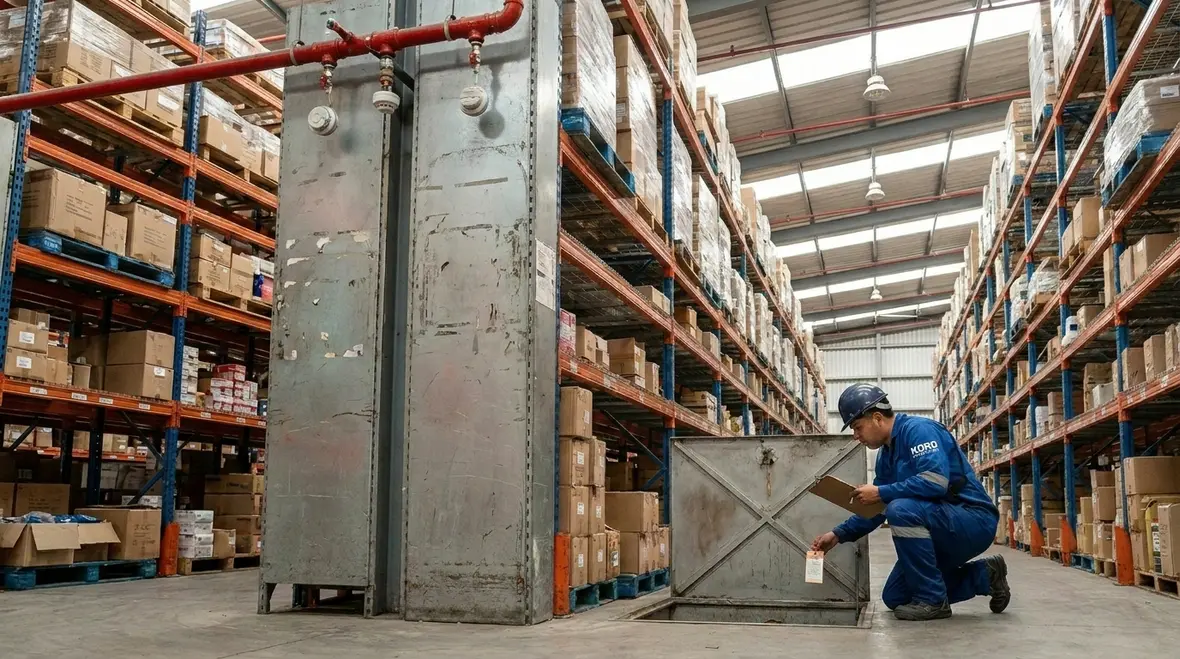
- Facilities and warehouses often include complex racking layouts where fire spread can accelerate.
As a result, insurers may require current test and maintenance reports, defect remediation records, and evidence of compliant system performance. When a company cannot provide those documents, claims can stall, coverage can narrow, or premiums can jump.
In short, suppression systems support compliance in the legal sense, and they also support financial resilience in the business sense. It is not glamorous, but neither is downtime. Businesses often discover that the cost of preparedness is far easier to manage than the cost of interruption, investigation, and avoidable repair work after a serious event.
Operational readiness is the real overlap
This overlap becomes especially obvious when a business has multiple stakeholders involved in safety decisions. WHS teams, facilities managers, contractors, insurers, and leadership may all look at the same system from different angles. Good suppression management keeps everyone aligned because the technical performance, service schedule, and documentation all point in the same direction.
Choosing the right system for the hazard and the premises
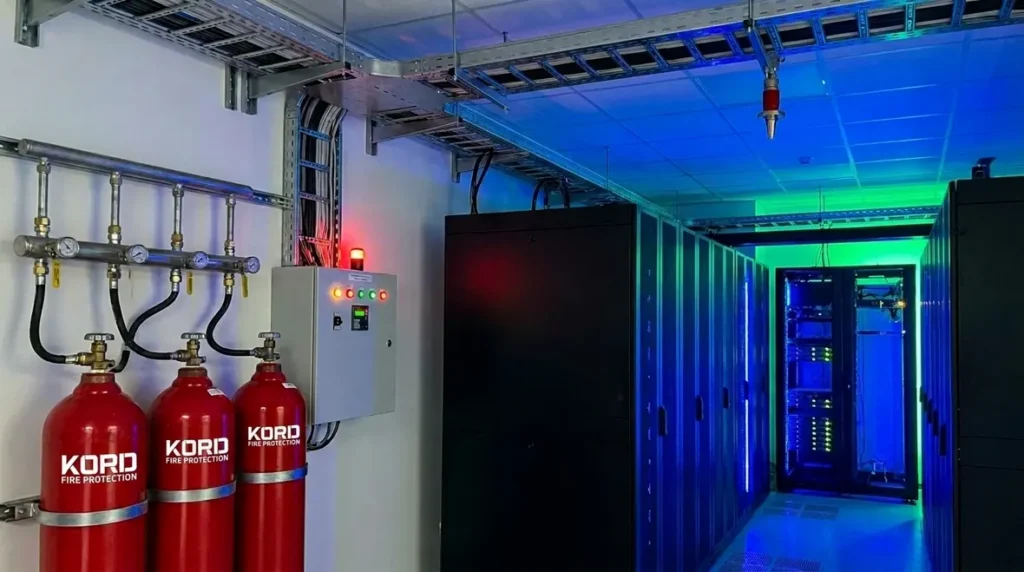
Risk-based design drives the decision. A suppression system does not work like a generic “cover all fires” solution. Instead, the system type should match the hazard, the space layout, the storage configuration, and the operating environment.
Therefore, sites should consider:
- Occupancy and use: office-adjacent areas behave differently than processing zones.
- Fuel load: product types, packaging, and stored materials change the fire behavior.
- Obstructions and airflow: ducting, mezzanines, and cable trays can affect coverage and detection.
- Water sensitivity: some assets require careful design choices to reduce damage.
- Access for maintenance: a system that cannot be serviced becomes a liability faster than a leaking ceiling after a storm.
When Kord Fire Protection supports a project, it can help the business think through selection with a practical approach that supports ongoing safety. That matters because the “best” system on paper must still perform as designed after years of real-world wear and operational change.
That practical view is important in mixed-use and evolving sites. A facility might start with one risk profile and then quietly outgrow it through tenant changes, stock increases, layout updates, or equipment expansion. The suppression system should keep pace with the operation instead of being treated like a frozen piece of history from the installation date.
Selection should support maintenance too
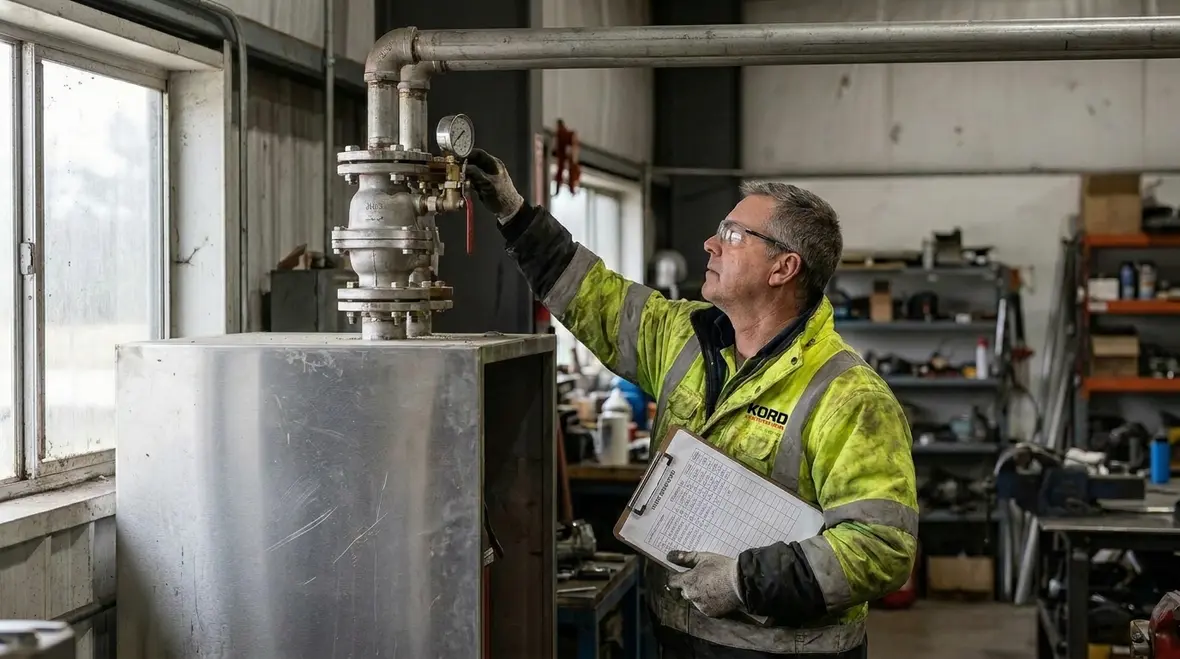
It is easy to focus on design and installation while forgetting what comes next. But if service access is poor, replacement parts are awkward to source, or the system is difficult to test without disrupting operations, those issues eventually feed back into compliance risk. A workable system is one that can actually be maintained properly over time.
Maintenance, testing, and documentation that stands up under scrutiny
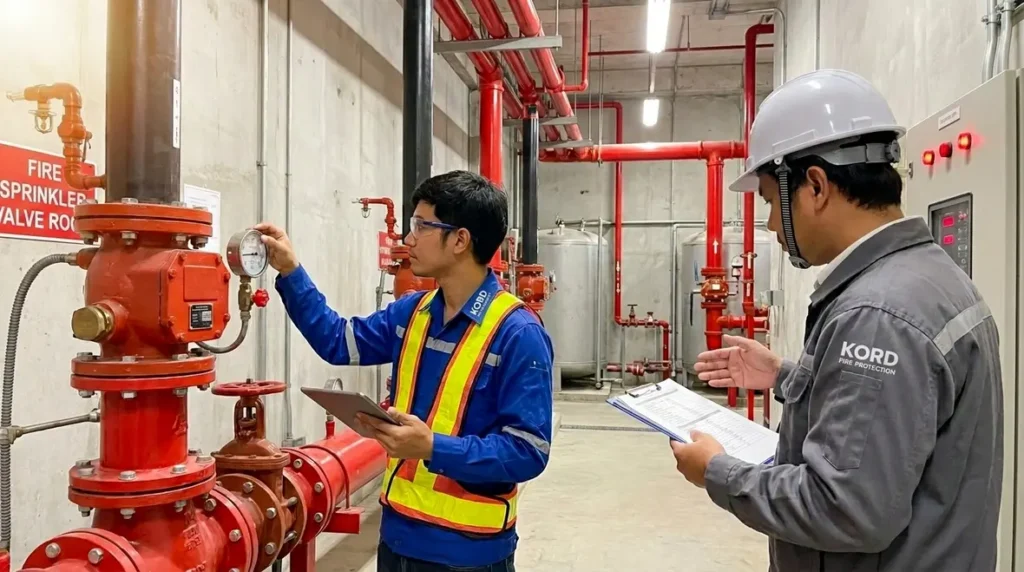
Even a correctly installed system can fail if it is not maintained. Consequently, the WHS fire suppression requirements often come alive during inspections, audits, and due diligence. Regulators and insurers look for proof that systems operate reliably, and that deficiencies do not linger like an unwanted tenant.
Effective compliance typically includes scheduled inspections, functional testing, servicing of components, and documentation that shows:
- Test dates and results are recorded
- Defects are logged and corrected
- Works completed match the issue found
- System status is communicated to the right people on site
Additionally, businesses should track changes. If a retail tenant expands storage, or an industrial process adds new combustible materials, the original risk picture can shift. Therefore, suppression performance should be reviewed to confirm it still matches the current hazard. Kord Fire Protection can help keep that lifecycle management tidy, so the company does not rely on “memory” when a record is needed tomorrow.
This is often where well-run sites separate themselves from reactive ones. Audit-ready businesses usually have a clear cadence for inspections, a process for rectifying defects, and a reliable way to file service evidence. That structure makes it easier to answer hard questions quickly and accurately when a review lands without much warning.

Common compliance gaps in commercial and industrial facilities
Most failures do not start with bad intentions. Instead, they arise from busy operations and fragmented responsibility. Here are common gaps that can undermine WHS outcomes and insurance confidence:
- Systems left unserviced: schedules slip, then catch up becomes expensive.
- Incomplete records: test reports exist, but they are missing, unclear, or not tied to the exact system.
- Delayed defect remediation: “minor” issues can grow, especially if they affect detection or control valves.
- Storage changes not communicated: stock growth changes hazard levels and coverage needs.
- Inconsistent contractor handover: new teams do not know what was installed, where, and how it was maintained.
Meanwhile, insurers and auditors usually respond to patterns, not just single incidents. So, a business should treat suppression compliance like a recurring commitment, not a once-a-year checkbox. Kord Fire Protection can become a dependable partner by providing clear advice, consistent service, and documentation that reduces uncertainty across stakeholders.
Another common issue is assuming a system remains suitable just because it still exists. In reality, premises change all the time. New machinery, denser storage, temporary partitions, shifted access paths, and changing workflows can all affect how a system performs. If those updates are not reflected in reviews and servicing conversations, compliance can drift quietly in the background.
How Kord Fire Protection helps businesses stay audit-ready
When a facility needs a suppression system that meets compliance expectations, support should not end at installation. Kord Fire Protection can work as a vital partner by helping clients manage the full responsibility chain: from understanding requirements, to coordinating appropriate servicing, to maintaining documentation that supports both WHS compliance and insurance reviews.
Additionally, Kord Fire Protection can help businesses reduce operational friction. Instead of treating maintenance like a disruption, the right service strategy schedules work around business needs, records outcomes clearly, and helps teams understand what to do next. Because the goal is simple: keep people safe, keep property protected, and keep compliance defensible.
And if this sounds like a lot, remember the alternative. Fire investigation reports do not care how busy the roster was. They care about facts.
A practical partner makes compliance easier
For many businesses, the challenge is not understanding that fire safety matters. The challenge is keeping all the moving parts under control while daily operations continue. That is why practical support matters. Clear service intervals, useful reporting, coordinated follow-up, and straightforward communication help turn compliance from a vague obligation into a manageable routine.
FAQ
Conclusion
Suppression systems carry legal weight when workplaces apply a proper risk approach under WHS frameworks and meet insurance expectations. Therefore, businesses across industrial, retail, and commercial sectors should treat installation, testing, and maintenance as one continuous job. Kord Fire Protection helps organisations stay audit-ready with practical service and clear records. If a system is due for review or service, contact Kord Fire Protection now and get a plan that protects people, assets, and business continuity.