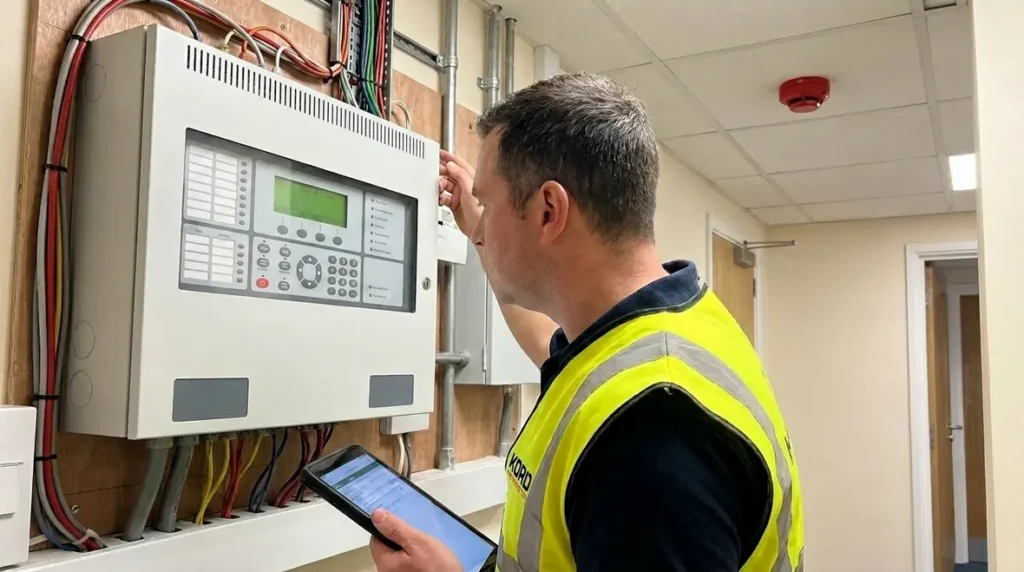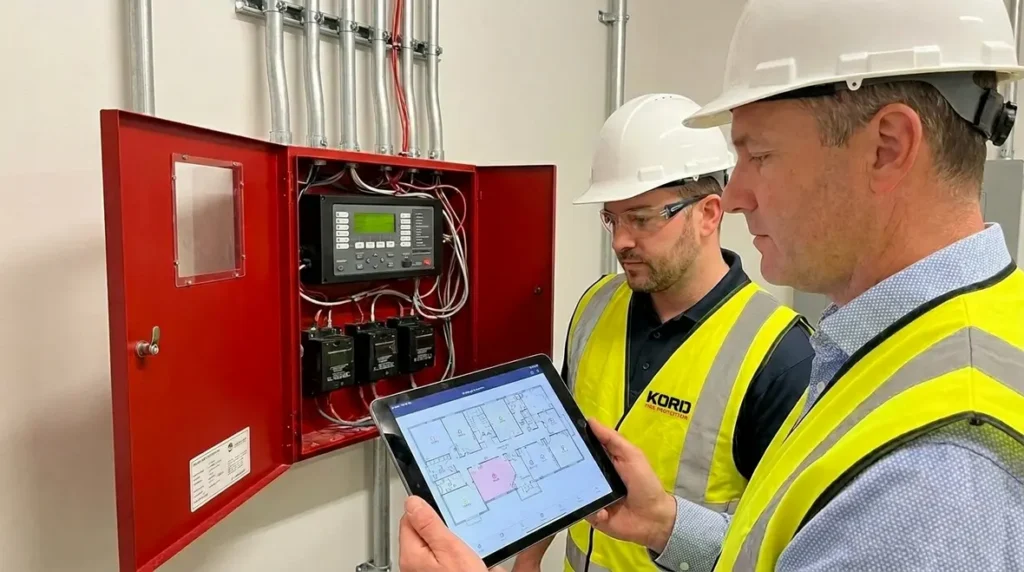
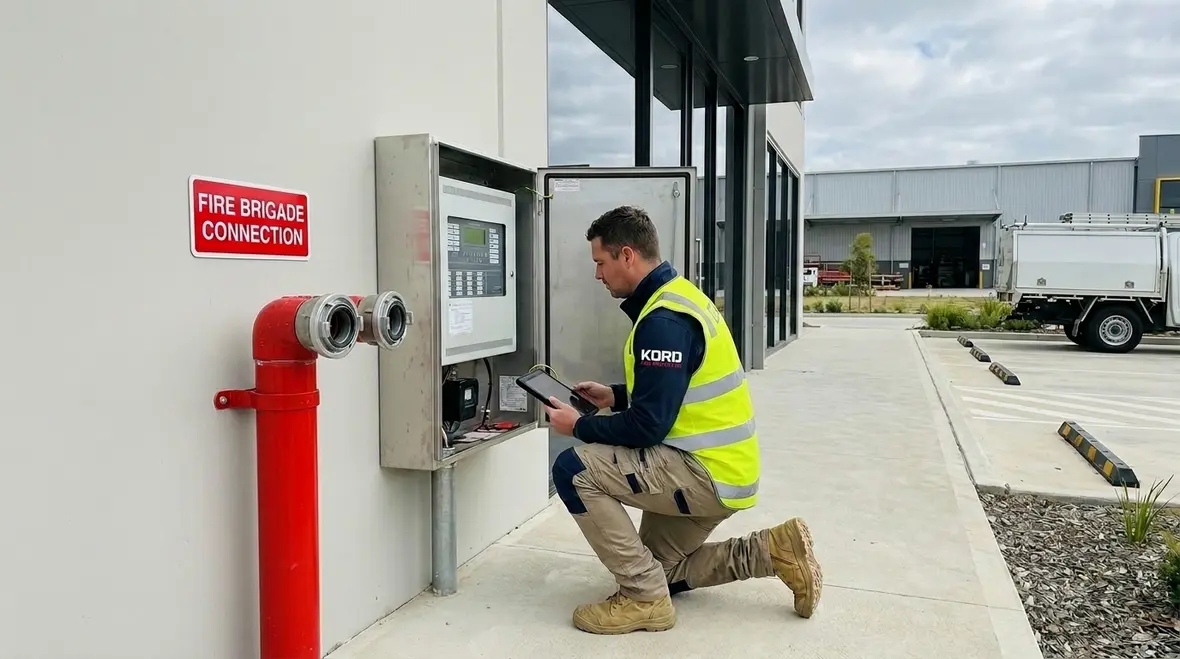
Fire Brigade Connection to Fire Alarms in Australia
Quick Answer
Fire brigade connection to fire alarms helps ensure fast emergency response when a building detects smoke or heat. Building owners should align system design, testing, and reporting with local requirements and risk levels. To keep downtime low and response reliable, Kord Fire Protection can monitor, verify, and support the full pathway from alarm to alerting.
In Australia, industrial and commercial sites cannot afford “maybe it worked” when lives and assets are on the line. That is why fire brigade monitoring matters. Kord Fire Protection supports building owners by helping ensure the alarm signal pathway is correct, supervised, and ready to act. And yes, while alarms are usually not the most thrilling thing to talk about at a facilities meeting, they are a lot like seatbelts: boring until the moment they are not.
In the sections ahead, third person guidance will walk through how the fire alarm and the fire brigade connection typically work, what owners should confirm, and where Kord Fire Protection becomes a practical partner for ongoing compliance and reliability. For a broader look at detection, notification, and site coverage, see fire alarm systems.
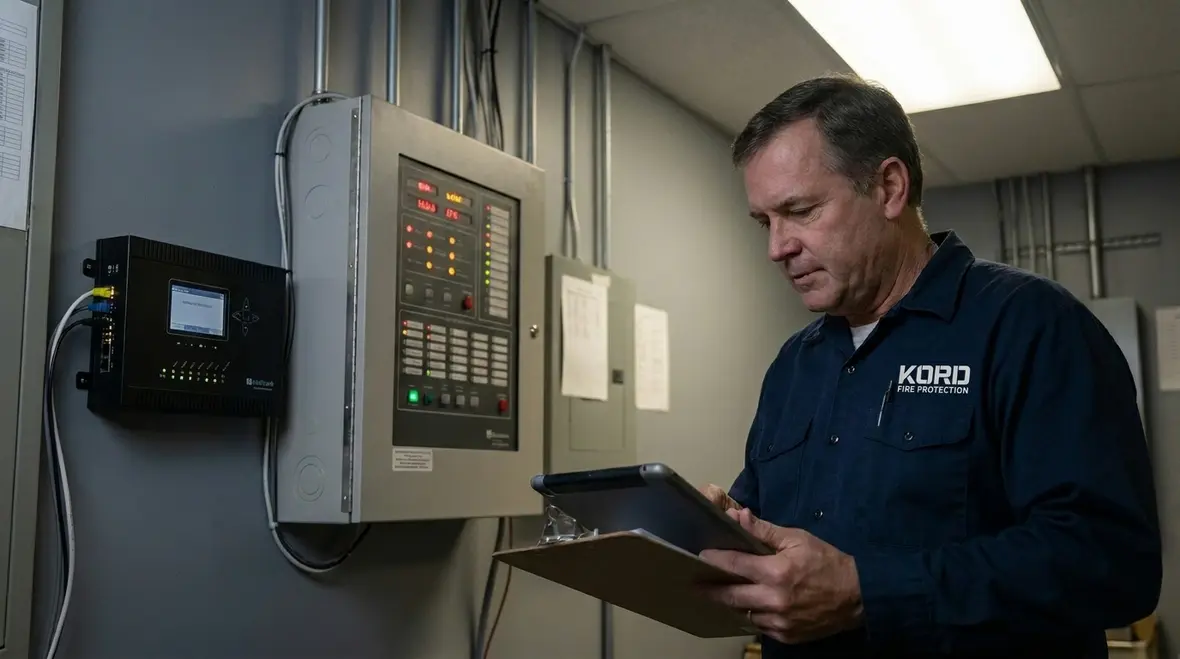
How the connection works in commercial and industrial settings
A fire alarm system usually triggers one or more actions when it detects a fire condition. First, it alerts occupants on site through sounders, strobes, and control panel indications. Next, it sends a signal to the supervising pathway. For fire brigade connection, that pathway is designed to notify the relevant response network promptly.
However, “connected” does not automatically mean “effective.” Therefore, owners should confirm the alarm panel’s capability and the monitoring method used by the service provider. For example, the monitoring solution should handle alarm transmission, fault supervision, and event logging. As a result, the system can show what happened, when it happened, and whether the connection stayed stable during the event.
On industrial sites with high-risk processes, delays caused by unclear signal routing can become costly. Additionally, complex buildings often have multiple fire zones, plant rooms, and access pathways. Consequently, the alarm-to-monitoring-to-response chain must match the site layout and the intended response plan.
Why the signal pathway matters more than people think
This is where a lot of sites discover that a neat-looking panel and a noisy sounder do not tell the whole story. The real test is whether the event gets from detection point to monitoring pathway without confusion, delay, or missing data. If a panel reports one thing, the monitoring pathway interprets another, and the site team assumes a third, that is not a system. That is a relay race where nobody remembered to pass the baton.
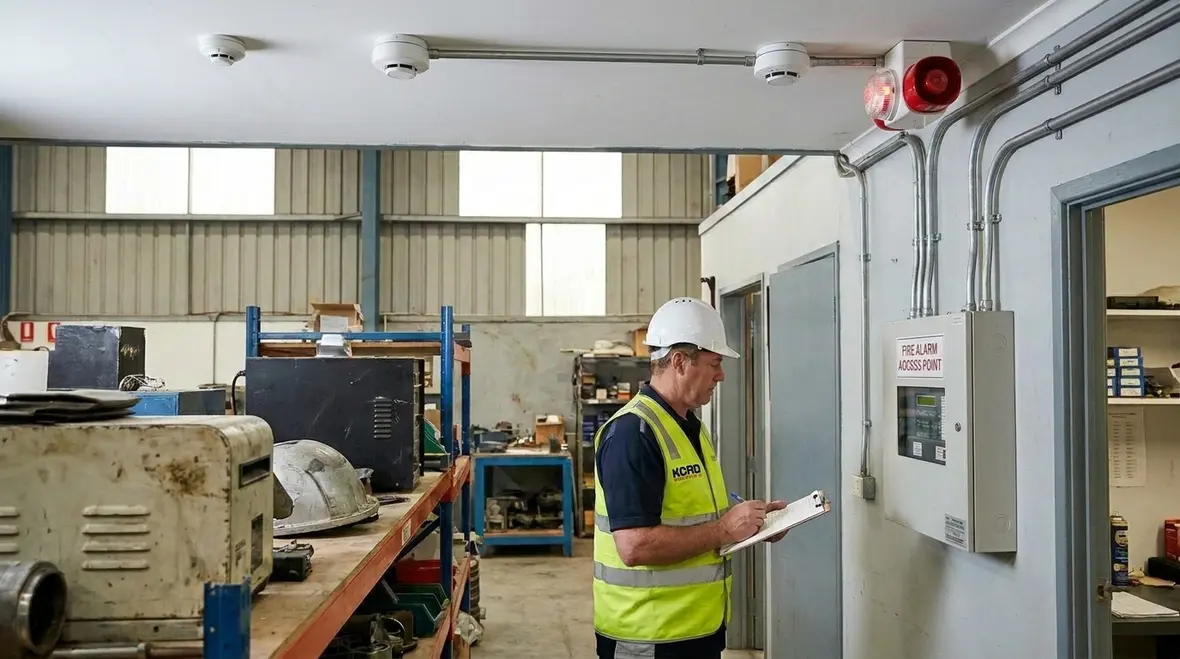
What building owners must verify before committing
Before signing off on a fire brigade connection service, owners should treat it like a critical vendor dependency, not a checkbox. They should verify documentation, performance, and how the service behaves during faults and maintenance windows.
Key items to verify include:
- Signal type and event mapping: alarms, faults, and pre-alarm states should map correctly to what the monitoring service expects
- Supervision status: the system should report loss of communication, panel faults, and other critical conditions
- Testing routine: owners need scheduled tests that reflect real operations, not “quick checks” that miss edge cases
- Response information: the monitoring service should capture the site identity and relevant location data needed for dispatch
- Documentation trail: reports should be clear enough for auditors, insurers, and internal risk reviews
Furthermore, when owners review the contract, they should look for defined responsibilities during call-outs, remedial works, and temporary impairments. If a service partner fails to outline what happens during repairs, the site can end up guessing under stress. And guessing in fire safety is like using a microwave as a safe: technically possible, practically reckless.
Questions worth asking before anyone signs anything
Owners should also ask who receives fault notifications first, what escalation timelines apply, how after-hours support works, and what evidence is provided after testing. These are not fussy details. They are the difference between a monitored pathway that quietly does its job and one that becomes everyone’s problem at 4:57 pm on a Friday.
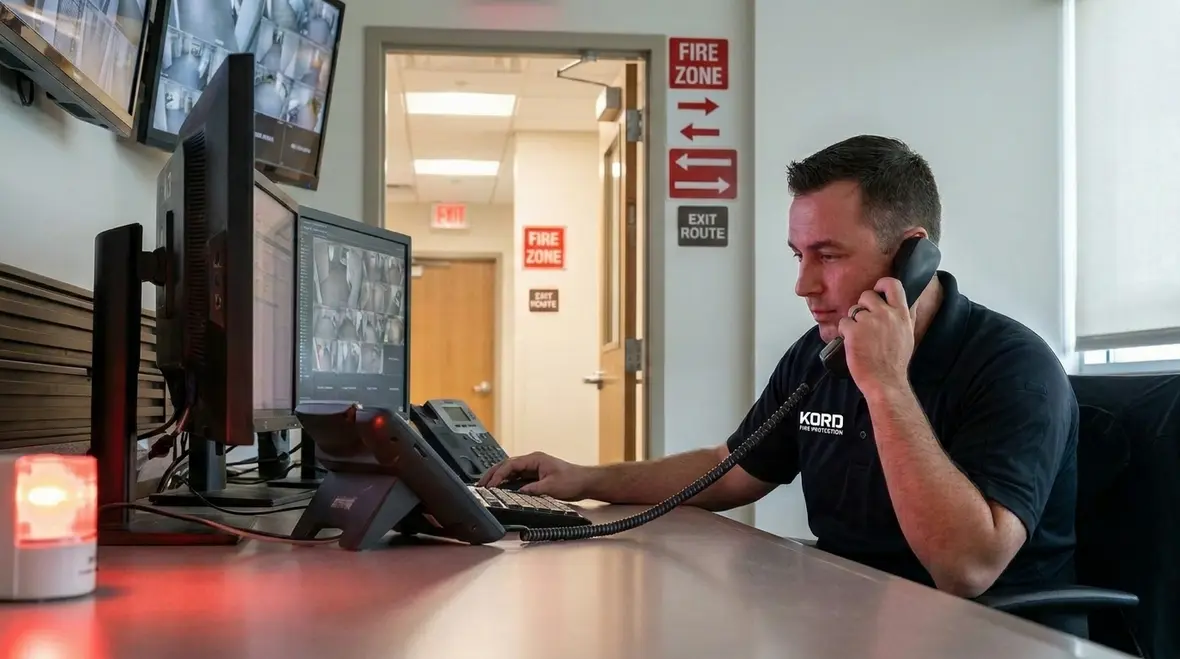
Reliability, supervision, and maintenance that actually reduce risk
Fire brigade monitoring should not rely on faith or memory. Instead, it should rely on supervised monitoring, event logs, and predictable maintenance. When a system loses supervision, the site may not know that the pathway failed until after an emergency begins.
Kord Fire Protection helps owners reduce that risk by supporting a disciplined maintenance approach. This includes verifying alarm panel performance, checking device coverage, and ensuring the monitoring pathway remains healthy. At the same time, scheduled inspection reduces the chance of nuisance issues that lead teams to ignore real alerts.
Also, industrial and retail environments often change. A new tenancy, altered ceiling spaces, additional storage, or a process upgrade can shift risk. Therefore, owners should require a change review whenever the building layout or fire strategy changes. If the system gets updated but the connection plan stays the same, signals can become less meaningful.
To keep things steady, owners should ask how fault conditions are handled. For instance, if a line fault occurs, monitoring should alert the right parties quickly, and the site should follow a documented response. Then, the team can restore reliability before a fault turns into a failure.
Maintenance that prevents the last-minute scramble
The most useful maintenance plans are not the ones that look impressive in a binder. They are the ones that create repeatable habits. Routine testing, clean reporting, supervised communications, and proper follow-up after repairs all help keep the brigade connection useful instead of theoretical. Nobody wants the safety equivalent of “it should be fine.”
Integrating the fire alarm with site response plans
Even with the best monitoring, response depends on people and procedures. Fire brigade connection works best when the alarm system ties into the site’s incident workflow. That means alarms should trigger the correct actions in the right order, and staff should understand what the control room or security team will do next.
For many commercial and facilities teams, the strongest approach combines four elements:
- Clear alarm notification: occupants receive instructions without confusion
- Defined roles: who confirms zone details, who isolates plant, and who contacts the monitoring team
- Site-specific access understanding: responders can find the right areas quickly
- Drills and feedback: teams practice, then improve based on real timing and observed issues
Because response plans evolve, owners should revisit them regularly. If changes occur, the monitoring service and the alarm system records should align with the updated fire plan. Otherwise, the fire brigade may receive accurate notification while the site’s internal steps remain outdated. That mismatch is where time gets burned, and time is the currency nobody wants to spend.
Getting humans and hardware to work as one system
An alarm can only do so much if the people around it do not know what comes next. Good site response planning makes sure the system output, monitoring process, and human actions line up cleanly. That way, the first few minutes of an incident are not spent translating confusion into action.

Common problems that owners see and how to prevent them
Owners often run into recurring issues that affect fire brigade connection performance. Some are technical, and others come from process gaps. The good news is that most problems can be prevented with structured checks.
Common issues include:
- Incorrect device or zone mapping: the monitoring event does not reflect the actual location accurately
- Unmanaged maintenance impairments: staff forget to document temporary shutdowns or bypasses
- Late escalation for faults: small faults sit too long until they become major
- Insufficient test evidence: records do not show that the system and connection performed as required
- Change management failures: renovations alter detection coverage without updated risk review
Additionally, owners sometimes assume that one annual test equals full confidence. Yet environments are dynamic. Therefore, a better approach includes ongoing supervision health checks, routine device inspections, and after-maintenance verification. Kord Fire Protection can help coordinate those steps so owners get consistent outcomes rather than last-minute scrambles.
And if that “scramble” sounds familiar, it is because every facilities team has lived the horror movie scene where the alarm works, but the paperwork does not. Kord Fire Protection aims to reduce both.
Prevention is usually less dramatic and far more effective
Most recurring issues do not begin as disasters. They start as small mismatches, skipped updates, weak records, or assumptions that somebody else has it covered. A structured review process catches those early. That is much better than discovering them during an alarm event, when adrenaline is high and patience is low.
Why Kord Fire Protection is a strong partner for ongoing compliance
Kord Fire Protection acts as a vital partner by supporting owners through the full lifecycle: design support for alignment, commissioning verification, routine maintenance, testing coordination, and monitoring health management. Instead of treating fire brigade connection as a one-off installation, the partnership focuses on performance continuity.
In practical terms, owners benefit from:
- Clear maintenance and testing scheduling that reduces disruption to operations
- Supervision and event pathway awareness so faults get handled early
- Reliable reporting that supports audits, risk reviews, and insurer discussions
- Responsive site communication during service events and verification activities
When owners choose a monitoring and service partner that understands the real-world risks across Australia, the site gains steadiness. Moreover, it helps ensure fire brigade monitoring remains an active safety tool, not a silent line item that only gets attention when something goes wrong.
FAQ
Conclusion
Fire brigade connection to fire alarms protects people and property, but only when the full pathway works consistently. Building owners should verify signal mapping, supervision health, testing evidence, and site response alignment. Kord Fire Protection helps industrial, retail, and commercial facilities across Australia stay confident, not chaotic. If a safer connection and stronger ongoing service plan is the goal, reach out to Kord Fire Protection and build a partnership that keeps your alarm system ready when it matters.