AS 1530.4 Fire Resistance Testing for Australian Compliance
Quick Answer
AS 1530.4 fire resistance testing helps confirm how building elements perform in real fire conditions. It supports smarter design, safer upgrades, and smoother approvals for industrial, retail, and commercial facilities across Australia. Kord Fire Protection can guide projects from test planning to documentation, so compliance does not feel like a full time job.
When a facility manager hears the words fire resistance testing, their mind usually jumps to red warning lights and late night contractor emails. Fair. Still, the real backbone of safe buildings starts with evidence. In Australia, AS 1530.4 fire resistance provides a structured way to test building elements under fire exposure. In the first 100 to 150 words, that is the key idea: it helps determine how long components hold up and what happens to their performance when heat and flames do their worst.
In this article, third person readers will see how testing works, why it matters for approvals, and how Kord Fire Protection can become a vital partner for the service or job. Because in the real world, a test is not just a test. It is a decision tool that protects people, operations, and budgets.
For projects that also need broader compliance support, Kord Fire Protection’s fire protection services can fit naturally alongside fire resistance planning and documentation. That means the evidence behind a rated assembly is not left sitting in isolation while the rest of the job runs off in another direction.
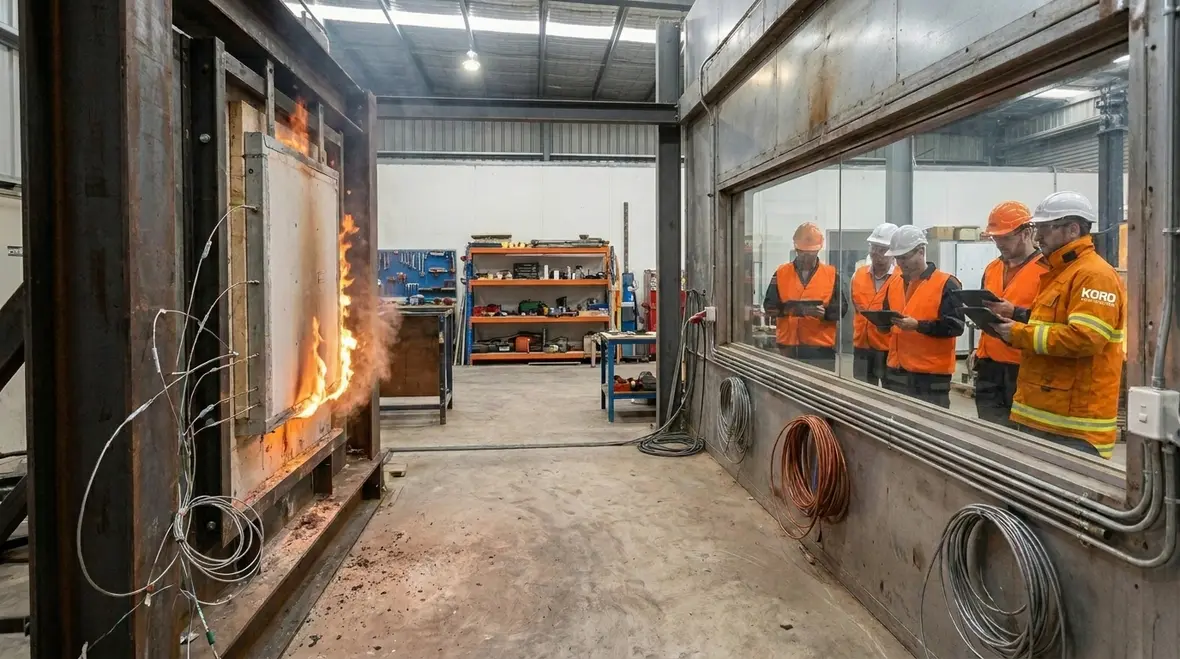
What AS 1530.4 fire resistance testing actually measures in practice
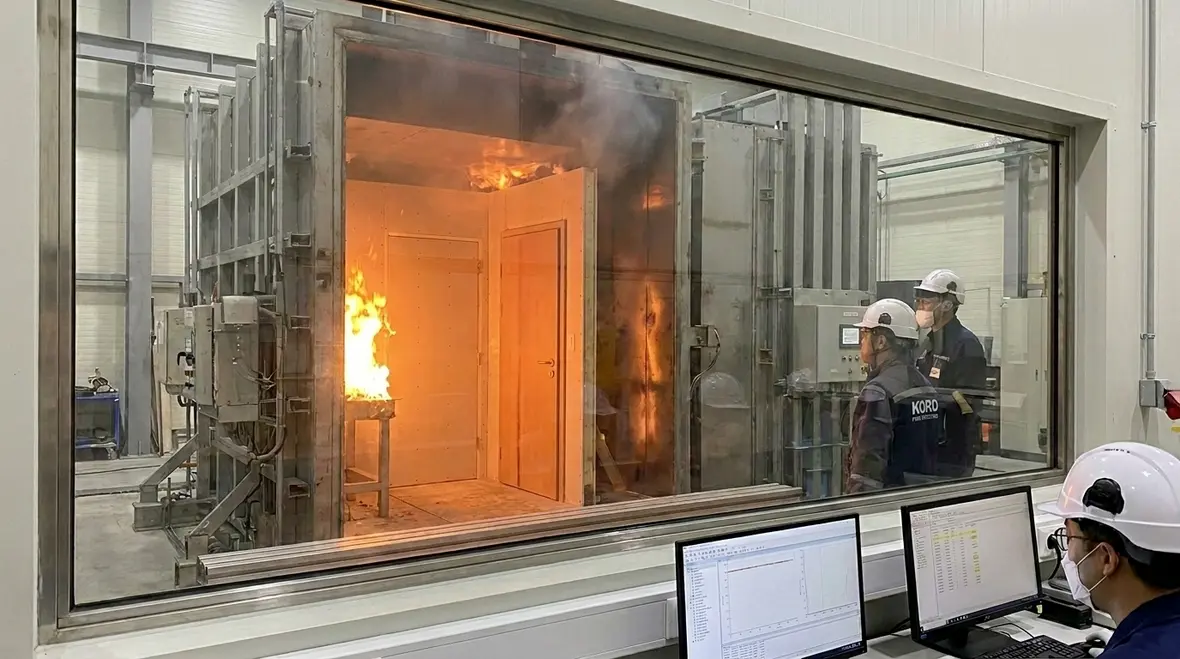
AS 1530.4 focuses on how building elements behave when exposed to a controlled fire scenario. Instead of guessing, teams measure performance factors like integrity and insulation over a defined period. Typically, the test evaluates whether the element stops flames and hot gases from passing through, and how well it limits heat transfer to the unexposed side.
More importantly, it clarifies which part of the construction system did the heavy lifting. For example, a wall assembly can look correct on drawings, yet still fail during exposure due to detailing gaps, different fixings, or mismatched materials. Therefore, AS 1530.4 fire resistance becomes a reality check for industrial and commercial assets where downtime costs real money.
And yes, fire testing can feel like paperwork in a lab coat, but the outcome is tangible. It either supports the design or forces improvements early, before the installation becomes an expensive mystery.
The two big performance checks everyone talks about
Integrity is about whether flames and hot gases stay where they are supposed to stay. Insulation is about whether the unexposed side heats up beyond acceptable limits. Put simply, one asks, “does the barrier stay closed off?” and the other asks, “does the safe side stay safe enough?” Those two ideas sound neat on paper, but on a live project they influence specifications, installation methods, maintenance planning, and even future tenant changes.
How fire resistance testing supports compliance and approvals across Australia
In most projects, approvals move faster when documentation is consistent and defensible. Fire safety requirements in Australia rely on evidence, and fire test results can underpin that evidence. Consequently, stakeholders such as certifiers, design teams, and asset owners gain a clear basis for selecting rated assemblies.
Furthermore, testing results can support decisions for upgrades, refurbishments, and tenant works where existing systems may be modified. In industrial settings, changes happen all the time: new plant, new storage configurations, new services routed through penetrations. Without a solid fire performance basis, approvals can stall while everyone plays the game of “who owns the risk.”
Kord Fire Protection supports this process by aligning fire protection strategy with project timelines and deliverables. While the lab may run the exposure, Kord helps ensure the project knows what the results mean, where they apply, and how to document them in a way that auditors and approval pathways respect.
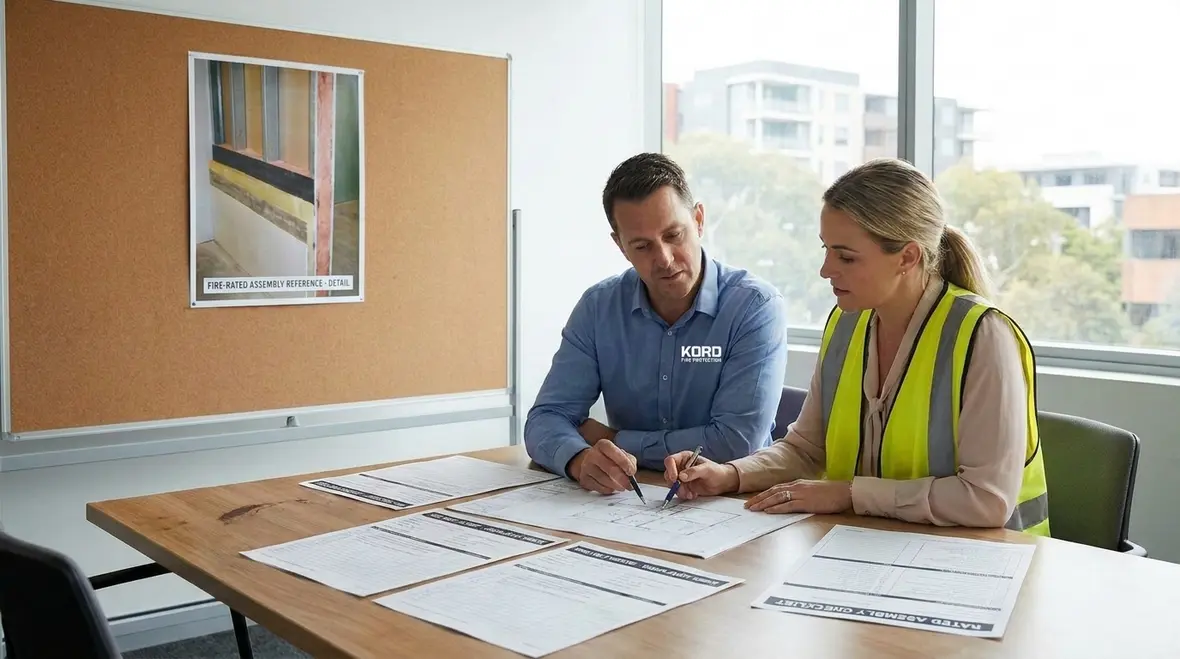
Why evidence keeps approvals from turning dramatic
Everyone likes to say they want a smooth approval pathway. Fewer people enjoy doing the boring evidence work that makes that happen. Test-backed documentation helps remove ambiguity around what assembly was assessed, how it should be installed, and where its limitations sit. That matters because vague paperwork tends to invite vague responsibility, and vague responsibility is where project delays go to stretch their legs and make themselves comfortable.
Key elements, assemblies, and common project use cases
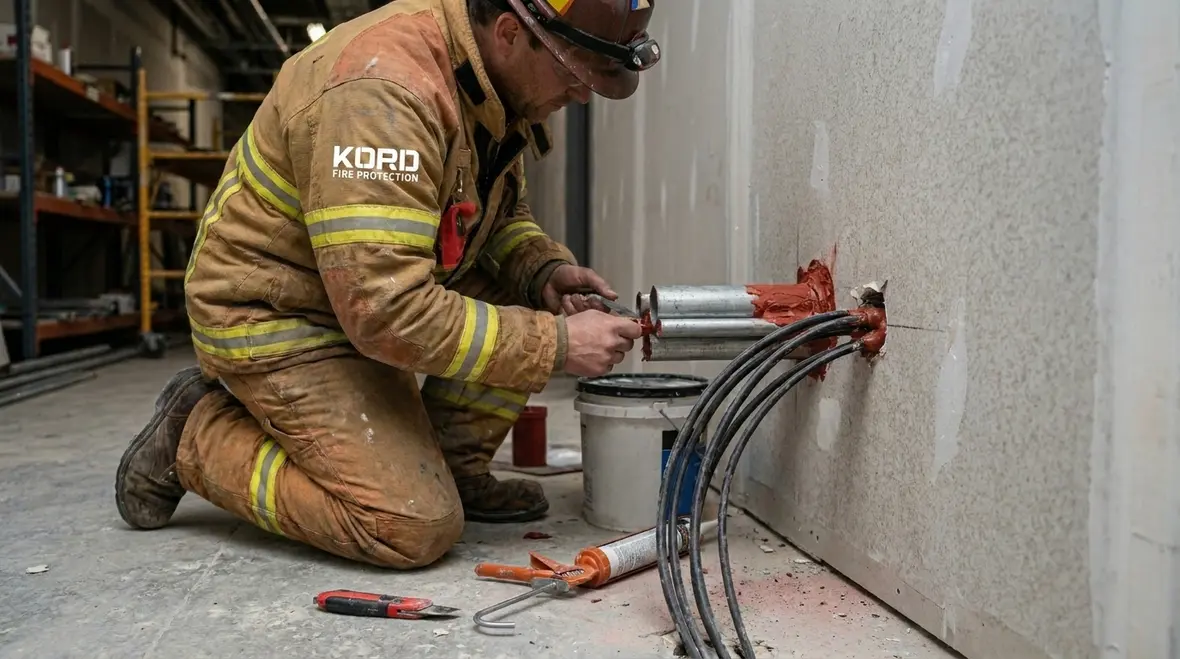
Fire resistance applies to more than just walls and doors. It also covers floors, penetrations, and the interfaces where systems meet. These interfaces often become the weak spots. For instance, cables, pipework, and ducts can create pathways if penetrations are not treated with the right sealing approach and tested performance in mind.
Common use cases include the following:
- Industrial fitouts where new partitions, service routes, or equipment enclosures require rated performance
- Retail and mixed use upgrades where compartmentation and fire door sets need to keep pace with fitout schedules
- Commercial refurbishments where smoke and fire compartment strategy must remain consistent while layouts change
- Facility maintenance and asset lifecycle work where replacements must match tested performance, not just look similar
When these projects move quickly, teams may be tempted to treat fire performance as “equivalent by eyeballing.” That approach is about as reliable as predicting the weather from a mood ring. Instead, assemblies should be selected with tested evidence behind them, including how construction details perform during exposure.
Where projects usually get caught out
Weak points usually appear at the places nobody wants to think about for too long: penetrations, junctions, service changes, and substitutions made because something else was out of stock. A rated wall is only as dependable as its openings and interfaces. A tidy drawing package does not automatically survive contact with onsite improvisation. That is why tested systems and disciplined documentation matter so much once real work starts rolling.
Dual column clarity for stakeholders: testing outcomes and next steps
This section pairs the what with the so what, so decision makers can move from test evidence to site action.
With this clarity, Kord Fire Protection can become the bridge between laboratory evidence and real world delivery. Because a test without practical guidance is like a map with no destination. It may look impressive, but it will not get anyone where they need to go.
Why choosing the right partner matters for fire resistance documentation
Fire resistance work involves more than selecting a rated product. It involves matching specifications, confirming compatibility, and managing the flow of evidence so approvals, construction, and operations stay aligned. That is where Kord Fire Protection adds value.
Kord helps projects handle the full chain of responsibilities, including review of documentation, alignment with project scope, and support that reduces rework. Meanwhile, because facilities often run across multiple states, consistency matters. Different sites should not end up with different interpretations of what the test evidence means.
In addition, Kord can help teams avoid common delays such as missing certificates, unclear assembly boundaries, and detailing that does not match what the evidence supports. When stakeholders trust documentation, conversations get calmer and decisions get faster. And if that sounds too good to be true, remember: it is still business, just with fewer fires to fight.
A good partner keeps the evidence usable
There is a big difference between possessing documents and being able to use them confidently. A strong project partner helps teams understand scope, limitations, interfaces, and the practical meaning of the tested configuration. That reduces the risk of a well intentioned substitution turning into a very expensive lesson in why details matter.
Risk reduction after the test: installation quality, interfaces, and maintenance
Testing proves performance under controlled conditions. However, real sites add variables: movement, tolerance, installer skill, and schedule pressure. Therefore, the real risk reduction starts after testing, when the assembly gets built.
To strengthen outcomes, teams should focus on the build phase and ongoing management. That includes:
- Control of penetrations so sealing systems match the evidence and installation method
- Verification of interfaces at wall to floor and wall to ceiling connections where gaps can grow over time
- Workmanship requirements so installers follow the tested approach, not just the brand label
- Handover evidence so maintenance teams know what is installed and why it matters
- Maintenance planning to manage alterations that otherwise quietly weaken performance
In facilities across Australia, change is constant. A rated assembly that gets modified without evidence can drift away from what the test supports. Kord Fire Protection helps clients keep fire safety performance grounded in documented intent, which helps protect both people and continuity of operations.
Keeping performance intact long after handover
The awkward truth is that plenty of compliant work becomes less compliant over time, not because anyone planned it that way, but because sites evolve. New services get added, old materials get replaced, and urgent changes happen on a Friday afternoon when nobody is in the mood for reading test reports. That is exactly why handover records, maintenance controls, and informed review processes are so important. They keep the assembly tied to documented intent instead of drifting into hopeful improvisation.
Conclusion
Fire safety should not rely on hope, guesswork, or a quick glance at a drawing. With AS 1530.4 fire resistance evidence at the core, Kord Fire Protection helps industrial, retail, and commercial projects turn test outcomes into practical specifications and approval friendly documentation. If a project needs safer, cleaner compliance support, it is time to partner with a team that delivers evidence and clarity. Contact Kord Fire Protection today and let the next build feel calmer than it used to.