AS 1851 Extinguisher Service Schedule Australia Timing
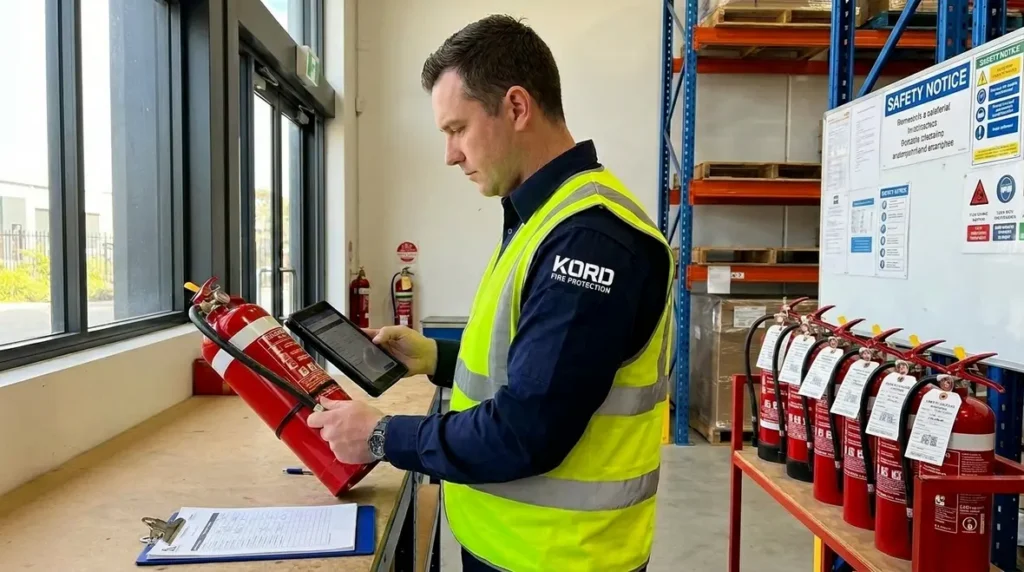
Quick answer: In Australia, the right service rhythm follows the AS 1851 extinguisher service schedule and the risk level at the site. Many extinguishers get inspected every year, with maintenance tasks at set intervals. For workplaces, this keeps inspections audit ready and reduces the chance an extinguisher fails when it’s needed most.
Picture this: an extinguisher sits quietly on a wall, waiting like a superhero in a very boring cape. Then something happens, and suddenly everyone wants it to work perfectly. That is why service timing matters, and why Australian businesses often align with the AS 1851 extinguisher service schedule early on.
In this guide, a third person explains how often extinguishers should be serviced across Australia, what the schedule tends to look like in real life, and how Kord Fire Protection can act as a vital partner for industrial, retail, commercial, and facility operators. After all, nobody wants the “we thought it was fine” conversation, especially when regulators and insurers are involved.
For teams also reviewing broader site responsibilities, it helps to keep extinguisher timing connected with the rest of a building’s fire safety routine. That way, servicing does not happen in a vacuum and site managers can line up inspections without turning the calendar into a horror movie.
What the Australian service rhythm really means
The AS 1851 extinguisher service schedule is not just a bureaucratic checkbox. It is a structured approach that links servicing to the extinguisher type, its operating environment, and the likelihood of use. For workplaces across Australia, this typically results in routine inspections, then periodic maintenance actions that go deeper than a quick glance.
Moreover, service frequency can change when conditions are harsher. For example, a unit in a coastal loading dock faces salt air and corrosion risk. Meanwhile, a unit near kitchens in retail or hospitality spaces sees heat and oil vapours. As conditions shift, so does the practical emphasis of inspections.
So, rather than thinking “once a year and done,” managers should think “inspection first, maintenance when needed, and documentation always.” That is how an extinguisher earns trust over time.
Why this matters on real sites
On paper, servicing looks simple. On an actual site, there are missing tags, blocked access, dented cylinders, sun-faded labels, relocated equipment, and the occasional extinguisher that seems to have been adopted by another tenancy. A proper service schedule helps bring order back to that chaos before an auditor or emergency does it for everyone.
How often should fire extinguishers be serviced in Australia
Most organisations plan service to match recurring inspection intervals, with maintenance and internal checks at defined points. In broad terms, the common pattern looks like this for many workplace extinguishers:
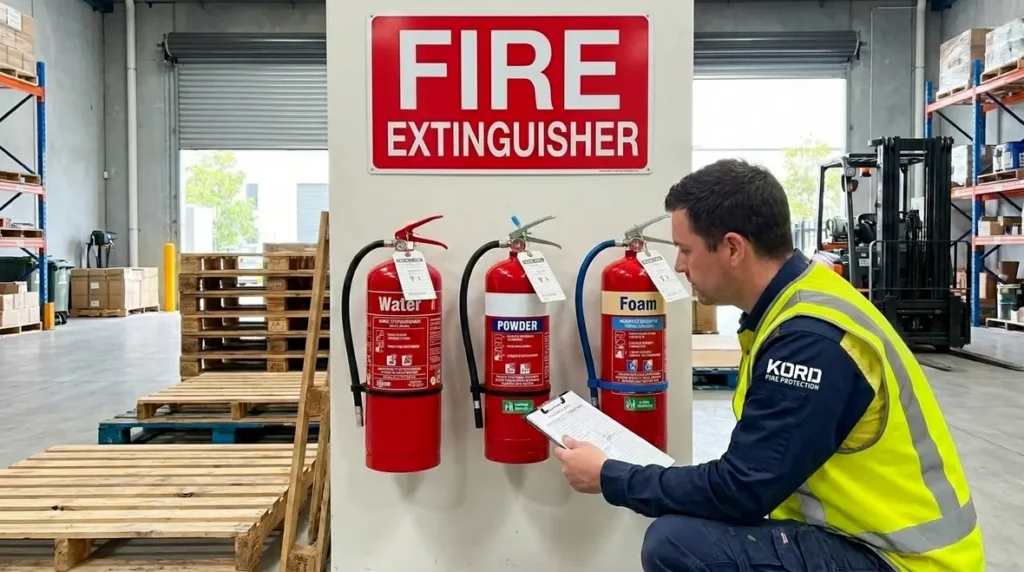
- Annual inspection for general condition, correct location, tamper seals, gauge readings, hose integrity, and evidence of damage
- More detailed maintenance at intervals that depend on the extinguisher type and risk context, such as internal checks and functional verification
- Hydraulic pressure testing or internal examination where required by the relevant extinguisher type and the applicable standards framework
However, the exact timing is best set by a competent technician after reviewing the asset register, extinguisher type, installed environment, and tagging history. That is the difference between a plan that looks good on paper and one that performs under scrutiny.
And yes, sometimes the extinguisher needs more than a sticker. Like a gym membership, the sticker is nice, but only the actual service makes it worthwhile.
This is also where site consistency pays off. If one building has an organised register, clear access zones, and sensible placement, service visits move faster and findings are easier to resolve. If another building treats extinguishers like decorative wall accessories, timing slips and little issues become expensive ones.
Businesses that want a practical starting point can review their options through fire extinguisher services and use that as a baseline for planning recurring inspections across offices, warehouses, retail sites, and mixed-use facilities.

Why location and environment change the servicing tempo
Service schedules may appear uniform, yet workplaces are anything but. Industrial sites, retail centres, offices, warehouses, and mixed-use facilities create different exposure levels. Therefore, risk drives what a facility needs to catch early.
Common factors that push service focus include:
- Corrosion risk from coastal air, chemical vapours, or high humidity
- Vibration and movement in loading zones, workshops, or near forklifts
- Temperature swings in areas like plant rooms, switch rooms, and loading bays
- Physical damage risk from traffic, racking, storage impacts, or frequent access
- Cleanliness and contamination where dust or residue can affect valves and hoses
As a result, a facility can have the same extinguisher model across the site but still need slightly different inspection attention. A technician may also recommend corrective actions like relocating units, replacing damaged brackets, or addressing blocked access pathways. These steps keep the extinguisher ready, not just “currently compliant.”
Examples that catch people out
A warehouse extinguisher mounted near a roller door may cop weather, dust, and knocks from pallets. A neatly mounted office unit might look far safer, yet it can still become inaccessible after a fit-out, boxed in by furniture, or hidden behind marketing signs that seemed like a good idea at the time. Service timing has to account for what people actually do around the equipment, not what the floor plan once promised.
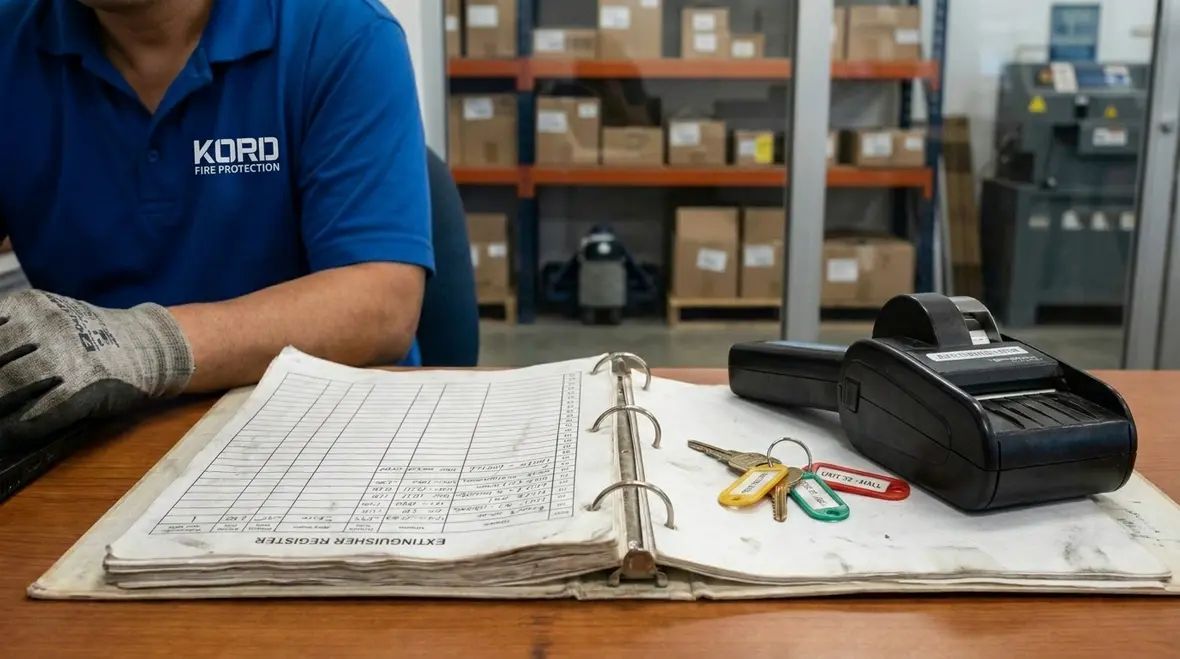
Keeping records audit-ready with clear tags and registers
In Australia, compliance does not live in memory. It lives in documentation. Fire protection records must show what exists, where it sits, when it was inspected, and what was found.
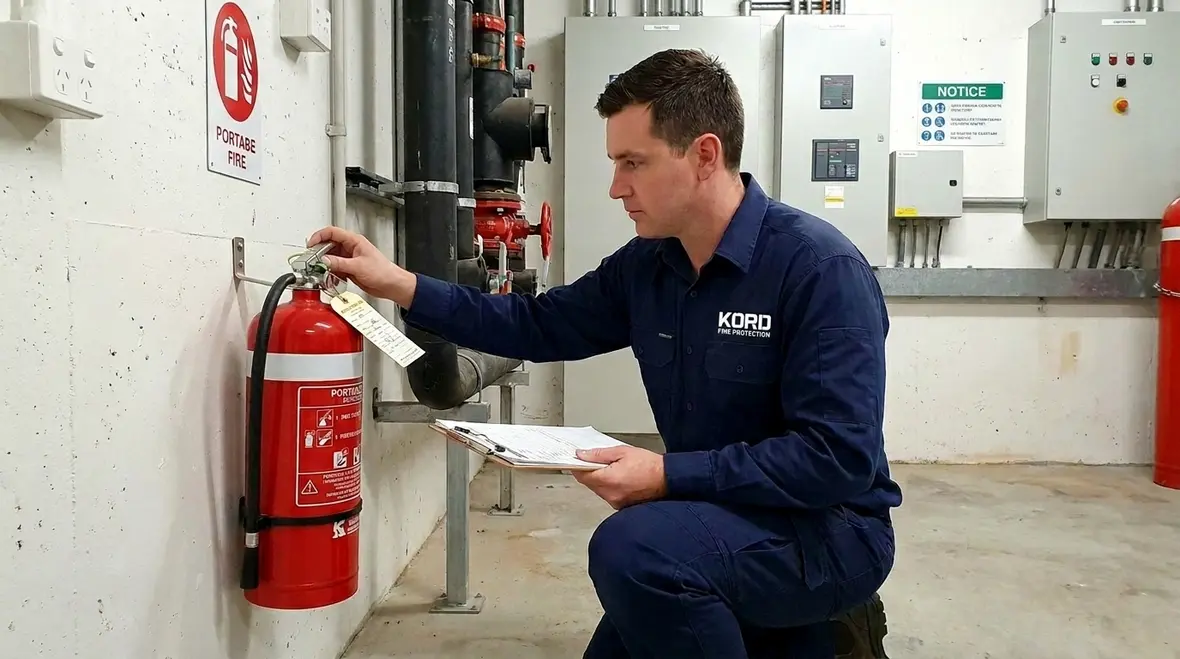
Therefore, facilities should maintain an extinguisher register that includes key details such as serial numbers, locations, extinguisher types, last service dates, and service outcomes. Then, each unit needs appropriate tagging so staff and auditors can quickly verify service history.
In addition, a good service partner will help the organisation stay organised between visits. For example, they may flag units that are approaching service due dates, identify recurring issues like recurring gauge failures, and ensure missing tags do not turn into a compliance headache later.
It is a lot like keeping invoices: nobody thinks about it until tax time. Then suddenly everyone remembers they should have been organised.
What better records actually achieve
Better records mean faster audits, clearer contractor handovers, fewer missed service dates, and less confusion when a site expands or reshuffles equipment. They also help internal teams answer simple questions quickly, such as which unit was last serviced, which area keeps producing defects, and whether a replacement was actually installed or merely discussed in a meeting that should have been an email.
How Kord Fire Protection can support your extinguisher program
Some companies treat extinguisher service like an annual chore. Yet mature operators treat it like a safety system. That is where Kord Fire Protection becomes a vital partner. They support businesses that need reliable service across Australia, including industrial, retail, commercial, and facility environments with multiple asset types and spread-out sites.
Specifically, a strong service relationship usually delivers:
- Scheduled servicing aligned to the AS 1851 extinguisher service schedule framework and the actual conditions on site
- Asset register support so staff can find units, verify locations, and track service history
- Consistent tagging that helps internal teams and external auditors confirm readiness
- Practical recommendations that improve access, reduce damage risk, and prevent repeated failures
- Reliable reporting that keeps compliance clean and reduces admin burden
Moreover, when organisations plan service through a specialist, they reduce downtime risk and avoid rushed “last minute” inspections. In workplaces, time matters. Shutting down a floor, delaying deliveries, or juggling access windows costs money. A partner like Kord Fire Protection helps coordinate work so it fits real operations.
In short, they help businesses do more than service extinguishers. They help businesses manage confidence.
That confidence matters even more for operators managing multiple tenancies, busy warehousing, changing layouts, or seasonal staffing. A dependable servicing partner adds consistency to a part of site safety that is easy to ignore right up until everyone wishes it had been handled properly months earlier.

FAQ: Australian extinguisher service timing and expectations
Final call: build a dependable extinguisher program
Fire extinguishers should not be treated like occasional housekeeping. They need steady inspection, timely maintenance, and documentation that stands up to audits. When a business works with Kord Fire Protection, it gains a partner that helps coordinate servicing across facilities, keep registers accurate, and improve readiness on the ground. If an extinguisher program feels stretched, now is the time to tighten it up. Contact Kord Fire Protection for a servicing plan that fits real operations.