AS 2419 Fire Pump Compliance for Multi Storey Buildings
Quick Answer
AS 2419 sets clear expectations for fire pump systems in multi storey buildings, including performance targets, pump design, power supply, controls, testing, and maintenance. It helps keep water delivery reliable when people and property need it most. Kord Fire Protection can help businesses meet these requirements with practical, job-ready expertise.
In multi storey commercial sites, fire pumps must do more than “work when they feel like it.” That is exactly why AS 2419 matters. Early on, it establishes the rules that govern how fire pumps should perform, how they should be arranged, and how they should be monitored and tested. As a result, teams across industrial, retail, and facilities management can reduce risk without guessing. Still, the standard alone does not install a pump, wire a controller, or prove the system under real test conditions. Therefore, the real value comes from applying AS 2419 with method and discipline, and that is where our company, Kord Fire Protection, becomes a vital partner with this service and job.
For sites that need practical support beyond paperwork, Kord Fire Protection also delivers fire protection services across Australia, helping businesses connect compliance goals with real on-site outcomes.
What AS 2419 demands for multi storey fire pump performance
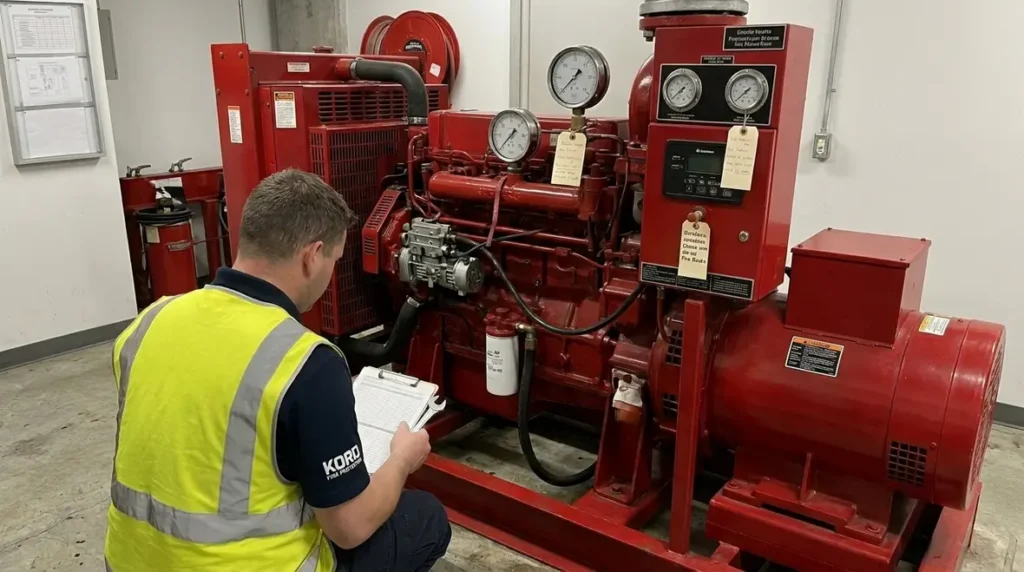
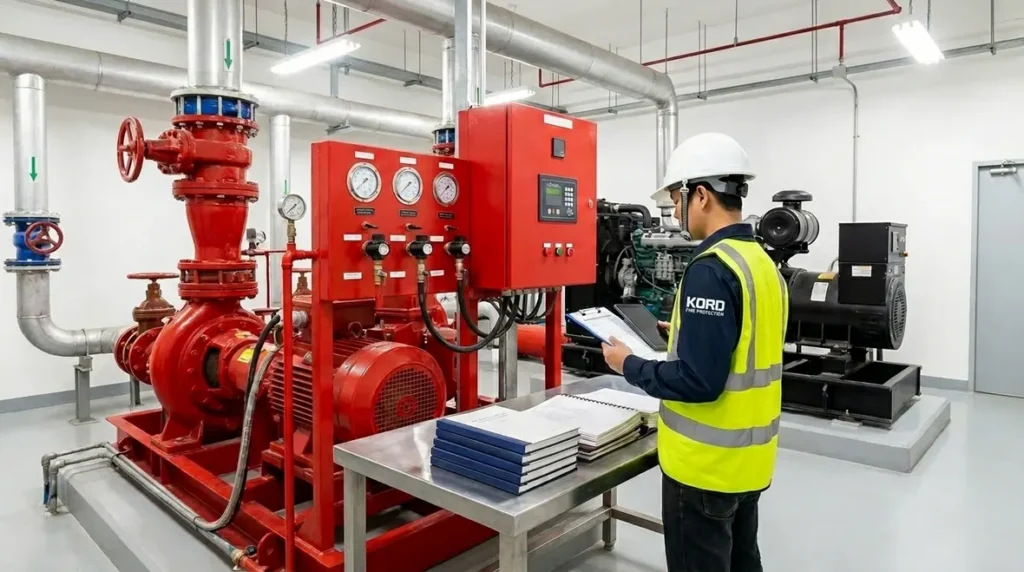
Fire pump requirements in multi storey buildings need steady pressure and dependable flow, not “mostly right” performance. Accordingly, AS 2419 drives a design and acceptance mindset that links hydraulic demand to real equipment capability. First, the pump must meet the required duty point, which is shaped by the building’s sprinkler or hydrant system demand profile. Then, the system must maintain pressure without falling into the danger zone where water delivery drops just when it counts.
In addition, multi storey layouts often involve complex pipe runs, varying elevations, and different zones. Consequently, pump selection, pipe sizing, and control logic must work together. If one element is treated like an afterthought, the rest has to compensate. And then, of course, the system meets the standard on paper but drifts out of compliance when tested during a real-world scenario. That is the kind of surprise nobody wants, unless they’re a magician, and even then they usually charge extra.
Performance starts with matching hydraulic demand to pump capability
That match sounds obvious, but multi storey buildings are very good at making obvious things difficult. Water has to travel vertically, hold useful pressure at the right outlets, and do it consistently under emergency demand. If the pump is undersized, pressure falls away. If the controller logic or sensing arrangement is weak, the system might not respond the way the design intended. AS 2419 pushes teams to look at the whole chain, not just the shiny equipment nameplate.
How pump configuration and redundancy reduce failure risk
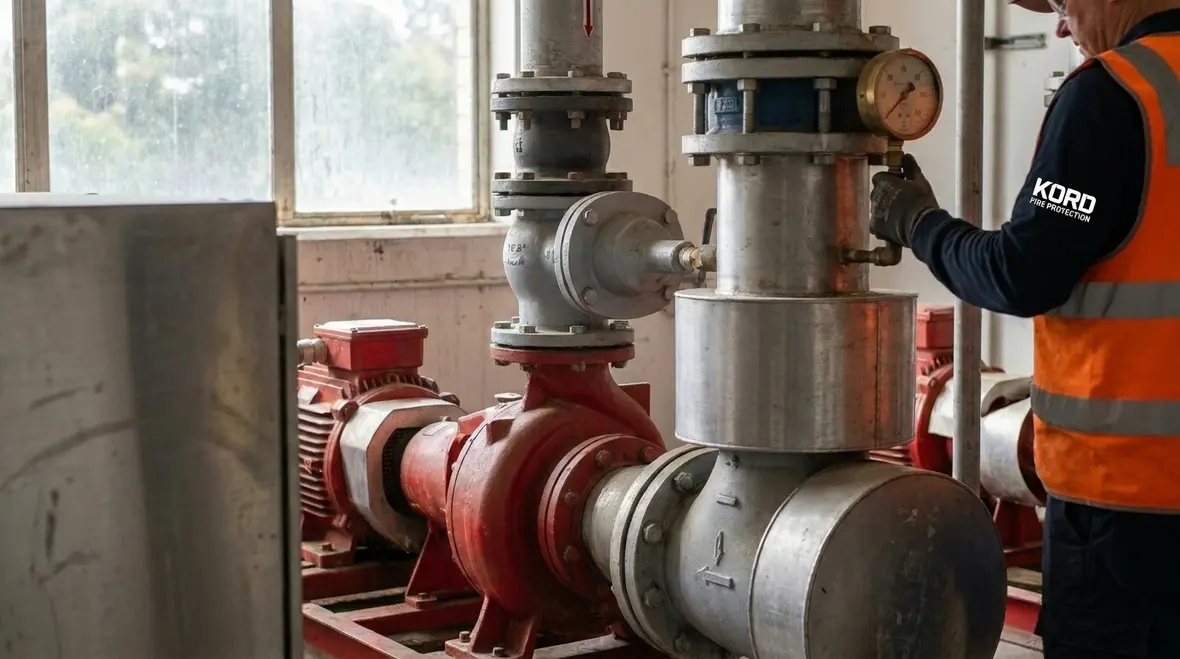
Where commercial and facilities teams manage multiple floors, they need a fire pump arrangement that can handle abnormal conditions. AS 2419 supports redundancy thinking, so the system does not rely on a single weak link. For example, equipment selection and arrangement often include measures that support reliability and resilience, such as duplicate components or design approaches that keep the system within safe operating limits during faults.
Furthermore, pump configuration affects more than hardware. It influences how quickly the system responds and how consistently it performs across starting conditions. If a pump controller logic is not aligned with the intended operation, the system may delay or mismanage changeover. Meanwhile, a real commissioning process verifies that controls trigger correctly, that starting sequences behave as designed, and that alarms and status signals land where the operators actually look.
In short, AS 2419 aims to prevent “works in theory” installations. And since most people have enough trouble understanding a lift panel without adding fire pump complexity, it helps to bring in a partner who handles the details every day.
Redundancy protects the job when one weak link tries to ruin the day
A reliable arrangement is about response under stress, not optimism during design meetings. In real buildings, faults happen, power conditions fluctuate, and components age in ways that are rarely polite. A well-planned fire pump setup reduces the chance that one issue cascades into a system-wide problem. That is especially important in commercial environments where occupancy, asset value, and operational continuity all raise the stakes.
Controllers, power supply, and monitoring that facilities teams trust
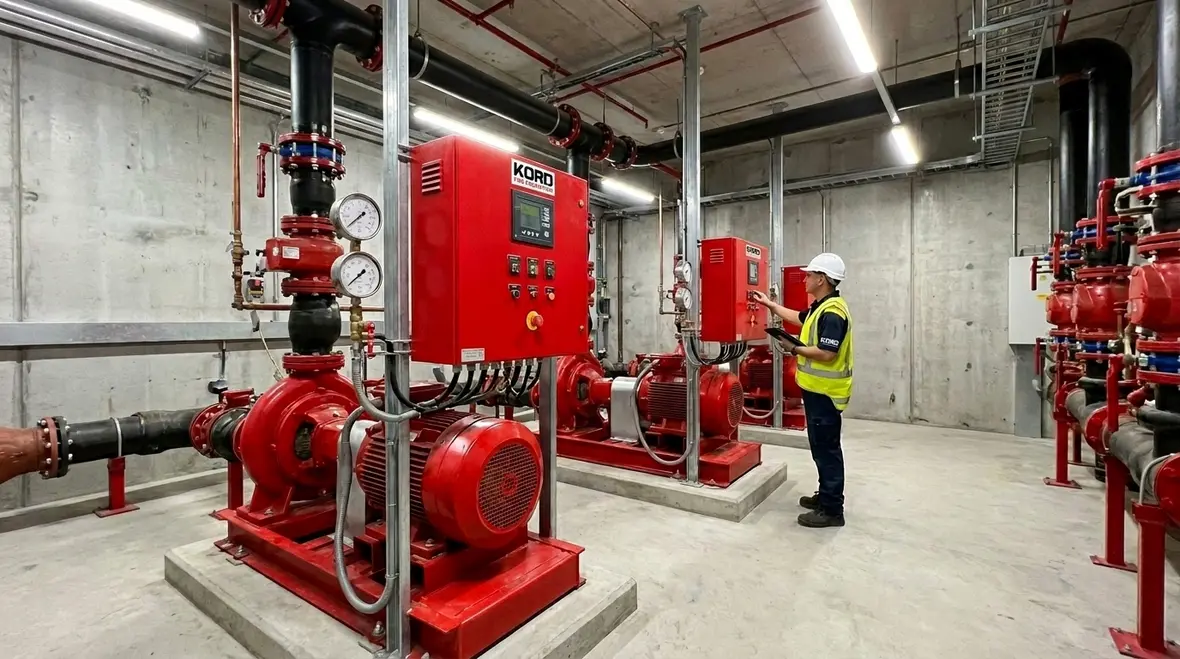
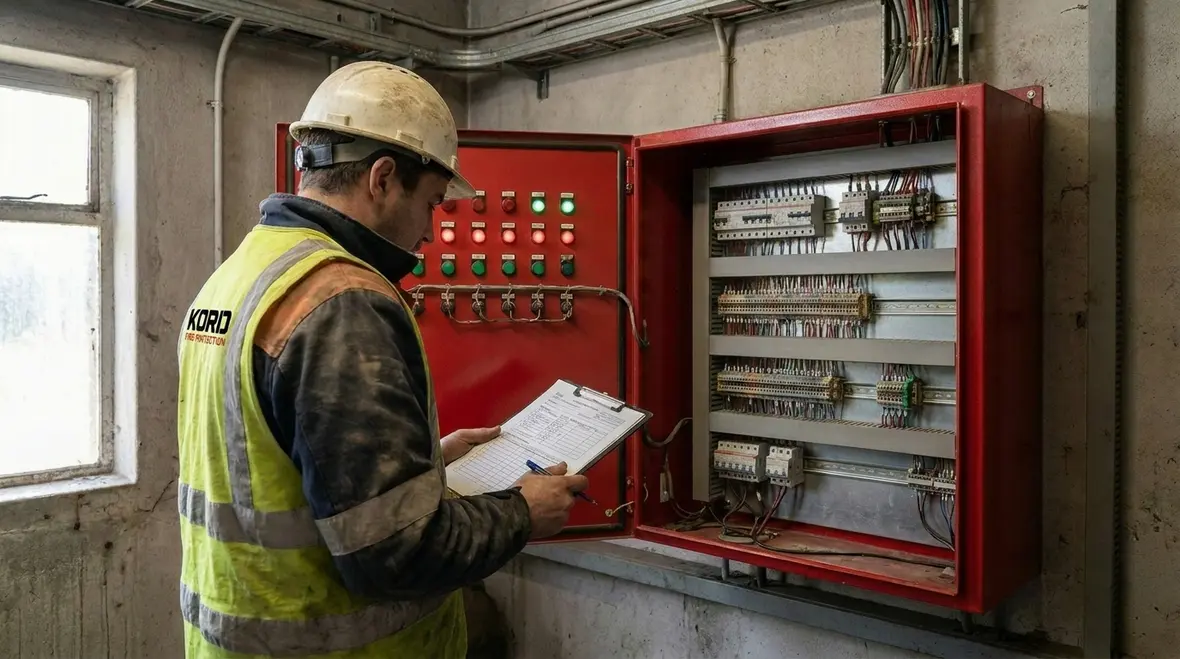
Fire pumps live or die by how they start and how they remain stable during an emergency. Therefore, AS 2419 highlights the need for reliable power supply arrangements, proper control system design, and clear monitoring. For multi storey assets, the controller must respond correctly to automatic signals, manual overrides, and feedback from the fire system.
At this stage, the difference between a checklist and a safe installation becomes clear. Transitioning from design to commissioning often reveals issues like incorrect input mapping, sensor placement that does not represent the required operating conditions, or wiring paths that are vulnerable to noise or faults. Additionally, monitoring outputs must align with the site’s operational reality. If alarms go to the wrong panel, or status indicators confuse duty staff, then compliance becomes performative instead of functional.
This is where Kord Fire Protection steps in with practical support. We help align controller operation, power logic, and alarm pathways with the intended duty, so facilities teams can trust the system when it matters.
Why monitoring only matters if the right people can actually use it
Monitoring should help operators act, not stare at a panel wondering whether a fault is serious or just having a dramatic moment. Signals need to be meaningful, alarm routes need to make sense, and duty staff need confidence that what they are seeing reflects reality. When those pieces are aligned, the system becomes manageable instead of mysterious. That practical usability is a major part of what separates compliance that looks good in a folder from compliance that holds up on site.
Commissioning, testing, and evidence that the system meets AS 2419
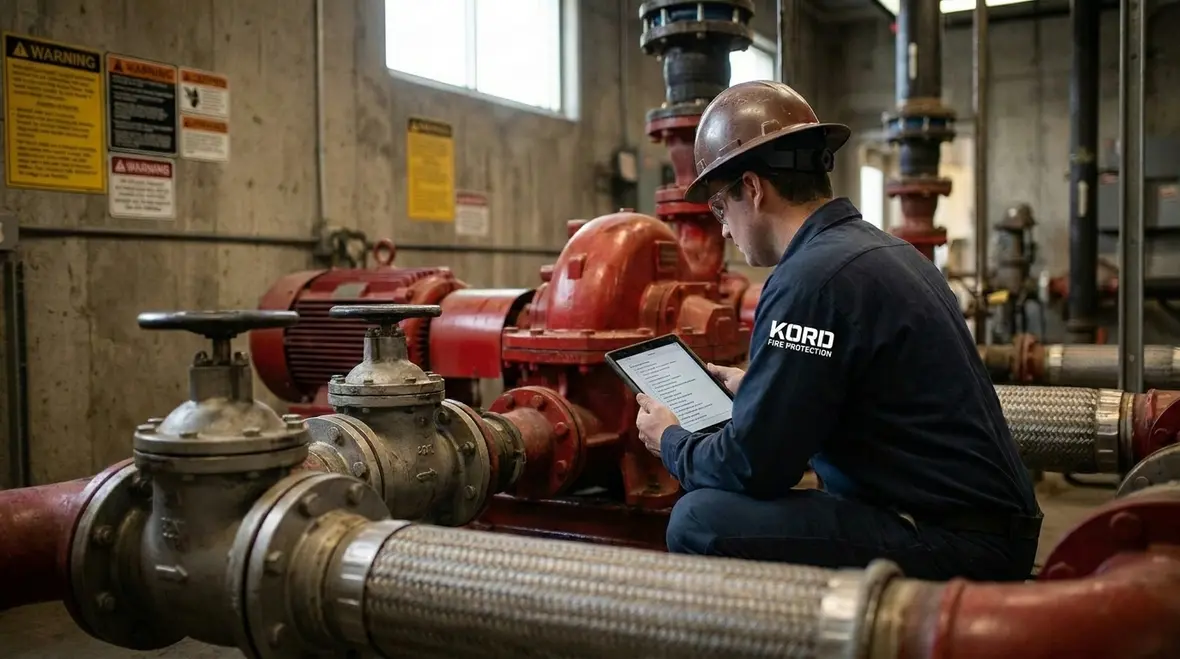
Inspection and testing should not feel like a surprise visit from a strict teacher at the end of term. Yet many organisations only scramble when a test date arrives. To avoid that, commissioning must follow a structured approach that verifies actual performance against the requirements. AS 2419 expectations mean the system must demonstrate behavior under controlled test conditions that reflect real demand.
Typically, teams focus on verifying correct pump start sequences, pressure and flow characteristics, controller response, and performance stability. Also, the testing process should capture evidence that is easy to understand later. That includes clear records of what was tested, results, and any tuning actions taken to bring the system into compliance.
Moreover, the value extends beyond passing an assessment. Good test evidence helps operators plan maintenance, detect drift early, and justify upgrades when the building changes. For example, modifications to pipework, additional tenancies, or revised fire hydraulics can shift demand. When that happens, the pump performance must be reviewed. Otherwise, the system quietly slides away from the duty point it was meant to cover.
And yes, if the record keeping looks like a ransom note written on thermal paper, it will cost more later. Kord Fire Protection keeps the documentation clean, usable, and job-ready.
Evidence matters because future maintenance depends on today’s records
When documentation is complete, legible, and tied to actual testing outcomes, the next service visit becomes smarter. Teams can compare results, spot performance drift, and decide whether a change is minor tuning or a sign of deeper trouble. That gives facility managers a better basis for budgeting, planning shutdown windows, and answering audit questions without digging through paperwork that looks like it survived a flood.
Maintenance planning for commercial sites across Australia
Fire pump compliance does not stop after installation. In facilities, systems age. Components wear, sensors drift, and power conditions change. Therefore, maintenance planning matters as much as the original design. AS 2419 supports a structured approach to ongoing checks, ensuring the pump system continues to perform as intended over time.
Consequently, a strong maintenance program balances prevention and verification. It includes routine inspections, functional checks, and periodic testing that confirms both mechanical condition and control accuracy. Meanwhile, it should also address the practical realities of industrial and retail environments where uptime matters, stock levels fluctuate, and access can be time sensitive.
Additionally, facilities teams must plan maintenance so it does not disrupt normal operations more than necessary. That means scheduling work around shift patterns, coordinating access, and aligning with fire system service windows. Kord Fire Protection supports that operational planning so compliance remains continuous, not seasonal. The goal is simple: keep the system ready, not just “renewed.”
Maintenance is where compliant systems prove they can stay compliant
A system that passed once is not automatically a system that will keep passing. Regular checks, clear scheduling, and practical coordination make a major difference in busy commercial buildings. When maintenance is treated as part of operations instead of an inconvenient surprise, site teams gain confidence, response capability stays sharper, and small issues are more likely to be fixed before they become expensive problems.
Choosing the right partner to deliver AS 2419 on real projects
Many organisations choose contractors based on speed. While speed helps, it should not replace competence. For multi storey fire pump work, project outcomes depend on the partner who can interpret requirements correctly, coordinate testing, manage documentation, and communicate with stakeholders. That is why the relationship matters as much as the equipment.
Kord Fire Protection becomes a vital partner because we bring service depth across installation support, commissioning support, and ongoing compliance activities. We focus on turning AS 2419 expectations into outcomes that facilities teams can rely on during audits and, more importantly, emergencies. Also, we communicate in practical terms that operators understand, not just technical language that sounds impressive in a report but fails to guide action.
Finally, the “best” partner is the one who can handle the messy middle of a job. You know, the part where design meets site conditions, the pipe route turns out to be slightly different, and the control panel labels look like they were created during a caffeine storm. We help you resolve those issues early, so the project stays on track and the system remains compliant.
FAQ
Conclusion
Fire pump compliance in multi storey buildings is not a box to tick. It is a duty to deliver the right water performance under stress, and AS 2419 helps define that responsibility. When facilities teams need a partner who can manage the technical details, commissioning evidence, and ongoing maintenance reality, Kord Fire Protection is ready. Reach out today to discuss your site, your system, and the smartest path to confident compliance across Australia.