AS 5426 Vehicle Fire Suppression Compliance for Fleets
Quick Answer: AS 5426 sets out Australian vehicle fire suppression requirements that help fleets reduce fire risk, protect passengers and drivers, and limit damage to costly equipment. This article explains the key triggers, system types, installation expectations, testing, and ongoing compliance. And yes, Kord Fire Protection can help fleets stay audit-ready.
Australian vehicle fire safety standards demand more than good intentions. For industrial, retail, and commercial fleets operating across many sites, compliance depends on practical, documented vehicle fire suppression planning. In Australia, AS 5426 plays a central role by defining how suppression systems should be designed, installed, maintained, and verified so crews can respond fast and fires do not turn into full scale business downtime.
If your wider compliance program also touches fixed-site protection, it helps to understand how fire suppression systems fit into a broader risk strategy across vehicles, depots, and operational facilities.
And since nobody wants their fleet to behave like a bad cooking show where everything catches fire at once, this guide breaks down what AS 5426 requires, what organisations should expect during implementation, and how a capable partner can make compliance smoother rather than harder.
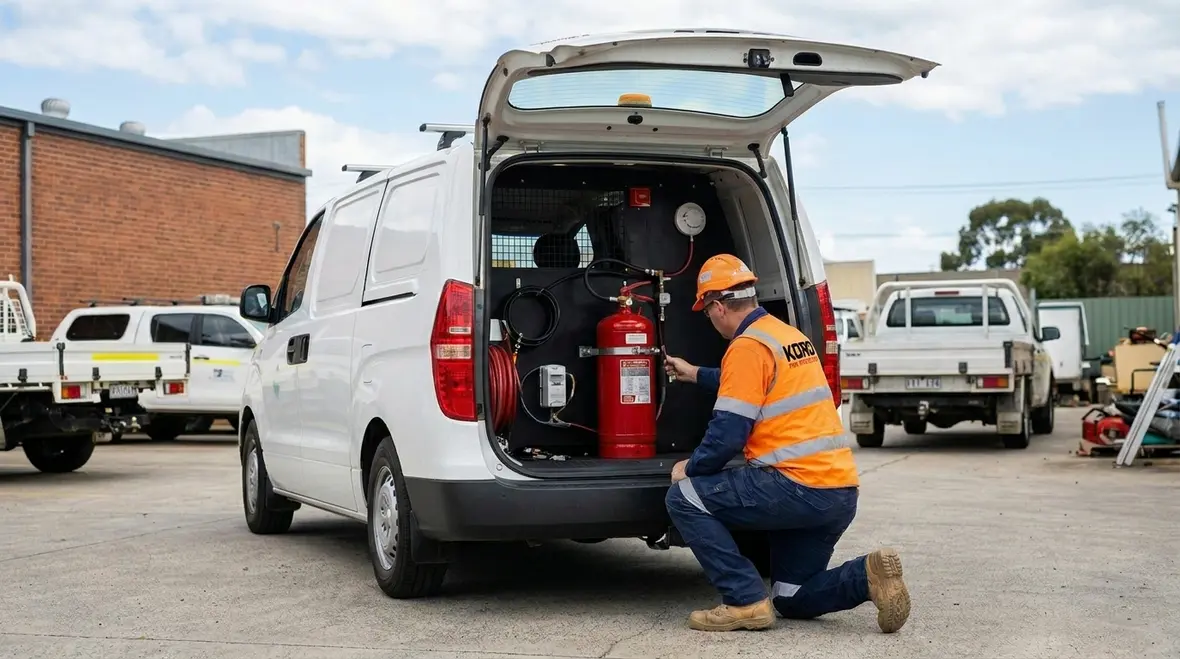
What AS 5426 requires for fleet fire suppression
AS 5426 outlines performance and installation expectations for vehicle fire suppression systems, focusing on how a system detects a fire and then suppresses it in a way that limits heat, flame spread, and damage. First, the standard pushes fleets toward systems that match the risk profile of the vehicle type and the hazards inside. Then it links that selection to installation quality and evidence through commissioning and ongoing checks.
To stay aligned with Australian vehicle fire safety standards, fleets typically need to ensure the system is suitable for the vehicle compartment, the hazard class, and the intended operating conditions. After that, the standard expects verification steps so there is no “trust me” moment during an incident. In short, the system must work as designed, not as hoped.
Why suitability matters more than labels
A suppression package can sound impressive on paper and still be wrong for the job. Fleet vehicles vary wildly in layout, heat generation, stored materials, and operating conditions. A service van carrying electrical equipment presents a different fire profile from a workshop ute loaded with lubricants, and both differ again from a retail delivery vehicle packed with packaging and mixed cargo. AS 5426 compliance is not about grabbing a generic kit and hoping for the best. It is about matching the system to the actual hazard environment.
That is why risk review needs to happen before hardware goes in. Fleets should look at ignition sources, likely fuel load, compartment geometry, ventilation, and how quickly a fire could spread to people or critical components. Once that picture is clear, the suppression design has a fighting chance of doing its job properly instead of becoming expensive decoration with a compliance sticker.
How detection and agent release must work
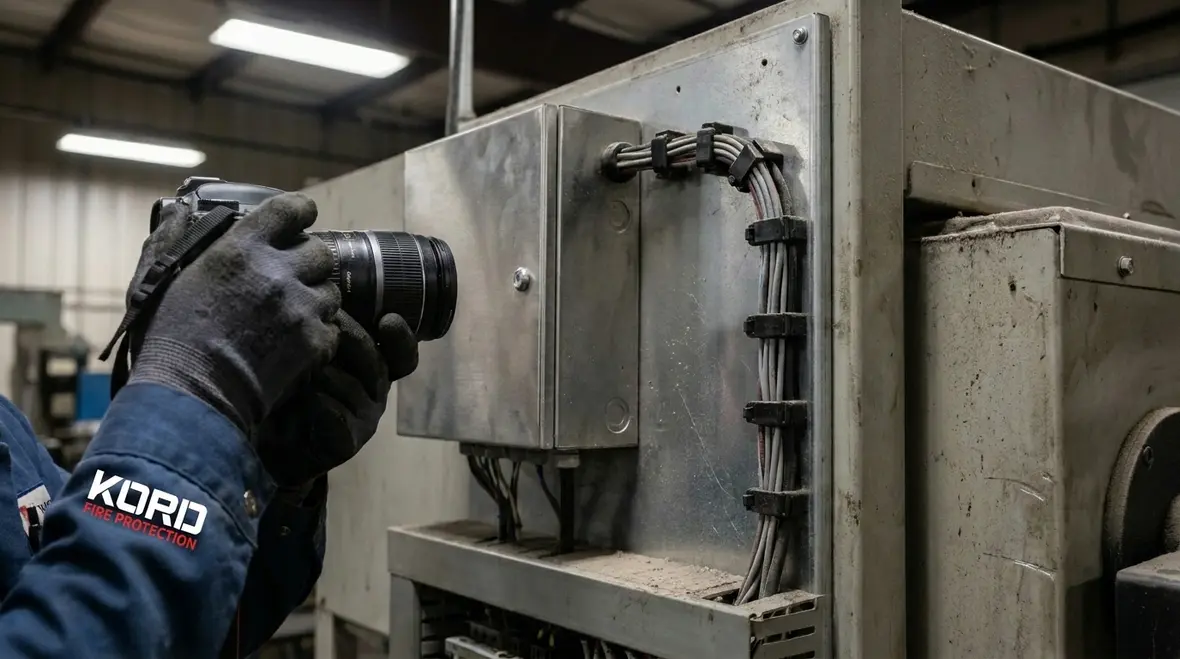
Fire suppression fails when detection and discharge do not line up with the real hazard. Therefore, AS 5426 focuses on reliable detection logic and proper release timing. Depending on the vehicle design, detection may involve heat responsive devices and closely integrated triggering components. Furthermore, the discharge setup needs to direct the agent into the protected area to interrupt combustion and reduce fire growth.
Because vehicles experience vibration, heat soak, and airflow changes, the system needs secure mounting and correct layout. Also, it cannot hide in the shadows. Wiring paths, nozzle placement, and discharge coverage must follow the design intent so the suppression agent reaches the right surfaces.
In many fleet settings, companies also forget a simple truth: the system must be easy to inspect. As a result, access points and test procedures should support routine checks without turning the maintenance bay into a scene from a sci fi movie where tools vanish and alarms never stop.
Detection has to beat the fire, not chase it
A vehicle fire grows fast in confined areas. Delayed detection can mean the agent releases after heat, flame, and smoke have already spread beyond the original source. For fleets, that means trigger devices need to be positioned where fire conditions are most likely to develop first, not merely where installation is easiest. The same logic applies to discharge nozzles. If coverage skips the hottest or most fuel-rich area, the system may technically activate while practically underperforming.
This is where commissioning becomes more than paperwork. It confirms the installed layout still reflects the original design intent and that real-world constraints have not compromised the outcome. In plain terms, the system should respond like a trained professional, not like someone who heard there might be smoke somewhere and decided to wander over eventually.
Installation, wiring, and coverage expectations for compliance
AS 5426 does not treat installation as a “box ticking” exercise. Instead, it expects workmanship that supports safe operation. First, the vehicle fire suppression system must be installed with correct component placement and secure supports. Then, wiring and control components must be routed and protected to reduce faults from abrasion and heat exposure.
Coverage matters as well. If the agent release does not reach the hazard, suppression can underperform, even when the system triggers. Therefore, fleets should confirm nozzle locations, discharge pathways, and any shutoff or partition arrangements within the vehicle. In addition, organisations should consider where heat and smoke develop first, then align the system layout to those realities.
Finally, documentation becomes essential. Fleets often operate across multiple states and depots, so clear records help maintain consistent Australian vehicle fire safety standards outcomes. As the fleet grows, those records also support training, incident review, and audit readiness.
The paperwork is part of the protection
Documentation is not glamorous, but it is one of the main reasons a fleet can prove compliance across dozens or hundreds of vehicles. Installation records, component details, service intervals, and change history help managers verify that each system still reflects the vehicle’s current setup. Without that paper trail, even a well-installed suppression system can become difficult to defend during an audit or after an incident review.
Commissioning, inspection, and evidence for audits
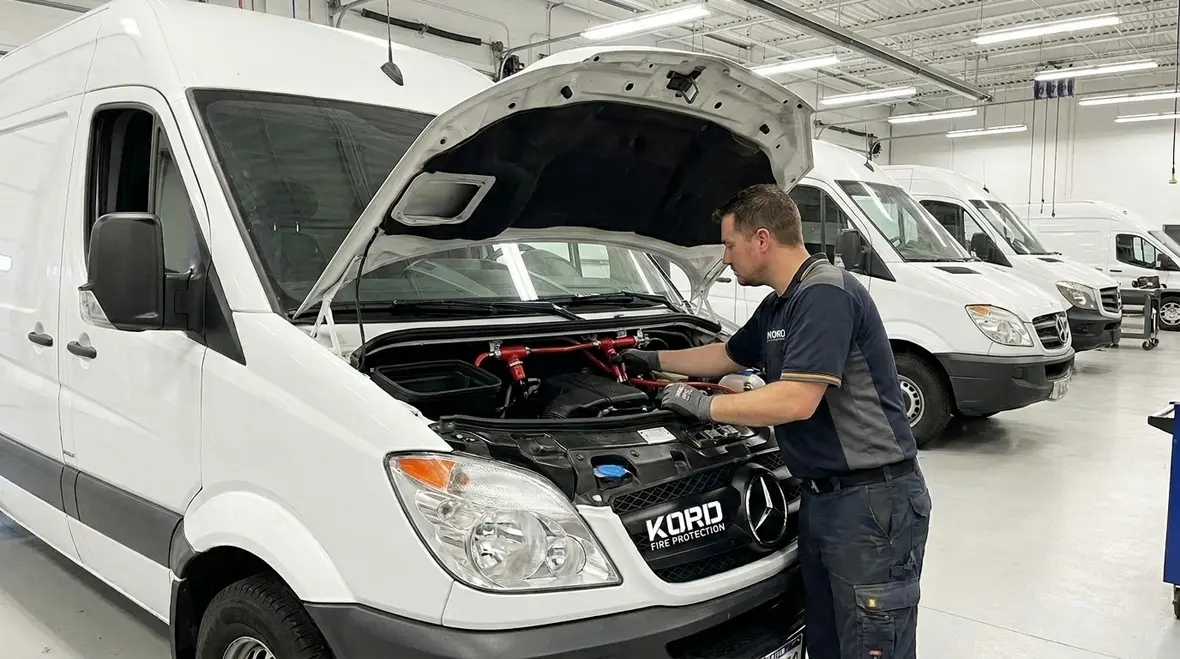
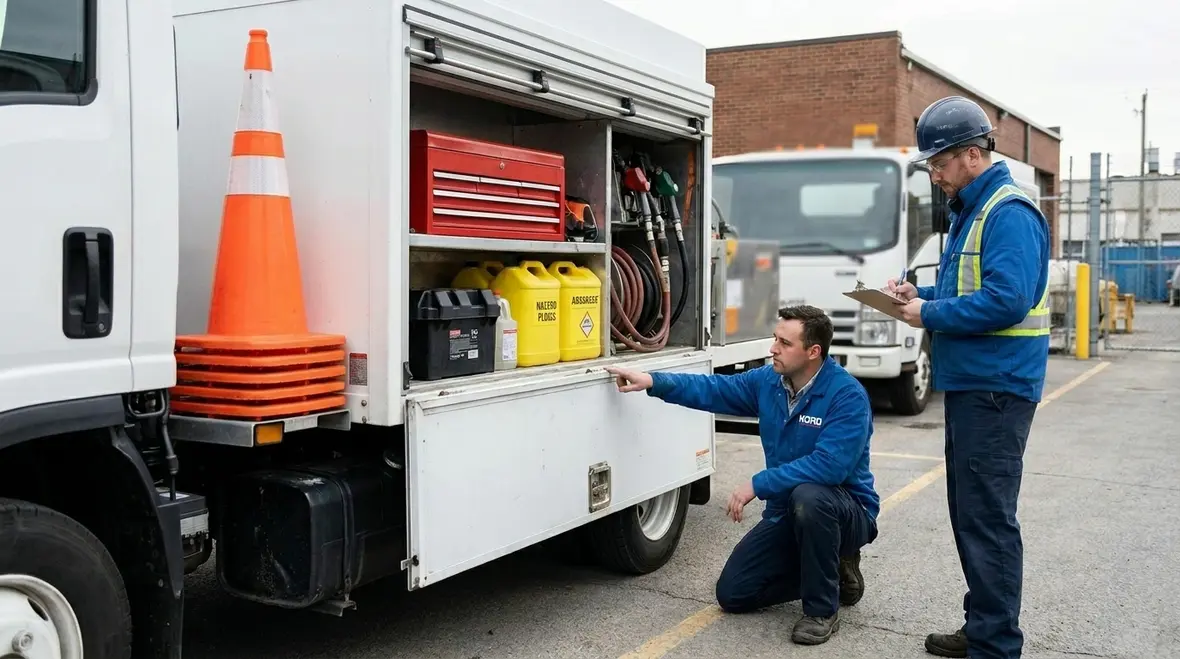
Once installed, suppression systems need commissioning and verification. That means checks that the system triggers correctly, that the discharge sequence works, and that components operate within expected parameters. After commissioning, routine inspection schedules should capture the practical state of the vehicle fire suppression system, including inspections for damage, contamination, corrosion, or changes to compartments that might block discharge.
Transition from “installed” to “proven” is where many fleets stumble. For example, a vehicle may be modified later for new equipment, added storage, or altered airflow. However, those changes can affect discharge coverage and detection placement. Consequently, suppression compliance relies on change control, not just the original install.
A solid inspection program also helps fleets avoid last minute scrambling during compliance visits. Meanwhile, crews benefit because they learn how the system behaves, what indicators show, and how to respond safely while technicians handle the technical parts.
Audit readiness is built slowly, not magically
When auditors review a fleet, they usually want to see a chain of evidence rather than a heroic speech about good intentions. That chain includes commissioning outcomes, inspection logs, service actions, rectification history, and records of any modifications that affected protected areas. If each vehicle tells the same documented story, audits become manageable. If every depot keeps records differently, the whole process turns into forensic archaeology with spreadsheets.
Common fleet risks and how to prevent system underperformance
Fleets in industrial and retail operations often use vehicles that face unique risk patterns. For instance, service vans may carry tools, batteries, fuels, lubricants, and heat sources. Delivery vehicles can accumulate packaging and textiles. Workshop support trucks may hold electrical equipment that generates heat under load. Therefore, suppression planning should consider what actually sits inside the compartment and how that material responds to heat.
In addition, operational habits influence outcomes. If vehicles idle with engine heat trapped in certain areas, or if airflow patterns change due to covers and cargo placement, then detection and discharge performance can shift. Hence, fleets should align training with real use, not generic theory.
Here is the playful bit: a suppression system does not “know” your schedule. It does not care that the driver swears the compartment was empty yesterday. The system reacts to conditions in front of it, so fleets should keep compartments organised, maintain clear access, and update suppression design when equipment changes.
Small changes can quietly break a good design
One of the biggest compliance traps is gradual change. A bracket gets added. Storage gets shifted. Cabling gets rerouted. A cover panel gets replaced with something that alters airflow. None of those tweaks feels dramatic in isolation, yet together they can change detection speed or block agent discharge. Fleets that review suppression layouts whenever vehicles are modified are far less likely to discover problems the hard way.

Why Kord Fire Protection helps fleets stay ready
Organisations often see AS 5426 as a compliance document. However, fleets experience it as a delivery challenge: the system must be fitted correctly, proven through commissioning, then kept performing across years and across locations. That is where Kord Fire Protection becomes a practical partner for Australian fleets.
First, Kord Fire Protection supports a structured approach that maps vehicle risk to suitable suppression system design and installation expectations. Then it helps fleets manage the evidence that auditors look for, including commissioning records, inspection outcomes, and maintenance support that keeps systems operating as intended.
Moreover, because fleets rarely stay still, Kord Fire Protection can help teams plan for changes, so modifications do not quietly undermine suppression coverage. As a result, fleet managers spend less time chasing paperwork and more time running operations.
If compliance feels like a long meeting nobody asked for, Kord Fire Protection works to turn it into a clear plan with accountable steps.
FAQ about AS 5426 and vehicle fire suppression
Conclusion: make compliance simple and fleet-ready
Vehicle fire suppression is not a one-time install. It is a continuing commitment to detection reliability, correct discharge coverage, and documented inspections that hold up under scrutiny. AS 5426 helps fleets protect people and assets by setting clear expectations, and Australian vehicle fire safety standards guide how organisations maintain performance over time.
If your fleet operates across industrial, retail, or commercial sites, Kord Fire Protection can help you build a practical compliance plan, reduce risk, and keep systems audit-ready. Contact Kord Fire Protection today to get your fleet fire suppression approach organised and dependable.