AS 5000 Explained for Commercial Kitchen Fire Suppression
Quick answer: AS 5000 explains the rules and responsibilities for fire suppression in Australia’s commercial kitchens, where heat, grease, and cooking appliances team up to create real fire risk. This article breaks down what the standard expects, what managers must plan for, and how Kord Fire Protection helps organisations stay compliant and ready.
In Australia, the commercial kitchen fire safety standard Australia sets the direction for how kitchen fire suppression systems should be designed, installed, commissioned, and maintained. This helps protect people, stock, and critical operations across industrial, retail, and facility environments. And because kitchens rarely pause for paperwork, the standard also pushes businesses to take risk seriously before a small flame turns into a full incident.
If your site also manages broader suppression risks beyond the kitchen, it helps to understand how fire suppression systems fit into a wider facility strategy. Below, a clear picture emerges: what AS 5000 actually covers, how systems work in practice, and how a competent partner can remove uncertainty. After all, no one wants to learn fire safety the hard way, the way you learn a pop quiz theme by walking into the wrong classroom. Let’s keep it professional, calm, and practical.
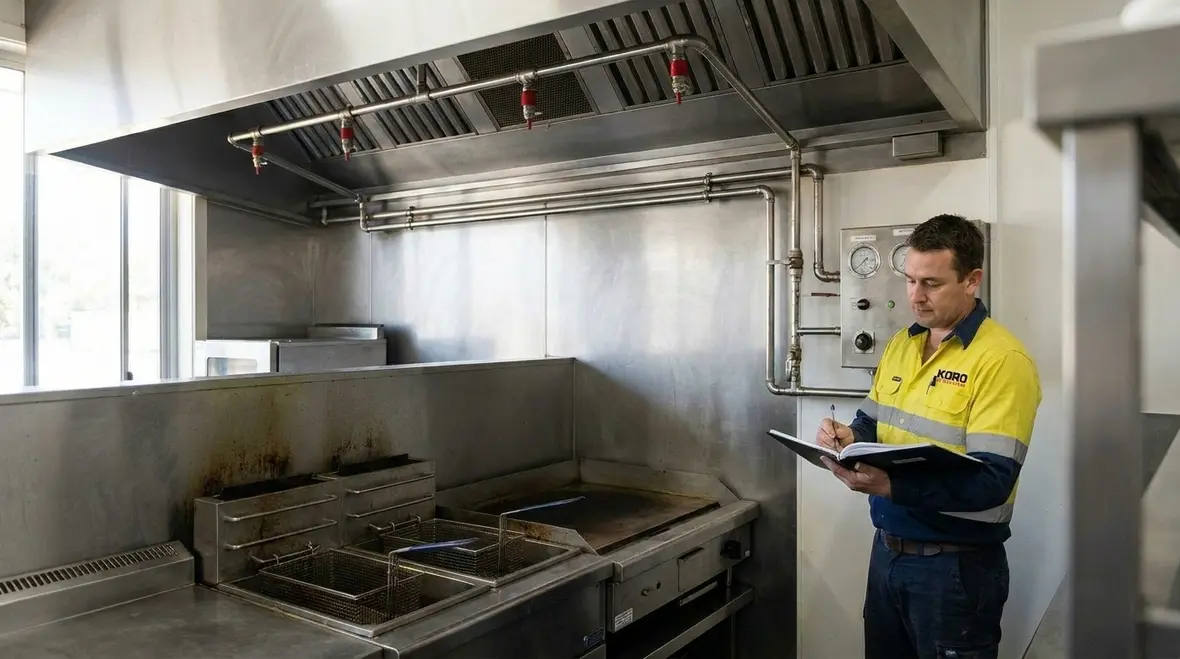
What AS 5000 requires for suppression in commercial kitchens
AS 5000 is the backbone for suppression in commercial cooking environments. It does not treat every kitchen the same. Instead, it focuses on key elements that drive system performance, such as the hazard level, the suppression agent, and how the system detects a fire early enough to control it.
To meet the commercial kitchen fire safety standard Australia expectations, businesses typically need to ensure the suppression system:
- Matches the cooking risk, not just the equipment list
- Uses correct detection methods and sequence logic
- Maintains reliable power and control operation
- Includes proper installation quality and commissioning evidence
- Receives ongoing inspections and servicing at the required intervals
Most importantly, the standard ties the system to real conditions in the kitchen. That means airflow, hood performance, and the way appliances cycle in a busy service period can affect effectiveness. Therefore, a business must treat suppression as a living system, not a one time install.
Why hazard matching matters more than labels
A kitchen can look ordinary on paper and still create very different fire behaviour in practice. A site running high volume frying, chargrills, open flame cooking, and long service periods carries a different suppression challenge from a lighter duty tenancy reheating prepared food. That is why hazard matching matters. The standard is not there to reward guesswork or generic assumptions. It exists to make sure system selection, nozzle layout, agent choice, and control logic match what actually happens under the canopy during a real shift.
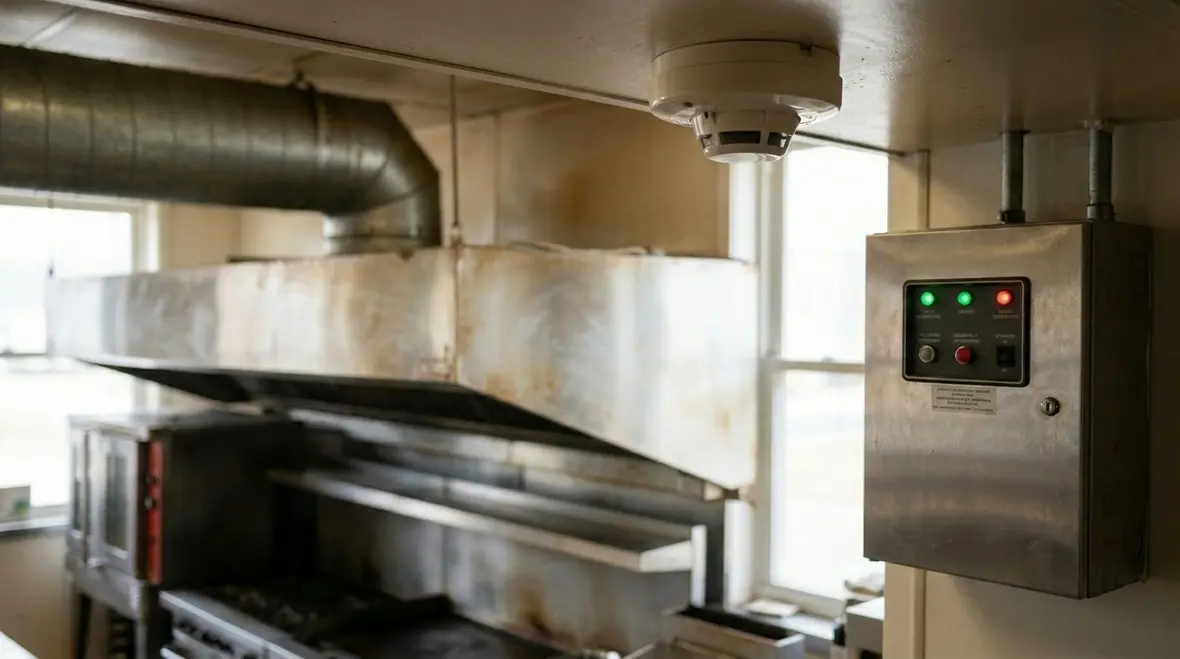
How kitchen suppression systems work when grease and flames move fast
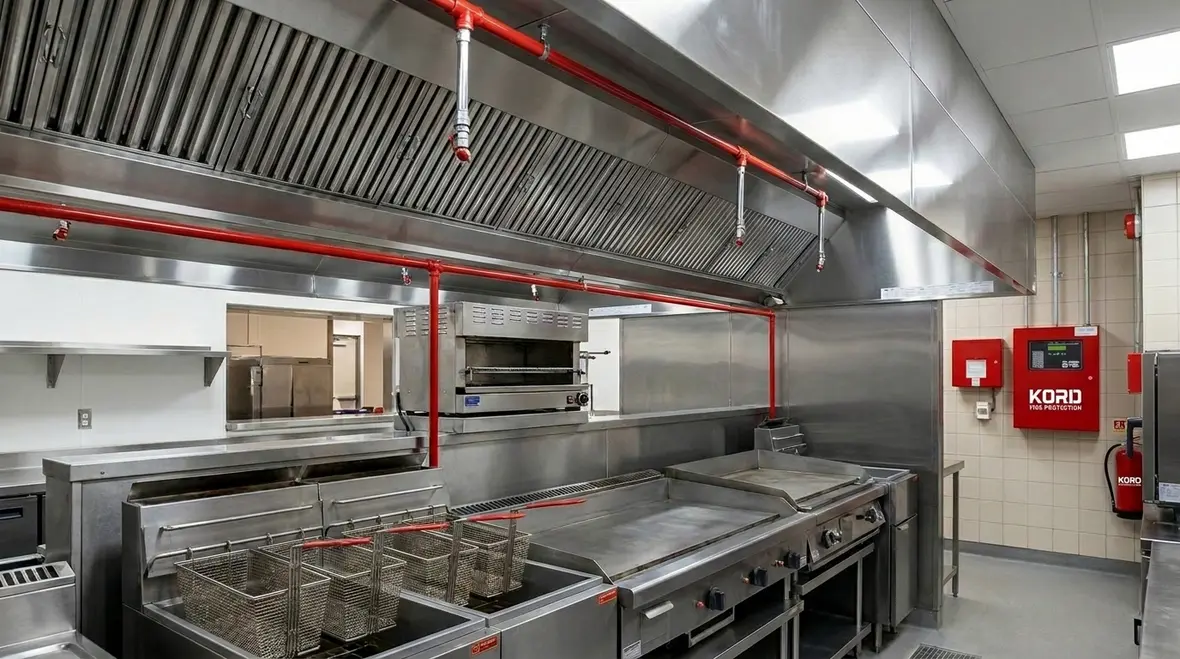
In commercial kitchens, ignition often begins with hot surfaces and grease vapours. Then heat builds quickly, and the hood area becomes a key battleground. As a result, suppression systems must cover the protected space in a way that suppresses flames and controls spread.
Typically, systems use a combination of detection and discharge. First, heat and smoke detection triggers the control panel. Next, the system releases an extinguishing agent designed for cooking grease fires. At the same time, the installation design aims to keep the fire from turning into a smoke filled evacuation problem.
However, the “it discharged” story is only half the story. The more subtle parts matter:
- Detection placement and sensitivity, so the system acts early
- Pipework routing and discharge coverage, so the agent reaches where it must
- Control sequencing, so the system behaves as intended under real conditions
- Interlocks, where relevant, so ventilation or power actions support the suppression strategy
Because kitchen operations include rush periods, staff turnover, and seasonal menu changes, the system must remain aligned with current risks. In other words, if the kitchen layout changes but the suppression design stays frozen in time, the system may not behave as expected when pressure rises. Fire safety does not do surprise quests, it does predictable outcomes, and that is the point.
The sequence that has to work under pressure
A strong kitchen suppression response is all about timing. Detection needs to identify the event quickly enough, controls need to activate the correct sequence, and discharge needs to reach the hazard without delay. If one part lags, the whole outcome can change. That makes commissioning and servicing especially important, because a system that looks complete from the outside may still have sequencing faults, sensitivity issues, or coverage blind spots hiding in plain sight.
This is also where management decisions affect fire performance. Equipment swaps, changed cooking processes, duct contamination, and extraction changes can all interfere with the original suppression strategy. A calm kitchen on Monday can become a very different hazard by Friday after menu changes, extra appliances, and one “temporary” setup that somehow becomes permanent.
Compliance planning for industrial and retail facilities
Facilities across Australia often combine cooking with other high activity areas: production spaces, warehouses, food retail outlets, and mixed use sites. Consequently, compliance planning must consider both the kitchen and the surrounding business operations.
Commercial kitchens usually need a documented approach that covers the full lifecycle of suppression equipment. That includes:
- Risk assessment and hazard classification aligned with the cooking operations
- System design review before installation or upgrades
- Commissioning documentation and test evidence
- Inspection and servicing schedules with clear responsibilities
- Service reporting that stakeholders can understand quickly
Even when a business believes it is “already compliant,” reality often looks like this: the system exists, but records are incomplete, modifications were done without an updated review, or servicing dates do not match operational risk. Therefore, facilities should build a compliance rhythm that matches how the business actually runs, not just how it ran once.
And yes, sometimes the maintenance file is harder to find than the last spare fry basket. Still, the solution is methodical, not magical.
What a workable compliance rhythm looks like
A workable compliance rhythm is not glamorous, but it is effective. It usually means assigning ownership, confirming service intervals, documenting changes, and reviewing records before someone asks for them. The point is to make compliance visible and repeatable. When the site expands, adds outlets, or changes contractors, that rhythm helps the program stay stable instead of becoming a box full of invoices and crossed fingers.
This becomes even more important in industrial and retail groups where several teams share responsibility. Operations may own the kitchen, facilities may own maintenance, and safety may own reporting. Without a consistent process, everyone assumes someone else has the latest record. That is usually the exact moment a missing document decides to become very interesting.
Common gaps that create risk during audits and after upgrades
When teams prepare for audits, fire safety can feel like a checklist sprint. Yet suppression performance depends on details. Small gaps can lead to big problems, especially after renovations or equipment changes.
Common issues include:
- Kitchen modifications that change the hazard area without system review
- Incorrect or outdated documentation, such as missing commissioning records
- Blocked or poorly maintained hood and duct systems that reduce agent reach
- Discharge nozzles or components that degrade over time and miss expected performance
- Inconsistent servicing, with intervals stretched because “nothing happened last time”
Furthermore, some facilities replace cooking appliances but keep the same assumptions about heat output and grease load. However, the fire behaviour can change. Therefore, a competent approach checks the whole system, not just the parts that got swapped.
If an auditor asks, “What changed since the last verification?” the best answer comes from clear records and a structured maintenance plan. Kord Fire Protection can help turn that answer from a hopeful guess into a confident statement.
Why Kord Fire Protection helps businesses stay ready, not just “pass”
Kord Fire Protection supports organisations with suppression system services that align with the requirements of the commercial kitchen fire safety standard Australia framework. The goal stays simple: the system must work as designed, when it matters.
In practical terms, a vital partner helps teams manage the parts that usually fall through the cracks. That includes maintaining accurate service records, scheduling inspections, and ensuring servicing reflects current kitchen realities. When a site runs multiple outlets, the complexity multiplies. And no, a spreadsheet alone does not put out a grease fire.
| Facility need | How Kord Fire Protection supports |
| Servicing and inspection that stays consistent | Clear schedules, structured reporting, and follow up actions so maintenance stays traceable |
| Upgrade readiness for equipment changes | Review support to help align suppression coverage and performance with updated cooking risks |
| Documentation for audits and stakeholders | Service evidence that leadership can review quickly and rely on during compliance discussions |
| Reduced uncertainty across multiple sites | Repeatable processes that support industrial, retail, and facilities teams across Australia |
Just like a well tuned team in a blockbuster heist movie, the best results come from coordinated roles, timing, and evidence. Kord Fire Protection helps facilities coordinate that work so the kitchen fire safety program stays calm under pressure.
Readiness is a stronger goal than a last minute pass
There is a big difference between a site that scrambles before an audit and a site that stays ready year round. Readiness means the records are current, the servicing history makes sense, the system reflects present day cooking risks, and responsible teams know what happens next. That kind of clarity saves time, reduces operational stress, and makes compliance conversations far less dramatic than they tend to become when everyone starts searching old folders five minutes before a review.
FAQ about AS 5000 explained for commercial kitchens
Final word: take action before the next busy service
AS 5000 explained is not just theory, it is a practical way to keep suppression systems dependable in real kitchens where grease, heat, and time all move quickly. A facility that schedules inspections, updates records, and reviews changes reduces risk and supports stronger compliance outcomes. If Kord Fire Protection becomes the partner on your suppression job, your team gains clarity, consistency, and documented readiness. Contact Kord Fire Protection today to assess current systems and plan the next servicing step.