Class F Fire Extinguisher for Australian Restaurant Kitchens
Quick Answer: Restaurants and commercial kitchens in Australia must protect people and property with the right fire equipment, correct placement, and proper maintenance. That usually includes a Class F fire extinguisher for cooking oil and grease hazards, trained use, inspections, and documentation that meets local expectations.
Picture this: a busy lunch rush, a fryer running hot, and someone reaches for the wrong lever. Nobody wants that plot twist. In commercial kitchens, the solution starts with the right protection plan, and it often begins with a Class F fire extinguisher, designed for cooking oils and fats. Unlike a generic extinguisher, it helps tackle the specific fires that start when grease heats up faster than common sense.
In Australia, fire protection expectations for restaurants and commercial kitchens usually go beyond “having an extinguisher somewhere.” Facilities must think about hazard types, correct equipment selection, safe access, ongoing checks, and staff readiness. And yes, that includes paperwork that no one loves, but everyone needs.
If you are reviewing wider protection needs across a site, it also helps to understand fire extinguisher services as part of an overall maintenance plan that keeps the right equipment in the right place and ready when it matters.
What fire risks exist in restaurant kitchens?
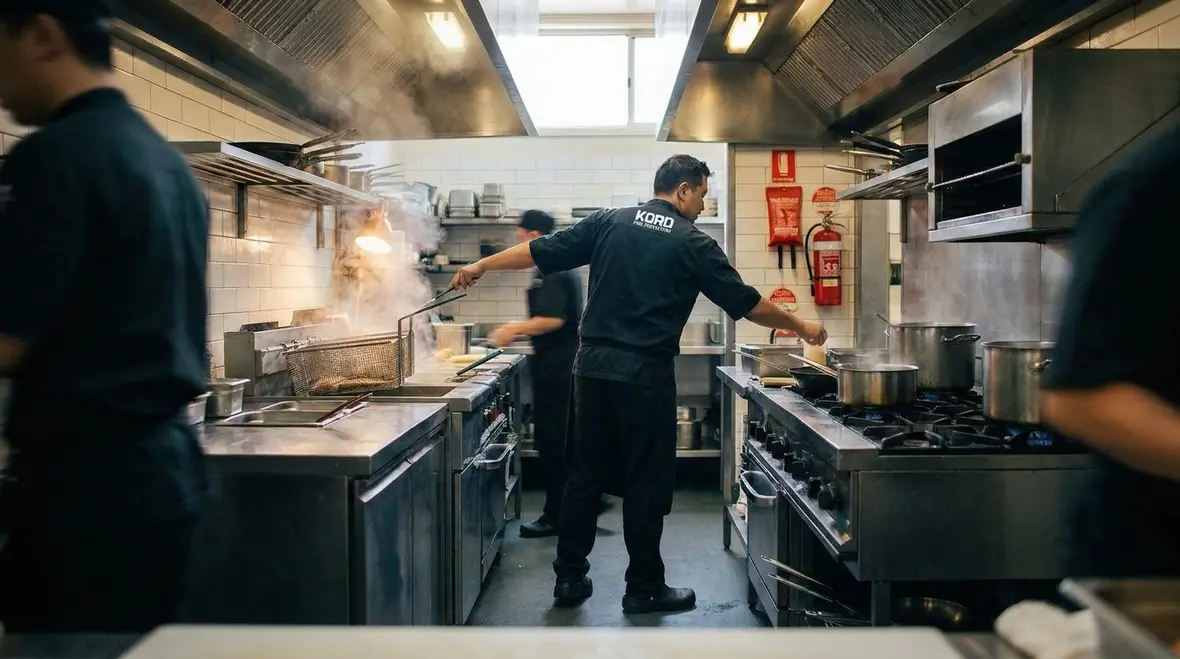
Restaurant kitchens burn in ways that look familiar, but behave differently once heat and fuel combine. Grease and cooking oils can ignite quickly, and they often spread across surfaces through splatter and vapour. Electrical panels, power boards, and equipment wiring add another layer of risk, especially where water and heat sit close together. Meanwhile, fuel sources such as LPG, or even backups like generators, can intensify consequences if a fire grows before anyone can respond.
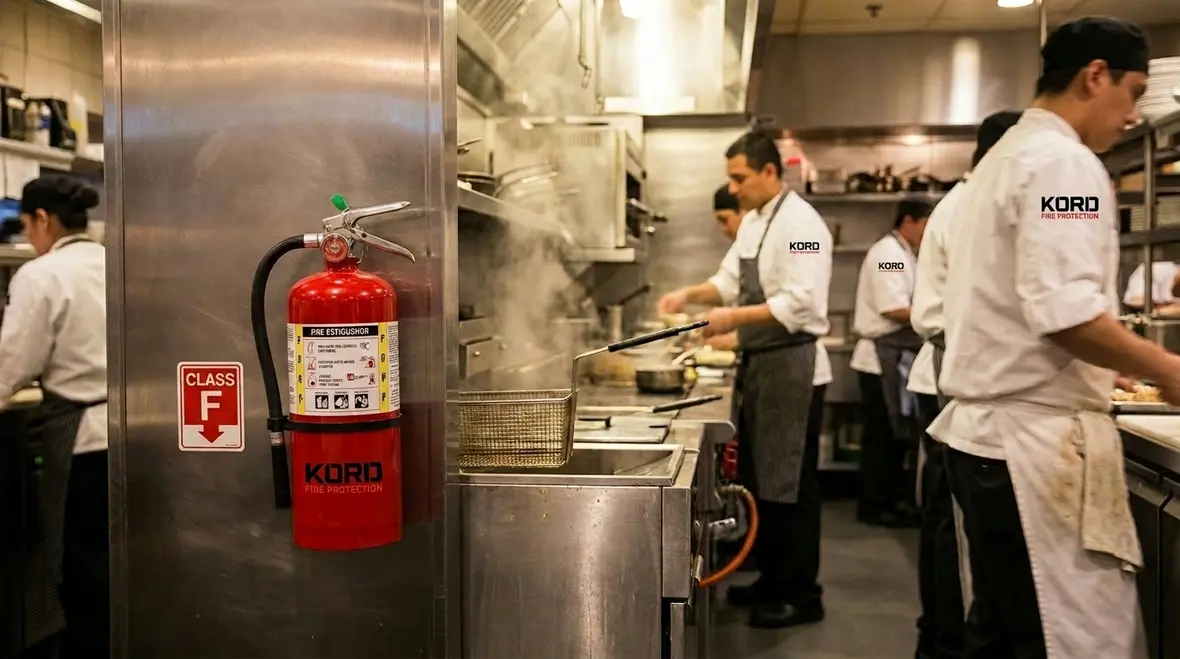
Because each risk behaves differently, fire protection must match the fuel. A cooking fire needs a method that interrupts the flame in grease and oil. That is where a Class F fire extinguisher earns its keep. Staff should not guess. They should recognize the hazard and use the right tool, the first time.
Transitioning from “what can burn” to “what protects,” the best kitchens run a plan that covers selection, placement, and upkeep in one system. Kord Fire Protection supports that approach by helping businesses align equipment choice with the actual cooking processes and layouts they operate daily.
Why grease fires need special treatment
Grease fires are not dramatic just for the sake of it. They react differently from ordinary combustibles, and using the wrong extinguisher can make the situation worse instead of better. In a restaurant kitchen, where deep fryers, pans, and hotplates can all create high-temperature oil hazards, the correct extinguisher type is not a nice bonus. It is the difference between a controlled response and a full blown kitchen disaster that ruins dinner service for everyone.
Where should extinguishers be placed for fast response?
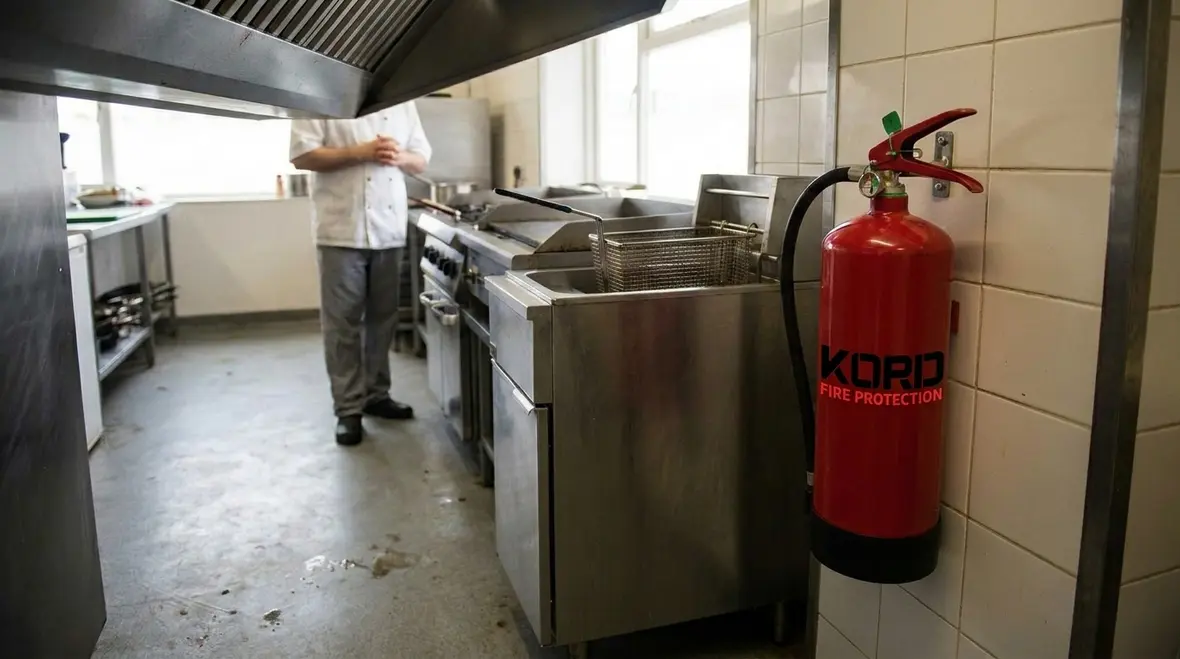
Speed matters, and so does access. Extinguishers must be located so staff can reach them without weaving through blocked aisles, stacked boxes, or trip hazards. The typical goal is simple: the first person on scene should grab equipment quickly and safely, even under stress.
In practice, kitchens need placement that fits how people move. Extinguishers near cooking lines and fryer areas reduce response time. Areas near extraction hoods and deep fryers support quicker action because grease fires can start from splatter, overflow, or a small ignition that grows fast. Additionally, staff should have clear routes to each unit, with signs that remain visible and unobstructed.
Transitioning again, businesses should also think about surface conditions. Kitchens run hot and humid. Corrosive conditions can affect mounts and labels over time. Therefore, a proper inspection routine should confirm equipment remains secure, readable, and ready.
Placement that works during actual service
A placement plan should make sense at full speed, not just on a quiet Tuesday morning before prep begins. Think about where staff stand during peak periods, how trays and stock move through the space, and whether someone can access an extinguisher without stepping toward the fire itself. That last point matters more than people think. If the extinguisher is technically nearby but practically blocked by the danger zone, it is not really nearby at all.
For multi-station kitchens, a simple map of equipment, exits, and extinguisher positions can make training easier. Staff learn faster when they can connect the plan to the room they work in every day. It also reduces the odds of that awful moment where everyone knows there is an extinguisher somewhere, but “somewhere” is not helpful when oil is flaming on the cooktop.
How do restaurants choose the right extinguisher type?
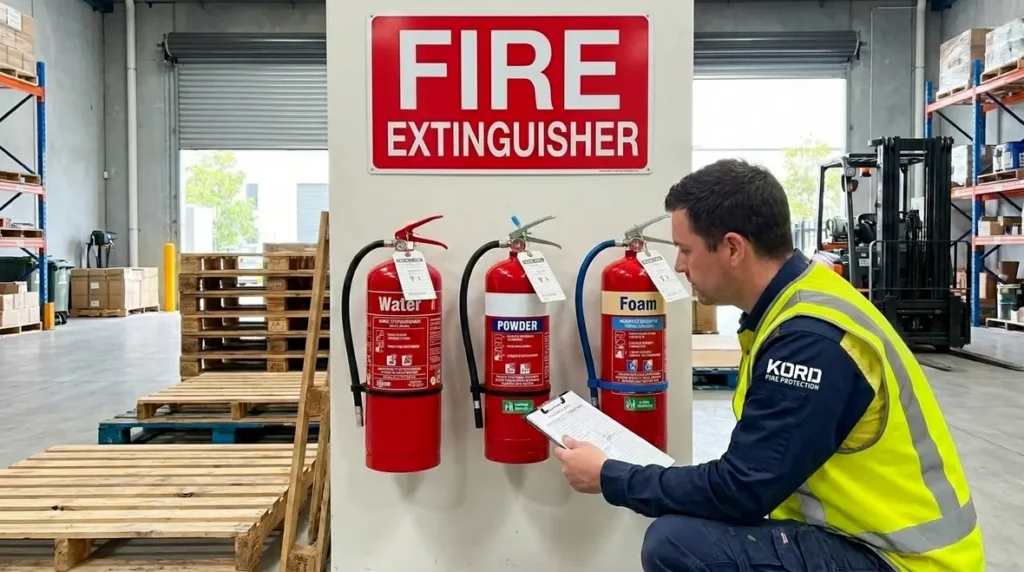
Choosing the right unit is where many plans become guesswork, and guesswork costs money. Commercial kitchens usually need coverage for multiple hazard categories. Grease and cooking oils demand a Class F fire extinguisher. Electrical risks may require different classes depending on equipment. Paper, packaging, or cardboard storage near service areas may call for other methods.
So the process should start with a hazard review, not a shopping list. Kord Fire Protection works with teams to identify the specific fire behaviours in each section of a commercial kitchen, including cooking line zones, storage spaces, and service corridors. Then it matches extinguisher types to the hazards, so staff respond with confidence rather than hope.
To keep things practical, the plan should also consider how people operate. A busy grill station and an enclosed fryer cabinet are not the same as a prep area with low flame exposure. When facilities match equipment to real workflow, training becomes simpler and safer.
One kitchen, multiple hazard types
Most commercial kitchens are a mash-up of risks. You have hot oil, live electrical equipment, packaging, cleaning products, storage areas, and sometimes adjoining service zones that introduce even more variables. That is why one extinguisher rarely covers every scenario well. Good planning means looking at the full environment, then assigning the right equipment where it actually supports safe action instead of ticking a box and hoping for the best.
This also helps with consistency across multiple sites. If a restaurant group standardises hazard reviews, equipment selection, and staff training, each venue becomes easier to manage. The menu might change from burgers to dumplings to steak night specials, but the fire safety logic still needs to hold together without becoming a mystery novel.
What inspection, maintenance, and compliance steps matter?
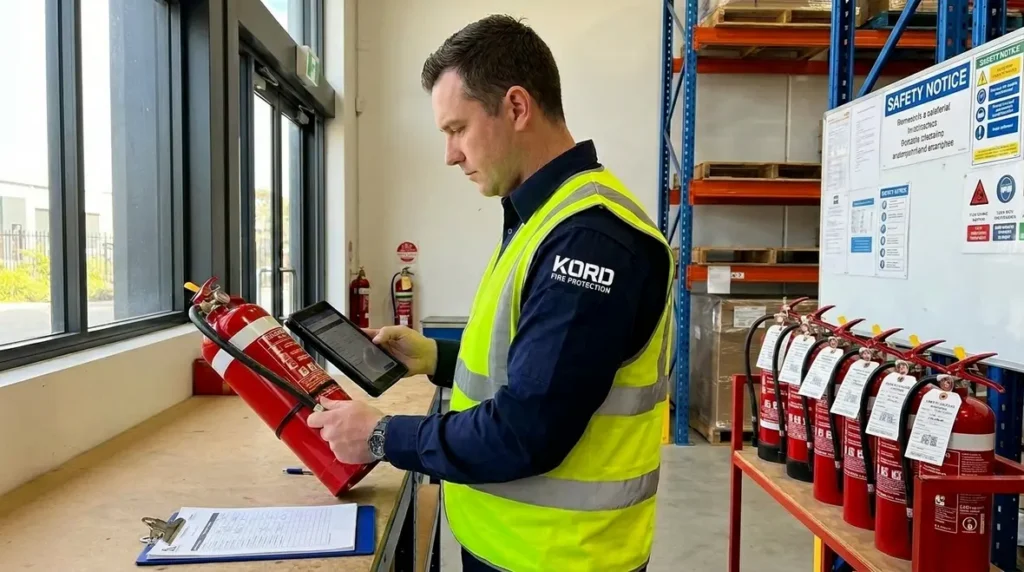
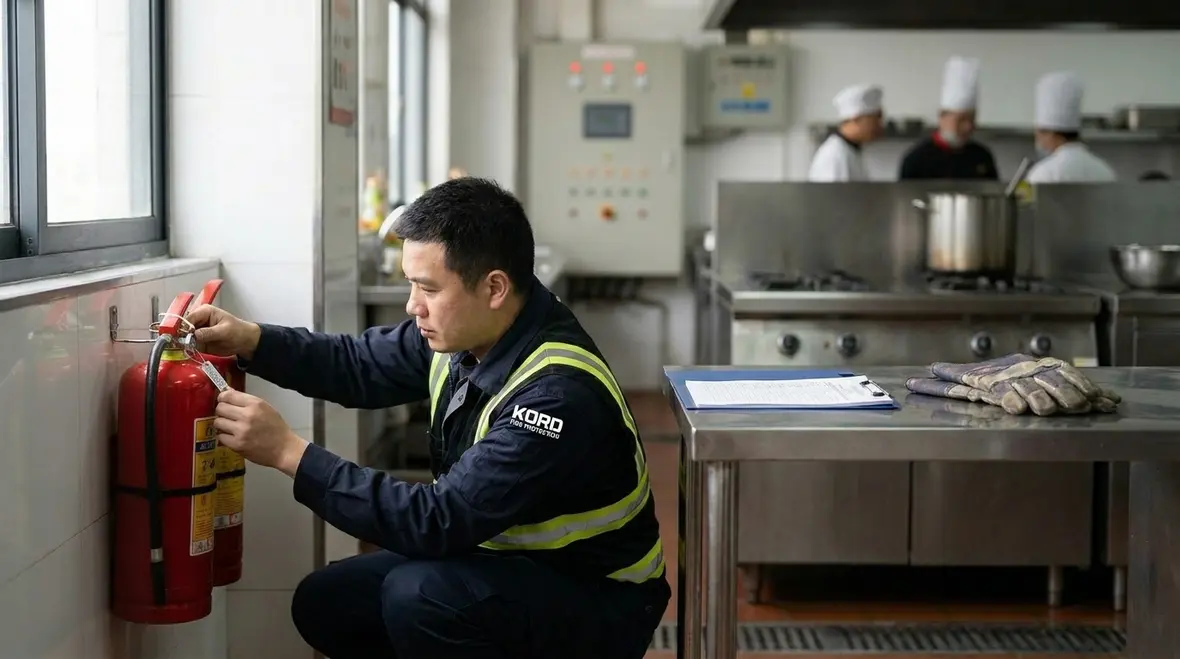
Extinguishers do not stay ready by magic. They require inspection and maintenance on a schedule that keeps them in service. That includes checking pressure indicators, physical condition, hoses and nozzles, tamper seals, and accessibility. It also includes verifying that the extinguisher remains the correct type for the hazard it protects.
Transitioning to the business side, restaurants must keep records. Inspections usually need documentation that shows dates, findings, and service actions. This helps demonstrate due diligence, supports audits, and reduces headaches when regulators ask basic questions.
In addition, commercial kitchens should maintain broader fire safety systems, such as emergency exits, signage, and staff training. Yet extinguishers remain the first line for small, developing incidents. A team that knows where equipment is and how to use it can reduce damage dramatically. When companies treat maintenance as part of daily operations, reliability improves.
This is where Kord Fire Protection becomes more than a vendor. The company helps facilities create a maintenance rhythm that fits restaurant timetables, so service does not disrupt cooking days or peak trade hours. In short, it turns fire safety into a managed process instead of a last minute scramble.
Documentation is boring until it saves the day
No one frames a maintenance record and hangs it beside the specials board, but clear documentation matters. Service records help prove what was checked, when it was checked, and what action was taken. They support internal reviews, make scheduled servicing easier to manage, and stop important details from living only in someone’s memory. Memory is great for regular customers’ orders. It is not the ideal compliance system.
How should staff training support extinguisher use?
Even the best equipment fails when people do not understand what it is for. Staff training should connect hazard recognition to the correct response. For grease fires, a Class F fire extinguisher should be presented as the tool for cooking oil and fat incidents, with guidance on safe approach and safe evacuation priorities.
Training also needs realism. Kitchens change. Menus evolve. New equipment gets installed. Therefore, training should update when hazards shift, and refresh regularly so staff do not forget steps under pressure.
Transition words help here because training needs clarity, not confusion. Staff should hear a simple message: identify the hazard, use the correct class, keep a safe path, and call for help immediately. A little pop culture helps, too. Imagine firefighters as the action heroes, and staff as the lead character who actually knows the plan. Without that, it is just another episode where the villain wins because someone read the label like it was a bedtime story.
Finally, training should include a “what not to do” section, such as avoiding unsafe movement around grease vapours or using the wrong method for the hazard. Kord Fire Protection supports training-aligned readiness by ensuring equipment selection and maintenance match the scenarios staff practice.
Simple training messages staff actually remember
The most useful training is the kind people can recall in a stressful moment. Keep it direct. What is burning? Which extinguisher matches it? Is there a safe path to respond? When should the team stop and evacuate? If training answers those questions clearly, staff are more likely to act correctly. If it sounds like a legal document read aloud at 6 am, the lesson will vanish faster than chips during a dinner rush.
How can Kord Fire Protection help commercial facilities across Australia?
Restaurants and commercial kitchens require dependable protection that scales across sites, suppliers, and shift patterns. Kord Fire Protection offers a partnership model that supports facilities in Australia across industrial, retail, and commercial environments, including multi-site operators.
Transitioning from equipment to outcomes, Kord Fire Protection focuses on aligning extinguisher type, placement, inspection schedules, and documentation into one practical system. It helps reduce risk of mismatch, such as having the wrong extinguishing agent for cooking oils, or locating equipment where staff cannot reach it quickly during an emergency.
Also, Kord Fire Protection helps facilities stay organized. Instead of chasing service dates, teams can plan maintenance with fewer interruptions. That means a kitchen can keep serving meals while staying ready for the moments that test readiness.
Because fire safety affects people, compliance, and operational continuity, choosing a steady partner matters. When a business gets support that actually fits the way it runs, the whole operation becomes calmer, safer, and more confident. And calm is underrated in kitchens. It should be on the menu, right next to the fries.
FAQ
Final call to action
Commercial kitchens cannot afford fire safety that feels like a last minute fix. Kord Fire Protection helps restaurants and facilities across Australia select the right equipment, including the Class F fire extinguisher for cooking oils and fats, and then keeps inspections and documentation under control. If a facility wants fewer surprises and a safer operation, it should book an assessment with Kord Fire Protection today. The goal is simple: protect people, protect stock, and keep service running.