Warehouse Fire Suppression Australia with Kord Fire Protection
Quick Answer: Warehouse and industrial fires do not care that a site has extinguishers. When flames hit hidden hazards, spread fast, or involve high-value stock, crews need a whole fire suppression system. Kord Fire Protection helps clients in Australia plan, install, and maintain the right protection for real-world risks.
In many facilities, warehouse fire suppression Australia becomes the difference between a quick knockdown and a full incident. Fire extinguishers have their place, yet warehouses and industrial spaces often carry risks that extinguishers alone cannot control. In racks, along conveyors, inside ceiling voids, and around stored materials, fire can grow while staff scramble for the right equipment. So, this guide explains why suppression systems matter, how they work with people and procedures, and where Kord Fire Protection steps in as a trusted partner. For businesses also reviewing broader site readiness, it makes sense to pair suppression planning with a practical look at fire suppression systems so protection decisions line up with the way the facility actually runs.
Why extinguishers fall short in real warehouses
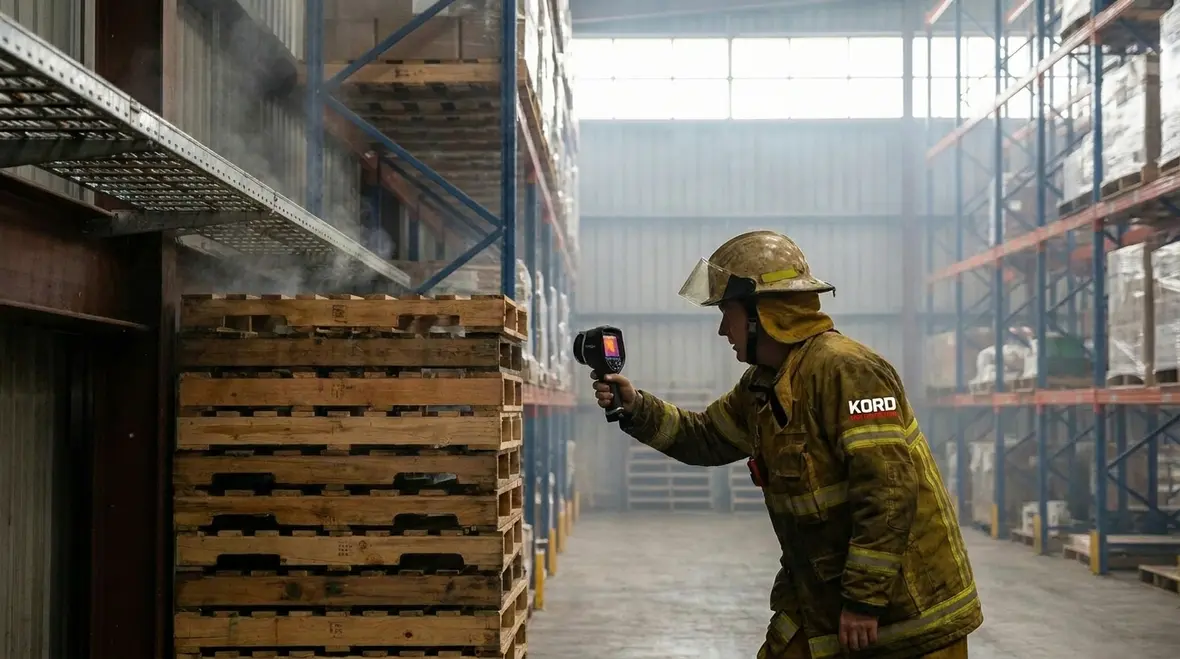
Extinguishers are useful, but they rely on quick spotting, the right agent, and a safe approach. Unfortunately, warehouses make all three harder. For example, fire can start behind pallet stacks or in cable trays, and visibility drops fast once smoke moves. Then, even if staff notices the fire, travel distance and access restrictions can delay first action. Meanwhile, heat and flame spread can outrun an extinguisher’s discharge time.
Additionally, warehouse layouts often create invisible routes for fire. In one zone, flames may start small, and then spread through void spaces, ventilation gaps, or along combustible surfaces. While extinguishers buy time, they seldom give full control over the growth stage. And that stage is when damage goes from painful to expensive. As the saying goes, smoke may be subtle, but invoices are not.
The speed problem nobody enjoys admitting
The issue is not that extinguishers are bad. The issue is that the environment is unforgiving. A warehouse can hide a fire for just long enough that by the time someone reaches it, the heat is already too intense, access is already compromised, or the fire has moved beyond the point where one person with a portable unit can safely control it. In sites with tall storage, mixed stock, shrink wrap, cardboard, plastics, and electrical services running through multiple zones, the fire does not need much help. It gets plenty of that from the building itself.
That is why relying on extinguishers alone can create a false sense of security. Staff see equipment on the wall and assume the box is ticked. In reality, the real question is whether the first response can happen fast enough, close enough, and safely enough to make a difference. In many warehouse scenarios, the honest answer is no. Not because the team is careless, but because the hazard is faster than the human response window.
Where suppression systems take control
A well designed suppression approach targets how a fire actually behaves in a facility. Instead of waiting for someone to run and aim, it provides fast activation based on heat, smoke, or other triggers, depending on the design. As a result, it can limit flame spread, reduce temperatures, and protect critical areas such as product storage, loading bays, plant rooms, and office-adjacent zones.
In industrial settings, hazards differ by process. Therefore, a proper solution evaluates what fuels the fire. Cardboard and plastics behave differently from oils and solvents. Old electrical systems behave differently from new, well maintained ones. And conveyor lines behave differently from static storage. So, the system must match the risk profile, not the hope that it probably will not happen. Fire does not run on optimism.
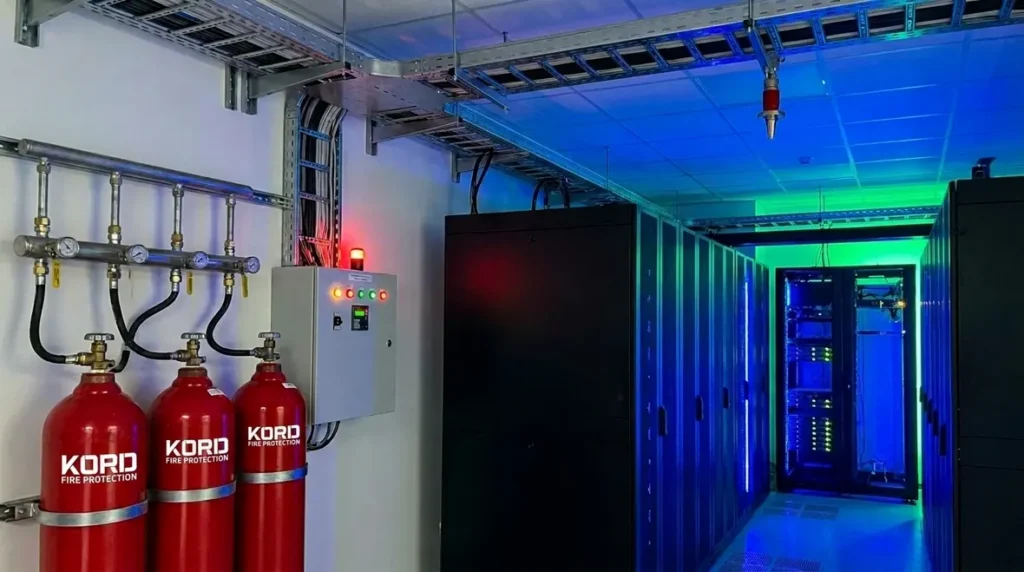
Common protection strategies often include automatic sprinkler systems, water mist or gaseous options in specific locations, and zone-based designs that reduce water damage while still stopping growth. The goal stays clear: stop the fire early, then protect life and maintain business continuity.
Protection that starts before someone grabs a handle
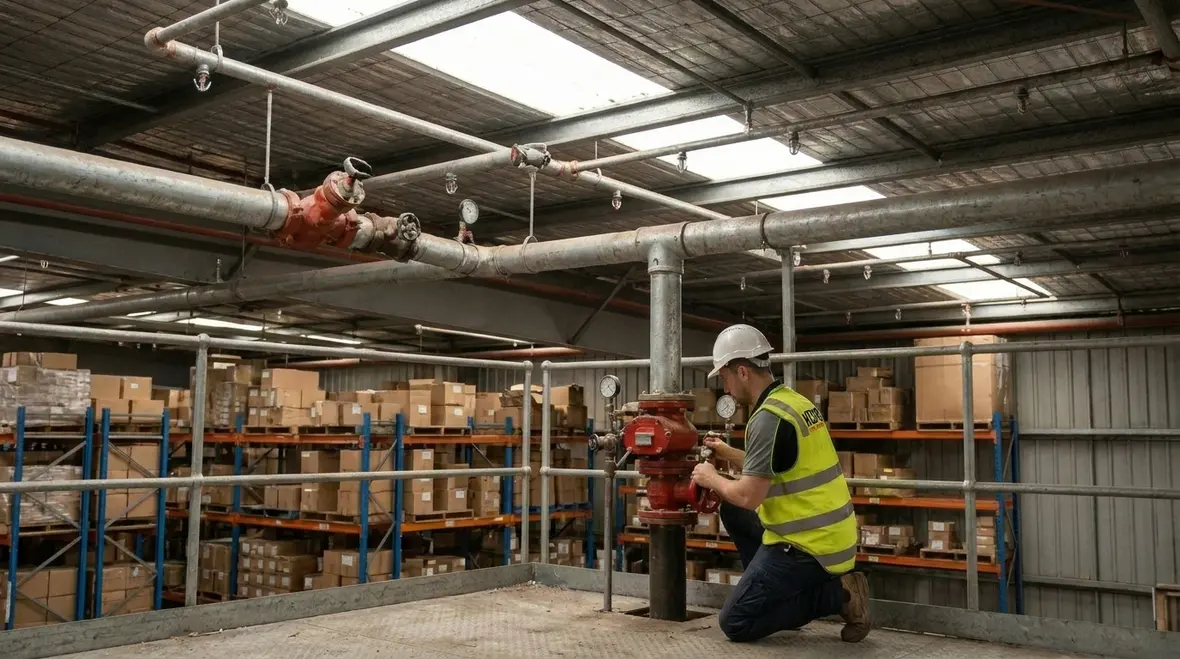
This is where suppression earns its keep. It removes delay from the equation. Instead of asking whether the nearest worker noticed the smoke in time or knew which extinguisher to choose, the system is built to detect and respond according to the design intent. That can be the difference between a contained incident in one section and a multi-zone event that shuts down operations, damages stock, and leaves everyone asking how a small ignition turned into a very large invoice.
Key design factors for industrial and retail sites across Australia
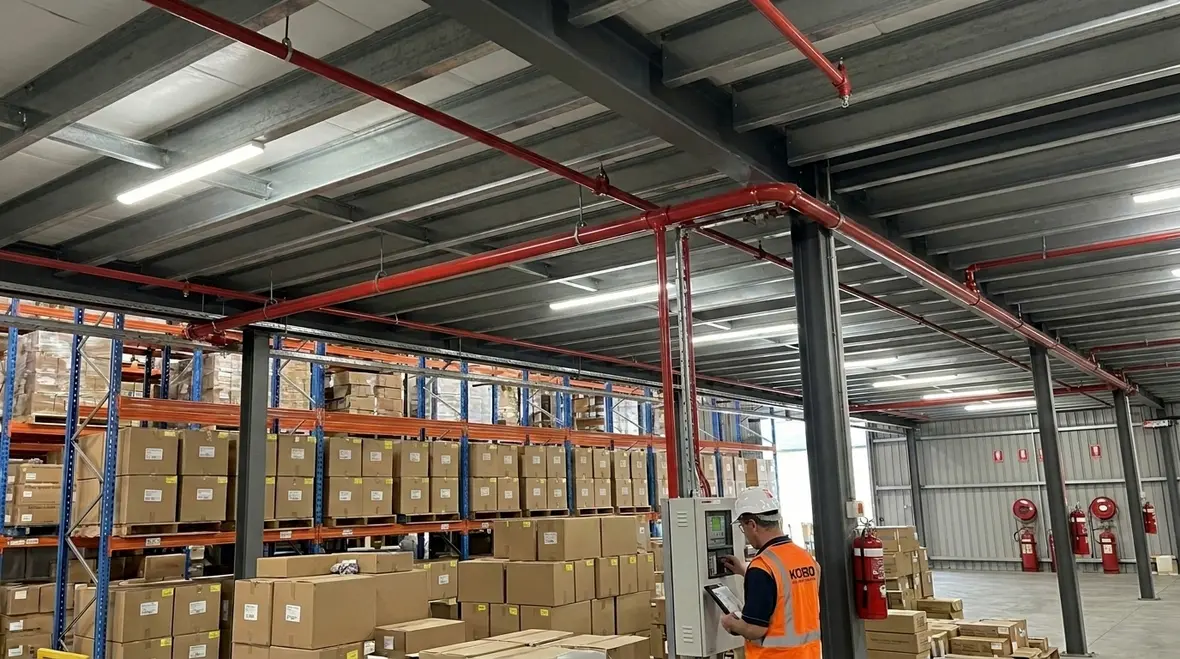
Successful warehouse fire suppression Australia planning starts with a site truth survey, not a template. First, a team reviews storage height, rack types, aisle widths, and ceiling construction. Next, they evaluate commodities, packaging, and how quickly the contents can feed a fire. Then they examine how air moves through the building, because airflow can push heat and smoke into new areas.
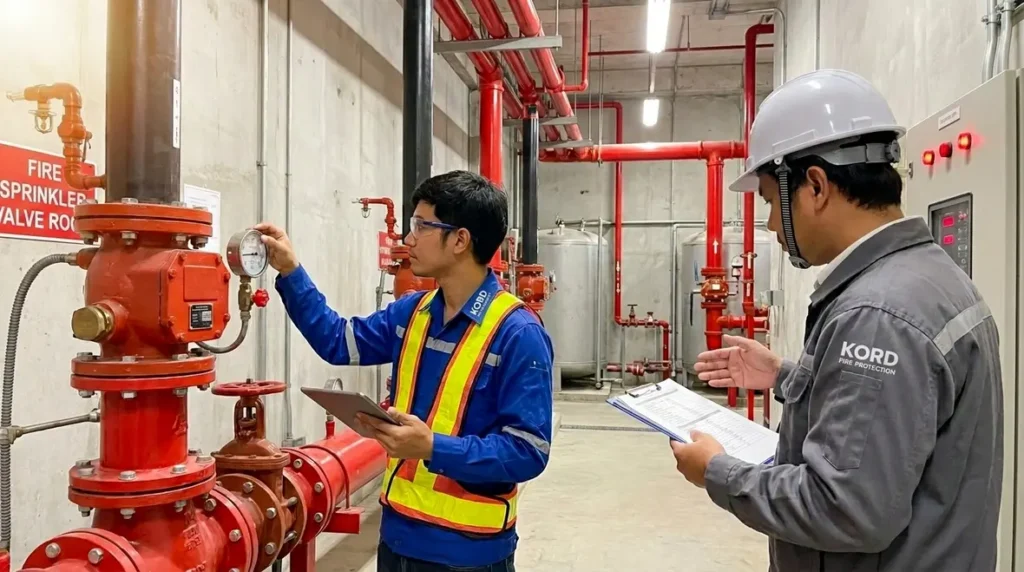
After that, engineers review services and constraints. Water supply capacity matters. Pipe routing matters. Floor drains matter. Even firefighting access points matter, because design should support both system performance and human response. Meanwhile, maintenance needs shape the final choices. Systems that are too complex to service tend to become unreliable. And no one wants a system that looks great on day one and behaves like a ghost on day one plus twelve months.
What practical design review usually covers
- Hazard classification by area and occupancy type to match protection levels
- Coverage planning that accounts for obstructions like beams, ducts, mezzanines, and sprinklers themselves
- Pipe sizing and hydraulics checks to keep pressure and flow consistent during activation
- Compatibility with fire alarms, detection, and evacuation procedures
- Consideration for business operation, including commissioning timing and service shut downs
Those decisions are not just technical details for a drawing set. They affect whether a system will still perform after changes in stock profile, whether maintenance teams can access key components without chaos, and whether the final arrangement works with the day-to-day demands of a busy site. Good design is not flashy. It is practical, serviceable, and ready for the real conditions that show up after handover.
How suppression integrates with alarms, staff, and downtime planning
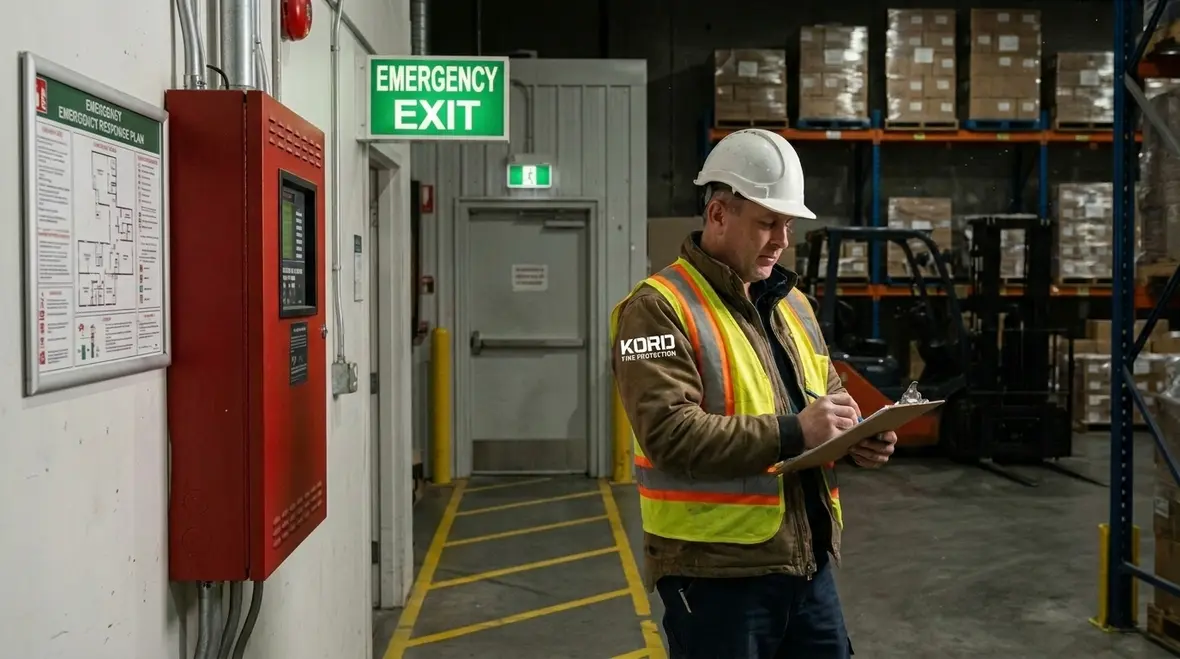
Systems do not work in isolation. They perform best when they connect with detection and response procedures. For example, when smoke or heat activates alarms, staff need clear guidance on where to go, what to shut down, and how to coordinate with emergency services. Meanwhile, the suppression system aims to slow or stop fire development until responders arrive.
In warehouses, continuity planning matters because downtime costs move fast. If a facility stores high-turnover stock, delays ripple across supply chains. Therefore, design decisions often consider response speed and targeted control zones. A system that limits damage to a smaller section can keep other operations running, or at least shorten the recovery window. That is not just safety, it is operational resilience.
And yes, people need training. No matter how good the hardware is, the team must understand alarm signals, access routes, and basic do’s and don’ts. A fire incident does not wait for meetings, so planning must happen before the smoke shows up. Clear procedures, routine drills, and sensible isolation steps give the suppression system the support it needs from the human side of the operation.
Downtime is usually the second emergency
Many facilities focus on the flames and forget the aftermath. Yet recovery time often causes damage long after the fire is out. Missed orders, interrupted logistics, spoiled stock, inaccessible plant, and clean-up delays can all hit hard. A suppression design that controls spread early gives the business a better chance of containing both the fire and the disruption. That is the kind of boring, sensible planning that becomes very exciting when something goes wrong.
Common risks in Australian warehouses and industrial spaces
Across Australia, warehouses and industrial sites face recurring hazards. One is storage practices that change over time. A pallet pattern that fits one product may shift when inventory changes. Over months, that shift can alter fire load and coverage effectiveness. For that reason, inspections and updates matter.
Another risk is aging infrastructure. Older pipework, valves, and detection devices can degrade. When a site does not test systems regularly, problems may go unnoticed until the worst possible moment. Then there is the human side: blocked access, damaged sprinkler heads, or temporary works that alter ceilings and obstruct coverage. It sounds minor, until it is not.
Finally, warehouses often add equipment. New racking, mezzanines, robotics, or extended conveyor runs can change how fire and heat move. Therefore, a system may require re-assessment when the building evolves. Kord Fire Protection supports that ongoing lifecycle approach, so protection stays aligned with how the site actually operates.
Why Kord Fire Protection becomes a vital partner
When extinguishers are not enough, businesses need a supplier that understands the whole job: risk review, compliant design, installation quality, and dependable service. Kord Fire Protection acts as a long-term partner rather than a one-time contractor. That means teams can expect clear communication, practical recommendations, and support that fits industrial timelines.
As a result, Kord Fire Protection helps clients in commercial, retail, and facilities environments make informed decisions about warehouse fire suppression Australia strategies, suited to real hazards and real constraints. They also help maintain systems so they perform when it counts, not only when paperwork is due. In a world where we will check it later often becomes we regretted it, this approach carries real value.
A partner is more useful than a box-ticker
That matters because warehouse protection is not static. Facilities change. Stock changes. Layouts change. Tenants, processes, staffing, and operating hours change too. A provider that looks beyond installation day can help keep the system aligned with reality instead of leaving the site with aging assumptions and crossed fingers. That long-term view is usually what separates a compliant setup on paper from a reliable one in the real world.
FAQ
Final CTA: If a warehouse relies on extinguishers alone, it is gambling with the one thing that always shows up: fire. Kord Fire Protection helps industrial, retail, and facilities teams across Australia build protection that actually controls risk. Get a risk focused review, discuss your layout and hazards, and move toward a suppression plan that supports safety and business continuity. Contact Kord Fire Protection today and let the system do the heavy lifting.