CO2 Fire Suppression Australia Compliance and Safety
Quick Answer: CO2 fire suppression systems help control fires by displacing oxygen and cooling fuel vapours. In Australia, they must follow strict design, installation, and maintenance rules tied to the right standards. For industrial sites and commercial facilities, an expert partner like Kord Fire Protection ensures the system fits the hazard, stays compliant, and works when it matters.
In busy workplaces across Australia, teams need fire protection that acts fast, reduces damage, and does not interrupt operations more than necessary. That is where CO2 fire suppression Australia comes in. However, the real value is not just the gas itself. It is the system design, the safety controls, and the Australian compliance pathway that together decide whether the protection performs as intended. In other words, CO2 can work brilliantly, provided it is engineered properly, tested properly, and maintained properly. And yes, that means the job is not “set and forget,” even if someone tries to treat it like a phone update.
For facilities comparing suppression strategies, it also helps to understand how broader fire suppression systems are selected around hazard type, asset sensitivity, and operational risk. CO2 is powerful, but only when it is the right fit for the enclosure and the people working around it.
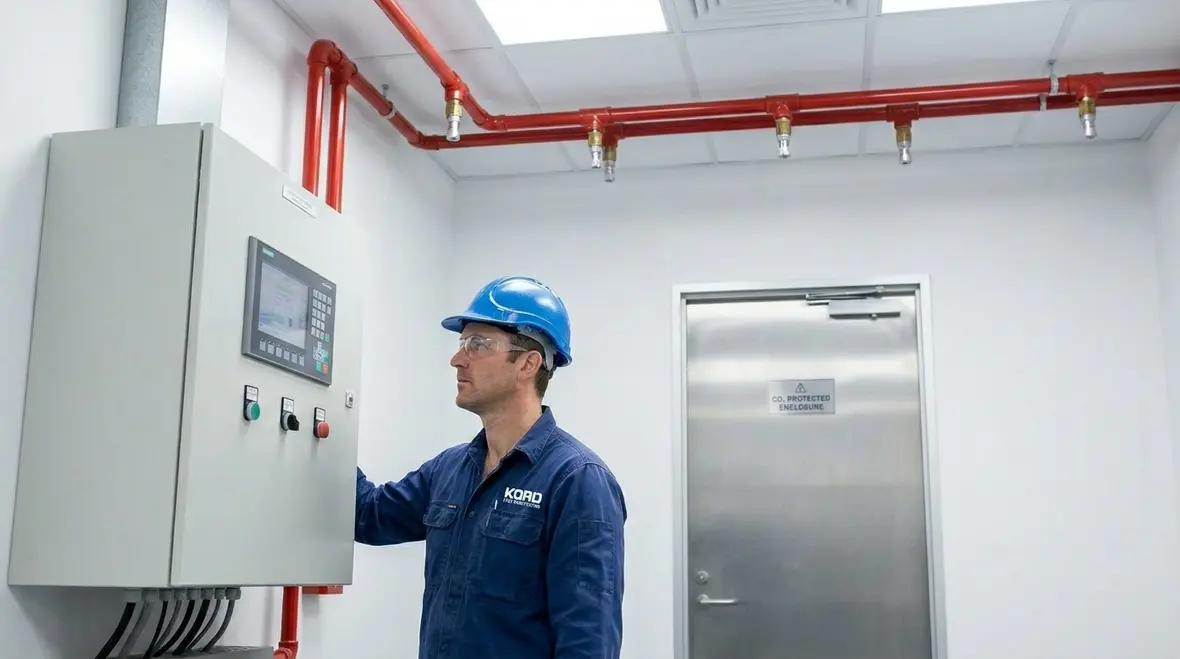
CO2 systems in Australian facilities: what they control and why
CO2 fire suppression works mainly for hazards where a controlled flooding approach can interrupt the fire triangle. It can reduce oxygen availability around the protected space and slow down combustion. Therefore, it suits locations such as cleanrooms and electrical switch rooms, along with industrial plant areas where water mist or foam may be unsuitable or risky.
Yet it does not fit every scenario. CO2 systems require careful hazard assessment because they protect a specific enclosure, volume, or machinery space. If the space cannot hold the concentration long enough, or if door openings and airflow undermine the discharge, performance drops. Consequently, designers evaluate enclosure integrity, ventilation rates, and likely fire growth.
It also matters how the system prevents exposure during discharge. People and animals in the protected zone during discharge can face serious risk, because CO2 reduces breathable oxygen. For that reason, safety interlocks and warning processes must be designed with discipline, not hope.
Why the enclosure matters more than people expect
A CO2 system is only as good as the space it protects. That sounds obvious, but it gets overlooked surprisingly often. The protected room or machinery enclosure has to behave like an engineered volume, not a mystery box with mystery gaps. If leakage is high, concentration falls too quickly. If fans keep running, discharge effectiveness drops. If doors are routinely propped open, the design intent quietly exits the building before the gas even gets a chance.
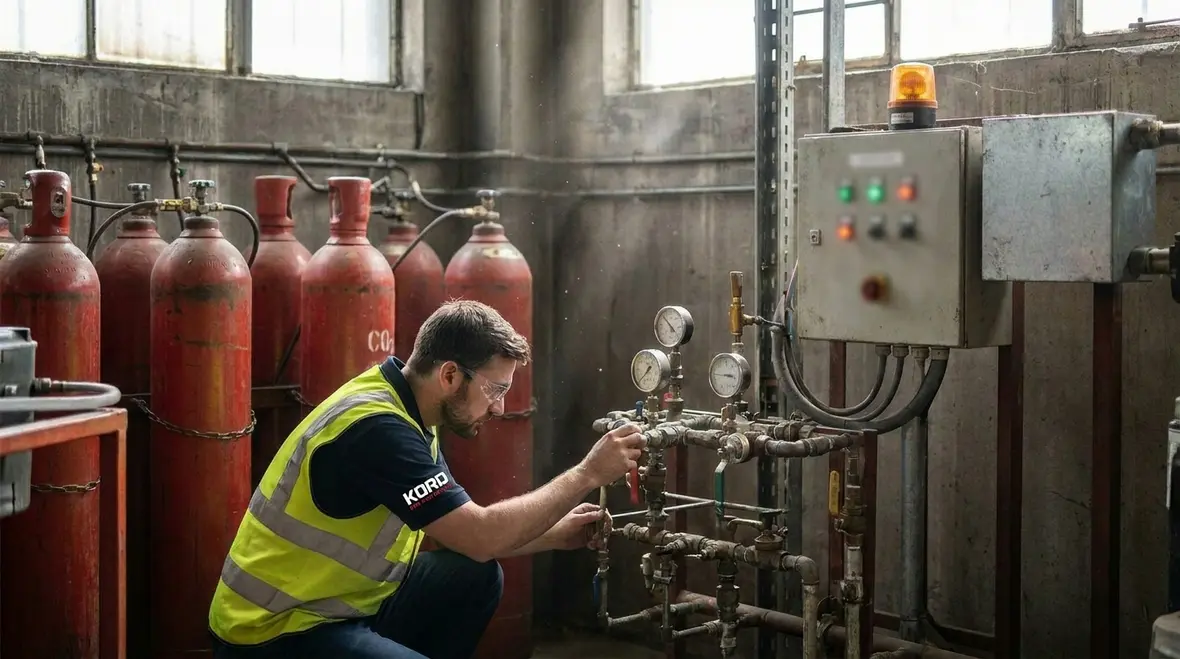
Key components that make CO2 effective and safe
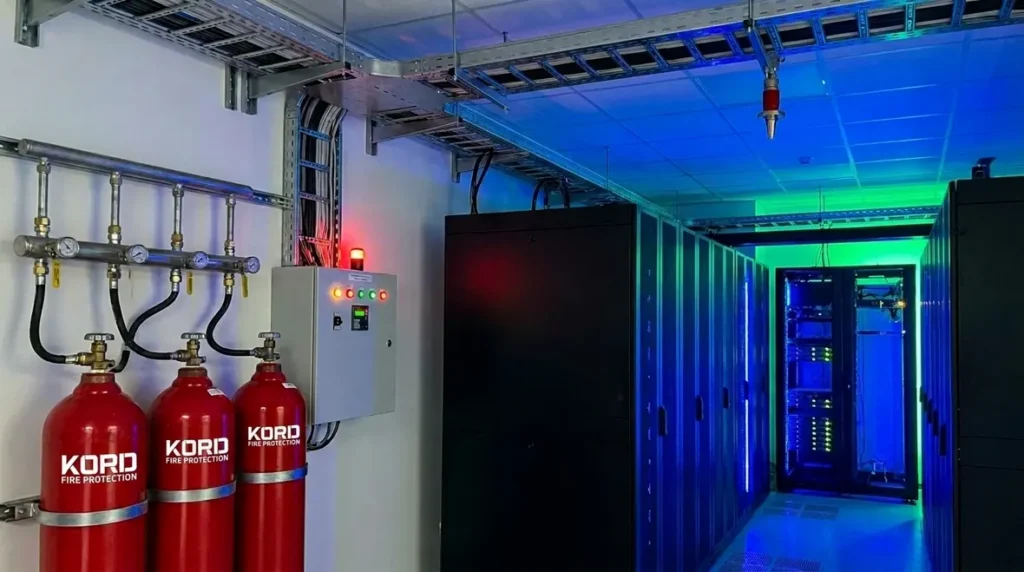
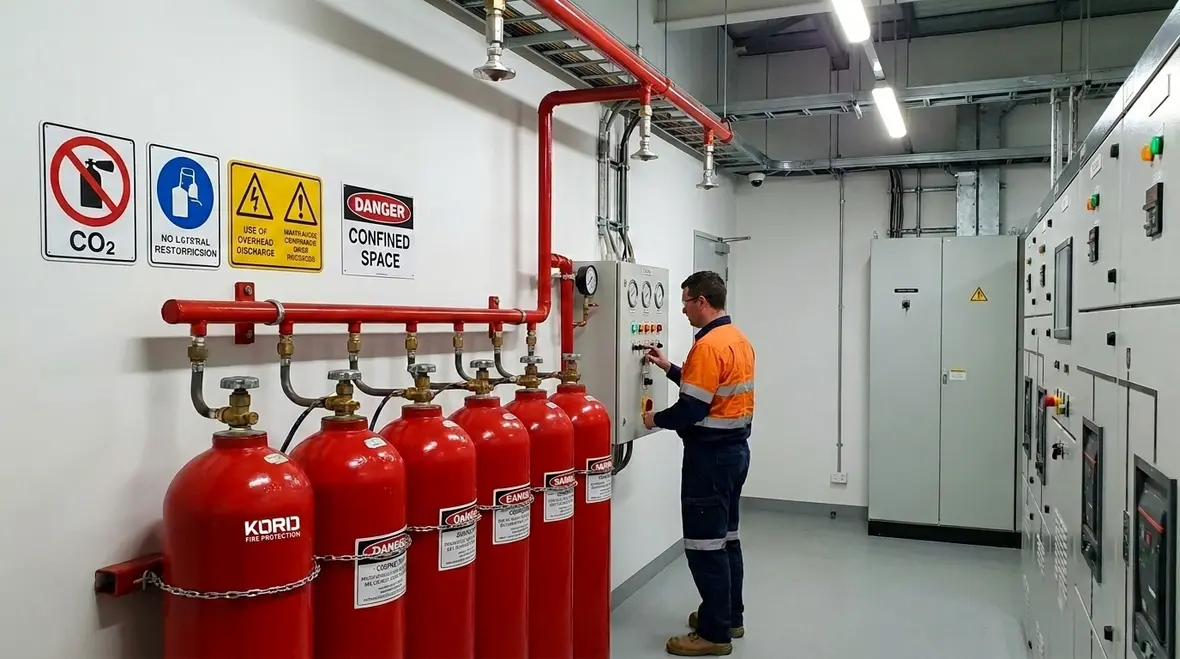
A reliable CO2 system depends on more than cylinders and a release head. It typically includes detectors, a control panel, release valves, piping or nozzles, and a manual call point. Moreover, it often uses dampers and ventilation controls to manage air flow before discharge. The system logic usually coordinates alarms, timers, and evacuation signals.
Common elements include:
- Detection and logic: multiple input signals and confirmed conditions reduce false discharges
- CO2 storage and distribution: cylinders, manifolds, and discharge piping sized for the target concentration
- Discharge nozzles: arranged to achieve coverage and avoid dead zones
- Pre-discharge alarms and timers: provide controlled evacuation time
- Mechanical interlocks: shut ventilation or isolate openings when required
- Manual release and abort controls: used carefully and only by trained operators
And then there is the part many people underestimate: commissioning. Testing verifies that detectors respond, valves open at the right moment, and the discharge achieves the required conditions. If commissioning is rushed, the system may “look” correct while failing at the exact time you need it most. Fires love shortcuts. Fire does not care about anyone’s project timeline.
Detection logic is not there for decoration
The safest systems are deliberate about when discharge should happen and when it absolutely should not. Cross-zoning, verified detection signals, pre-discharge delay, and supervised release circuits all contribute to controlled operation. That reduces nuisance trips while keeping the system ready for a real event. Nobody wants a false discharge in a critical room, and nobody wants hesitation in a real fire either. Good design has to handle both.
Australia safety standards: compliance that organisations can prove
In Australia, CO2 fire suppression Australia projects typically need alignment with nationally recognised fire safety and system requirements, and they must match the applicable codes and compliance expectations for fire detection and fixed suppression. The exact requirements can vary by state and by the building or industry classification, so a competent fire protection provider usually starts with a hazard assessment and then maps design choices to the relevant Australian compliance pathway.
Good compliance does not stop at design drawings. It includes installation records, functional testing, acceptance documentation, and ongoing maintenance schedules. Therefore, facilities teams should expect evidence such as commissioning reports, service tags, and documented inspections of detection components, release hardware, and integrity checks for the protected enclosure.
Safety management also includes operational controls. For instance, a site should maintain procedures for evacuation, staff training, and access management so people understand when the protected area becomes unsafe. Additionally, the system should integrate with the building fire alarm and monitoring arrangements where required, so alarms reach the right people without delay.
When standards are handled properly, the organisation can prove due diligence. In audits, that matters. In real incidents, it matters even more.
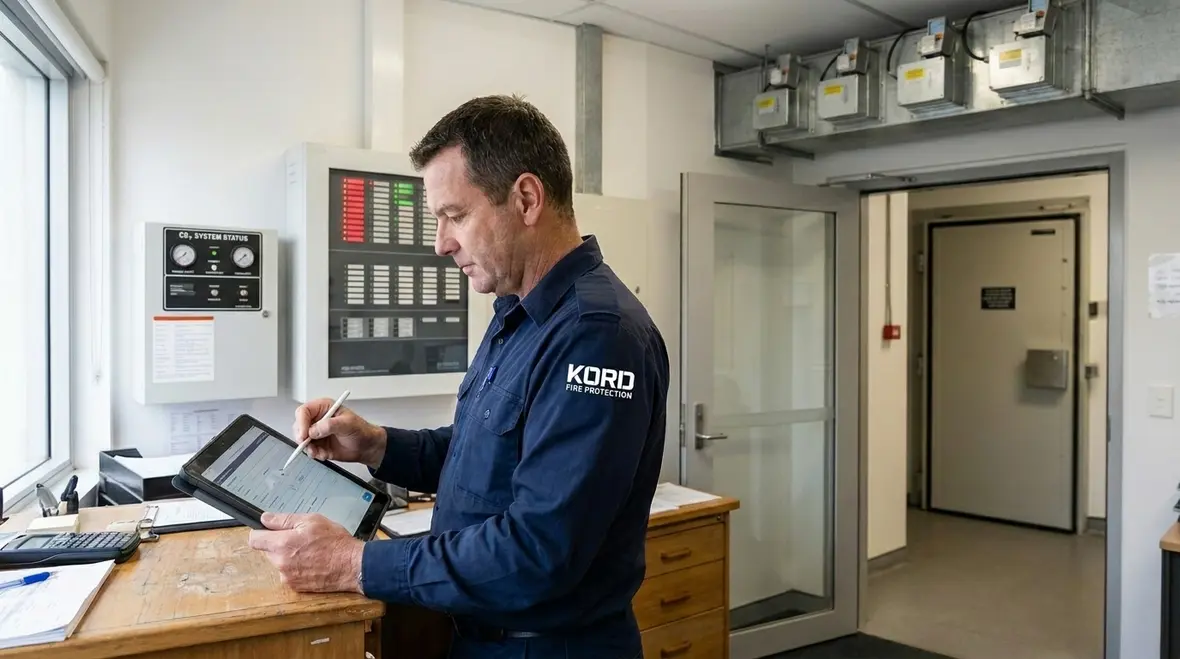
Where industrial and retail sites use CO2 effectively
Different businesses face different fire risks, and CO2 systems can be a smart choice where oxygen reduction and total flooding approaches align with the hazard. Industrial facilities often use CO2 to protect spaces with electrical equipment and machinery where water application can increase risk or damage critical assets. Similarly, some retail and commercial back-of-house areas with high-value electronics or limited suppression options can benefit when engineered carefully.
However, CO2 requires disciplined enclosure control. So, the best results come from:
- enclosed compartments with predictable leakage
- areas with limited spontaneous airflow disruption
- hazards that tolerate non-water suppression approaches
- sites that can support strict evacuation and access controls
For example, an electrical room often has tight equipment tolerances and a strict uptime expectation. CO2 can protect without flooding equipment with water. Yet the ventilation and door usage around that room must still be managed, otherwise the concentration target becomes a wish instead of an engineering outcome. In short, CO2 works best when facilities treat the protected space like an engineered compartment, not a casual corridor with occasional open doors.
Industrial confidence comes from repeatable conditions
That is one reason industrial and commercial operators benefit from disciplined review of enclosure changes, airflow modifications, and occupancy patterns over time. A room that was ideal for total flooding three years ago can become a very different risk profile after plant upgrades, ductwork changes, or a few too many “temporary” operational habits that somehow became permanent.
Designing interlocks, evacuation control, and ongoing maintenance
Safety hinges on timing and certainty. A CO2 discharge sequence usually includes pre-discharge alarms and a short delay so staff evacuate. Meanwhile, interlocks can shut ventilation fans, close dampers, and isolate certain openings. Consequently, the discharge does not just happen, it happens in the right order and with clear warnings.
Maintenance keeps that certainty alive. Regular service should check:
- detectors and control panel health
- valve operation and release circuit integrity
- pressure monitoring for stored gas
- nozzle blockages and pipe condition
- alarm sounders and visual warning devices
- enclosure closure performance where relevant
Also, facilities need to keep procedures current. If a site changes layout, adds airflow equipment, or alters door usage, the original design assumptions may no longer match reality. When that happens, the system may still “function,” but it may not perform at the required level. And yes, that is the kind of problem that shows up right after someone says, “It’s been fine for years.”
Maintenance is where compliance becomes real
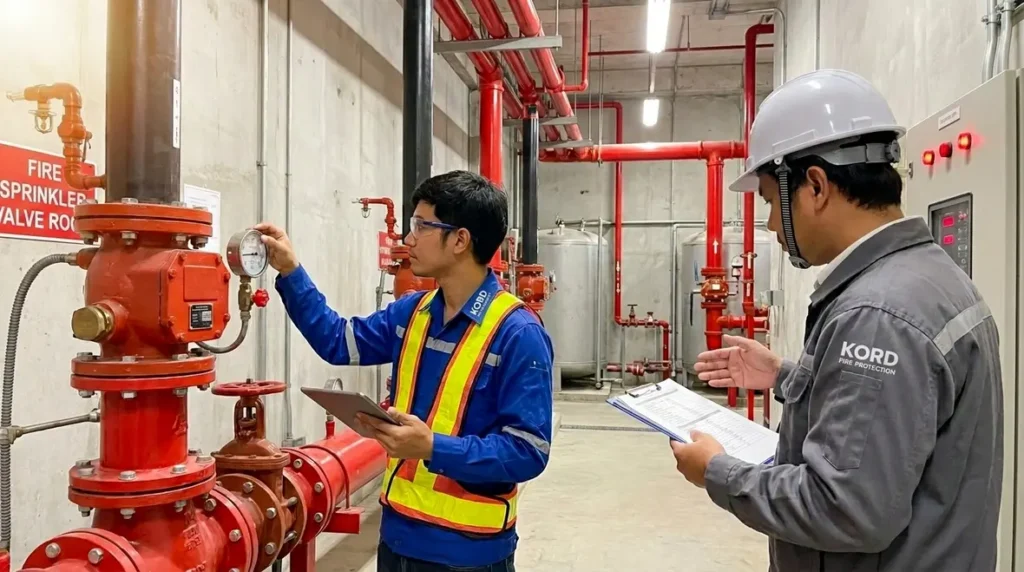
A compliant installation on day one is important. A compliant installation two years later is what actually protects the business. Service intervals, documented inspections, corrective actions, and retesting are what turn a specification into an operating safety measure. If maintenance records are thin, missing, or overly optimistic, that is usually not a paperwork issue. It is a reliability issue wearing a paperwork costume.
Kord Fire Protection as a vital partner for CO2 projects
Organisations do not need a vendor who simply installs cylinders and leaves. They need a partner who coordinates hazard understanding, design intent, and compliance proof. That is exactly where Kord Fire Protection supports industrial, retail, and commercial facilities across Australia. The team approaches CO2 fire suppression as a full service job, covering system assessment, design support, installation coordination, commissioning, and structured maintenance planning.
Moreover, Kord Fire Protection helps clients reduce risk by strengthening the “human side” of safety: procedures, warnings, and operational controls that staff must follow. Therefore, the system remains more than hardware. It becomes a tested safety strategy.
In business terms, it means fewer surprises during audits, better clarity for facility managers, and confidence that the system will perform under real conditions. And if someone tries to treat compliance like an optional extra, Kord Fire Protection makes sure it is handled properly, with the calm patience of a pro who has seen every version of “we’ll fix it later.”
FAQ
Conclusion and call to action
CO2 fire suppression Australia can be a strong option for industrial, retail, and commercial facilities when the hazard, enclosure design, and safety controls align. The difference between “installed” and “effective” comes down to commissioning, compliance evidence, and disciplined maintenance. Kord Fire Protection partners with organisations to deliver systems that perform when it counts and stay dependable over time. Reach out to discuss your hazard assessment, design intent, and service plan today.