Facility Manager Halon System Compliance and Upgrade
Quick answer: If a building still has a Halon system, a facility manager should confirm the system type and condition, stop reckless attempts at “top ups,” and plan a compliant replacement or risk based upgrade. They should also secure documentation, coordinate shutdowns safely, and verify alarms, detection, and agent control so the site stays protected.
In Australia, facilities often run older fire suppression equipment long past the “it was working when my uncle touched it” era. However, when a building still has a Halon system, the facility manager fire suppression task shifts from routine oversight to careful compliance planning, safety management, and long term risk reduction. And that is where Kord Fire Protection can become a vital partner.
Our company helps facility teams in industrial, retail, and commercial environments build a clear path forward. They do it by assessing what exists, identifying what actually works, and helping clients move toward safer options without creating avoidable downtime or surprises. For teams reviewing broader protection strategy, it also helps to understand how a fire suppression system upgrade pathway fits into operations before legacy equipment becomes a full blown headache.

1) Facility manager fire suppression with legacy Halon: first steps
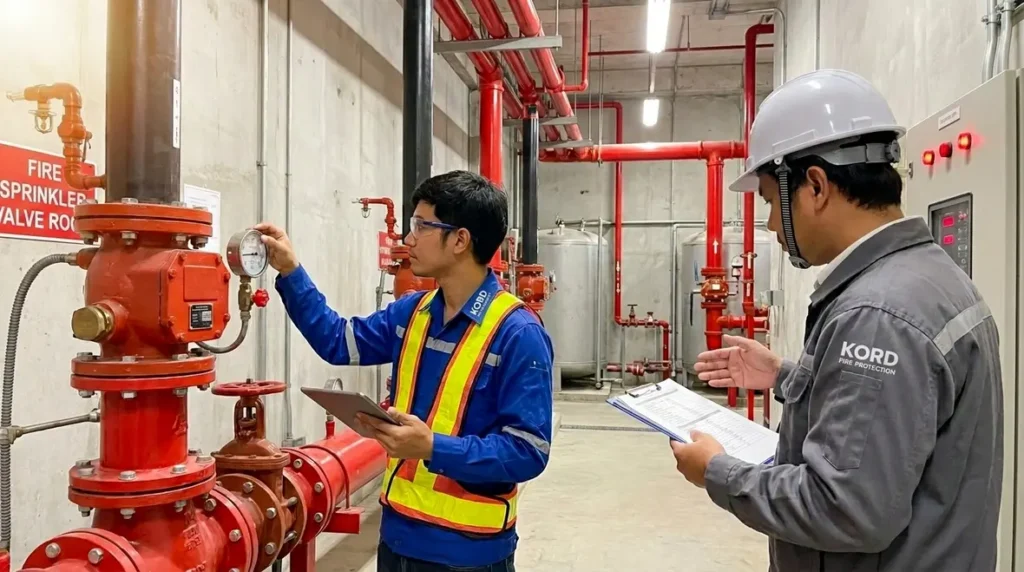
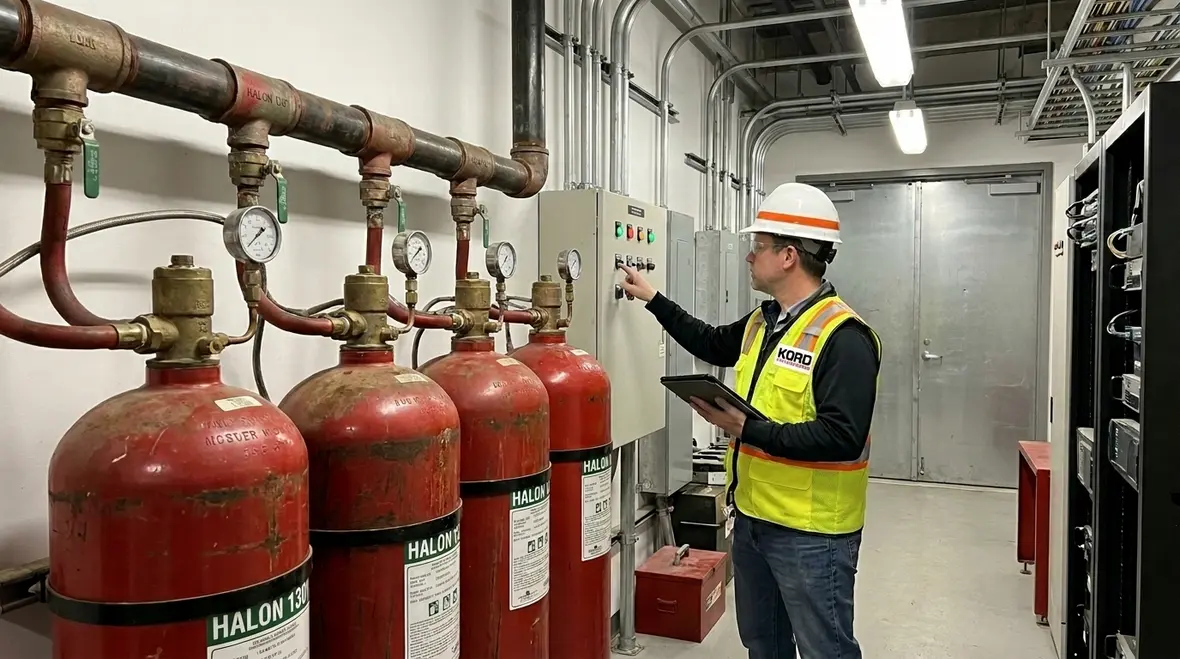
First, the facility should confirm what is installed, where it is stored, and how it releases. Halon systems may include cylinders, piping runs, release panels, and detection inputs. To begin, the facility manager fire suppression approach should include a physical survey and a document review. Then, they should match labels and panel history to the real equipment.
Next, they should check the system’s integrity in a way that does not rely on guesswork. That means verifying detection devices, release circuits, and manual pull stations. After that, they should inspect the discharge distribution areas for obstructions and verify that seals and access points remain correct for agent containment.
Start with what’s actually there, not what the folder says
That sounds obvious until a team opens a dusty cabinet, reads a label from another decade, and discovers the site layout has changed three times since the drawings were printed. Legacy fire suppression is famous for this. A room gets repurposed, cabling gets rerouted, a wall gets modified, and suddenly the original design assumptions are about as current as a flip phone charger.
Here is a practical reality: Halon is not just a chemical. It connects to release control logic, maintenance history, and building layout. So, a “we will just service it” mindset can turn into a comedy of errors, like trying to fix a playlist by replacing the whole record player.
Why early review saves pain later
The earlier a facility manager documents actual conditions, the easier every later decision becomes. That includes whether the system is still supportable, whether another suppression strategy is more sensible, and whether shutdown planning needs temporary protection measures. A proper first pass is less glamorous than a shiny upgrade announcement, but it prevents the classic project mistake of discovering the real problem halfway through the job.

2) Understand why Halon creates both compliance and safety pressure
Halon systems face long term issues due to availability and regulatory expectations. Even when a system still functions, the facility has to consider what happens if it must be discharged during an emergency. Then the facility manager should ask: can the agent be replenished in the required time frame, and does the maintenance strategy still make sense in today’s regulatory environment?
In addition, Halon older components can drift out of original tolerance. Detection sensitivity can change. Actuation timers can wear. Distribution pathways can develop damage from routine upgrades or pest control activity. Therefore, the facility should treat Halon like an aging network, not a static asset.
Also, the business risk matters. If the system requires service during peak operations, a facility may lose hours, shut down sections, or disrupt production. So, the safest plan is one that aligns engineering work with operations schedules.
Compliance pressure is not just paperwork
Facility managers know the pain of the “surely this is fine” assumption. On paper, the system exists. In reality, nobody is fully confident about spare parts, discharge readiness, or whether the records still reflect the installation. That gap matters. Compliance pressure usually shows up as audit questions, maintenance limitations, insurer concerns, or approval bottlenecks when site use changes. Safety pressure shows up when you realise an emergency is the worst possible moment to test old assumptions.
3) Build a Halon action plan that protects operations
A strong plan does not just aim to “fix the system.” Instead, it outlines decisions, timelines, and responsibilities. It starts with a risk based assessment. Then, it identifies which spaces have high likelihood of fire and high consequence outcomes.
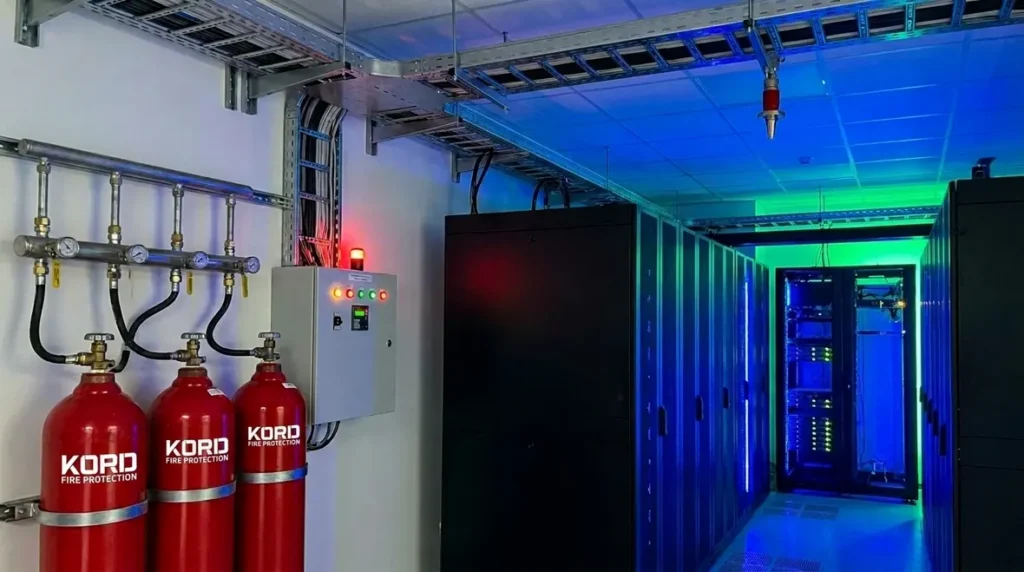
After that, the plan should include options such as replacement with modern clean agents, alternative suppression technologies, or localised protection improvements where full room flooding is not necessary. Meanwhile, detection and controls must keep pace, because a suppression system is only as reliable as its inputs.
Next, the facility manager should coordinate with stakeholders to schedule downtime and access. For example, the team might need temporary isolation for cylinder handling, valve checks, or panel verification. Then, they should confirm procedures for hot work permits and emergency response coordination.
A sequence that keeps everyone sane
To keep it simple, this is the sequence that works across Australian sites: assess, document, test, plan replacement, then execute with staged commissioning. Kord Fire Protection supports that workflow so facility teams do not scramble like it is last minute tax time.
That sequence matters because operations people, maintenance people, contractors, and managers usually bring different priorities to the same project. One group wants zero downtime, one wants zero risk, one wants faster approvals, and one just wants the work finished before the next budget meeting. A written action plan gives all of them the same map.
4) Verify documentation, inspection history, and system readiness
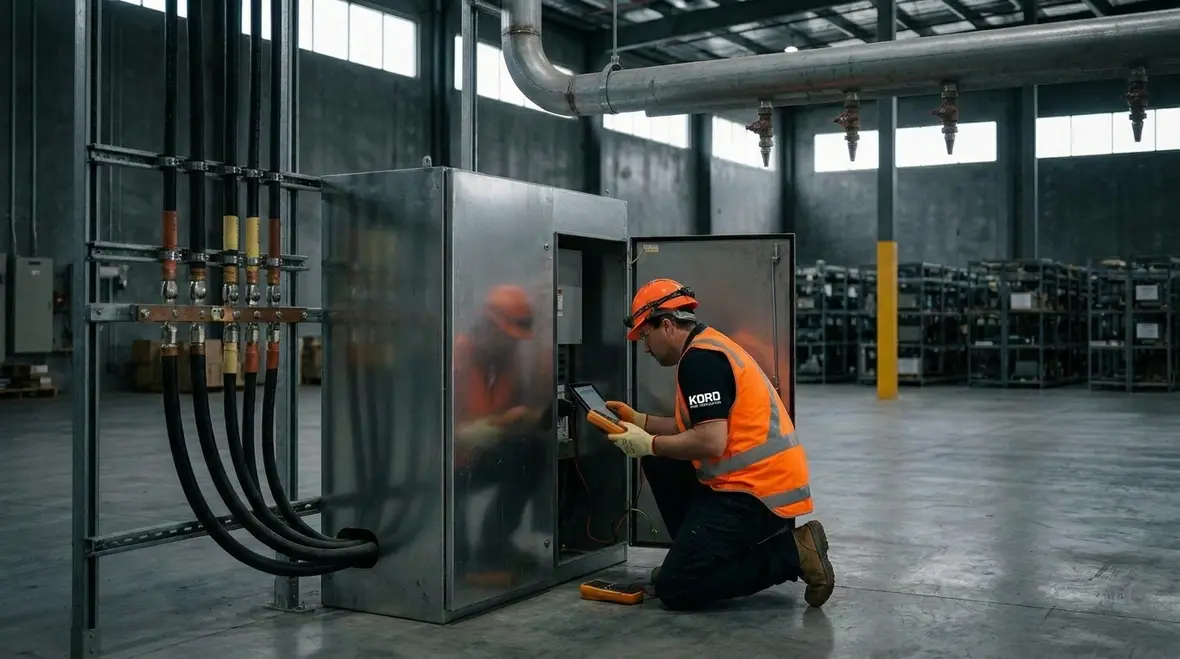
Before any major work begins, a facility manager should consolidate everything the building has. That includes as built drawings, cylinder schedules, system schematics, last inspection and test reports, and commissioning records. Then they should compare that information with what the system actually looks like today.
For system readiness, the facility should verify the complete chain of operation. Detection must trigger within expected time and conditions. Actuation components must operate correctly. Release pathways must not be blocked. Also, signage and occupant awareness should match the hazard profile, especially in spaces where discharge can reduce visibility and create panic if people do not understand what to do.
Most importantly, they should confirm how the system interfaces with fire alarms and building management systems. If alarms report correctly but suppression does not actuate, the facility will create false confidence. Therefore, testing should cover both detection performance and actuation performance, not just one or the other.
Readiness means proving the whole chain
This is where older systems often catch people out. A detector may appear serviceable, a panel may still power up, and signage may still be on the wall, yet the integrated logic between those components may not reflect current building use. Kord Fire Protection works with teams to interpret legacy records and align them with current compliance expectations, so the site moves from paperwork to practical readiness.
5) When to upgrade, and how to avoid costly downtime
Upgrades become necessary when the system cannot be maintained reliably, when replacement parts are no longer practical, or when risk assessment shows the protection strategy no longer fits the current use of the space. For example, a warehouse space that was once storage only might now include changed materials, pallet types, or packaging processes. That can change fire behaviour.
So, the facility manager should select an upgrade path that fits the operational rhythm. They may choose staged works that keep other zones online, or they might schedule modifications during planned maintenance windows. Then, commissioning should include integrated testing of detection, alarms, and suppression control logic.
At times, clients worry about disruptions. However, the right planning reduces disruption because the team knows the real constraints early. Kord Fire Protection brings that discipline. They coordinate site access, plan cylinder and valve handling, and support commissioning so the building does not sit in limbo.
In short, facility managers should not treat Halon as a slow leak problem. They should treat it as a managed project with clear deliverables and acceptance testing.
Downtime gets expensive when decisions are delayed
The costly part is often not the upgrade itself. It is the uncertainty before it. If nobody has confirmed scope, shutdown conditions, access requirements, or commissioning steps, operations teams start building contingency plans on bad information. That is how a neat technical project turns into a scheduling circus.
6) How Kord Fire Protection becomes a vital partner
Every building is different, and Australian workplaces vary widely between industrial plants, retail fit outs, and commercial tenancy layouts. Therefore, the best results come from a partner that can assess, design, and deliver without guesswork.
Kord Fire Protection helps facility managers by providing practical evaluation of existing Halon systems and recommending a compliant pathway forward. Then, they help manage the transition to modern solutions, including upgrades that align with detection, control logic, and site operations.
They also support the documentation side that facilities need for audits and internal governance. Consequently, the facility manager fire suppression strategy becomes easier to defend in meetings and easier to run day to day. And honestly, nobody wants to explain a missing compliance folder during a surprise audit. It is like forgetting your phone at home and realizing you now live in 1997.
With Kord Fire Protection, facilities gain a partner who understands legacy systems and the operational pressure that comes with keeping businesses running.
FAQ
Conclusion: make the smart move now
Halon systems do not fail overnight, but the risk builds quietly until a real emergency exposes weaknesses in parts, documentation, or readiness. A facility manager should assess the system, verify the full actuation chain, and plan a compliant upgrade without disrupting operations. Kord Fire Protection can guide industrial, retail, and commercial facilities across Australia from legacy Halon to a safer, modern fire protection strategy. Contact Kord Fire Protection to schedule an evaluation and build a clear next step.