Compliance Driven Decommissioning and Replacement Fire Suppression in Australia
Quick Answer: In Australia, compliance driven decommissioning and replacement of fire suppression systems protects people, keeps businesses running, and avoids nasty surprises during audits. It starts with a safe shutdown, evidence ready documentation, and correct disposal. Kord Fire Protection can guide the full process and deliver reliable replacement outcomes.
For many sites, the day finally comes when the remove outdated fire suppression system needs to happen. That might sound like a minor job, like clearing old boxes from a warehouse. However, in industrial, retail, and commercial facilities across Australia, it is anything but minor. First, the system may no longer meet current standards, or it may struggle to perform as intended. Next, compliance deadlines and inspection findings can force action sooner than anyone planned. Then, the real challenge appears: replacing it without disrupting operations, breaking safety rules, or triggering further non compliance.
So, the job turns into a carefully managed process, not a weekend DIY mission. Because nobody wants their sprinkler system to behave like a “maybe it will work” character from a bad TV plot. For sites also reviewing broader protection upgrades, fire suppression systems planning should be part of the conversation from the start.
Why compliance matters during system shutdown
When a facility prepares to retire an old installation, compliance becomes the spine of the whole project. Auditors and insurers look for clear evidence that the system was handled safely and correctly. And regulators expect that the new equipment matches the fire risk and the relevant Australian requirements.
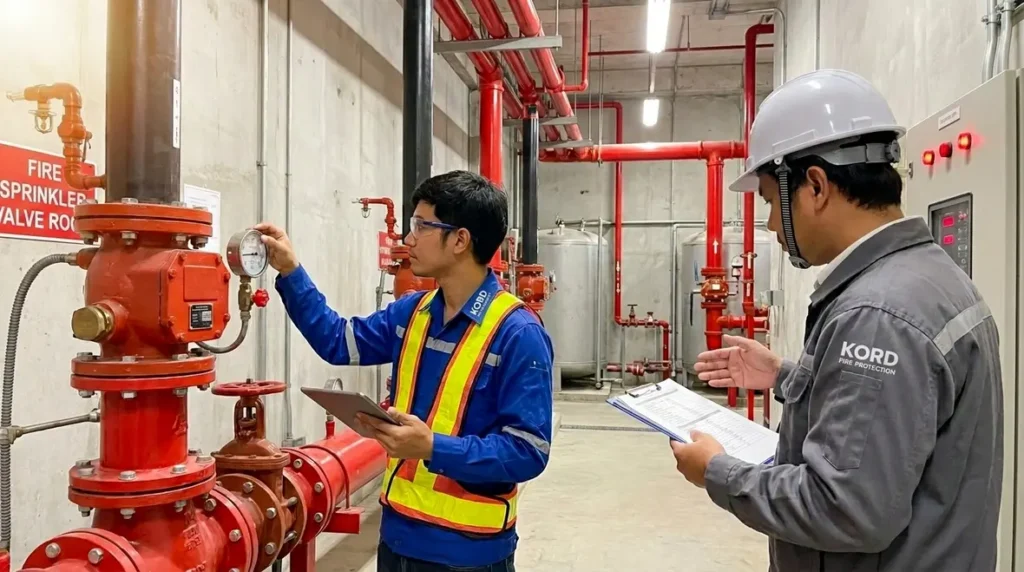
Typically, compliance driven decommissioning must address several elements at the same time. First, the site needs a safe plan for isolation and control of hazards. Then, teams must verify what is still in service and what is being taken out. After that, the facility must manage any stored agent, gas cylinders, foam concentrates, or pressurised components. Finally, replacement work must align with commissioning and documentation.
Kord Fire Protection supports sites across multiple facets of commercial operations, which means it understands the pressure of “we cannot close today.” It also helps clients keep records tidy enough that the next inspection feels less like a jump scare and more like a calm walkthrough.
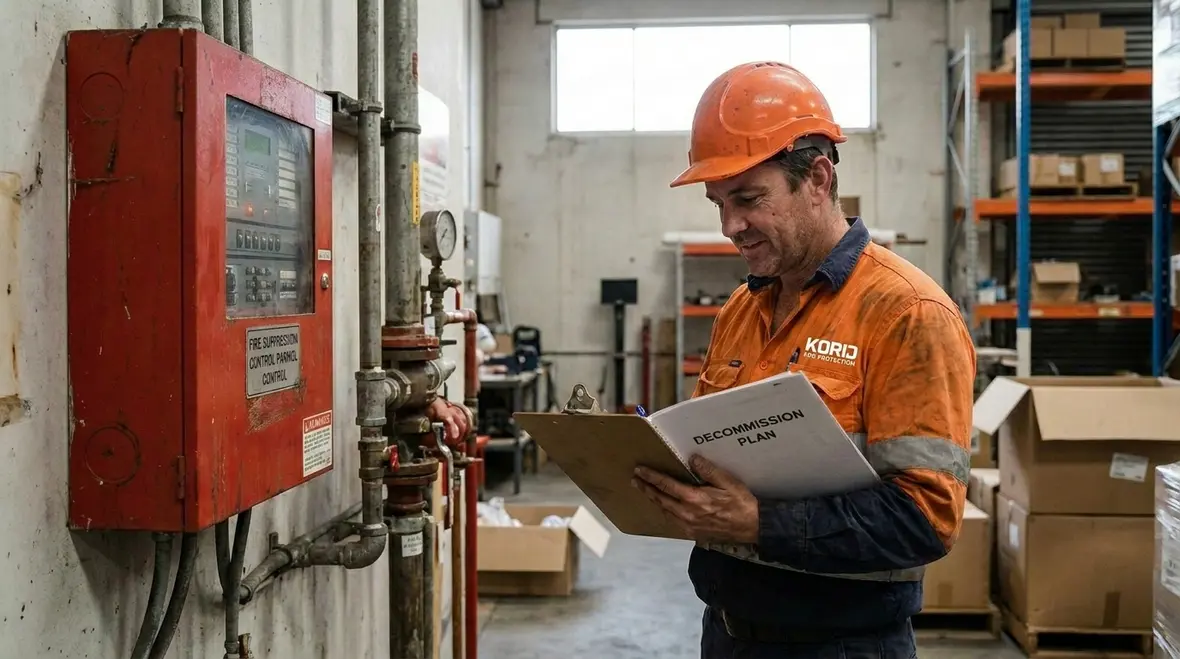
How to decommission without disrupting operations
A common mistake is treating decommissioning like a simple removal task. In reality, it should follow a sequence that protects staff, customers, and business continuity.
To manage the job well, a site typically uses a staged approach.
- Survey and confirm system details: identify components, zones, interfaces, and control panels so teams know exactly what they are touching
- Plan isolations and safeguards: maintain fire watch where required and set up temporary protections for high risk areas
- Schedule work windows: align shutdown steps with production cycles, trading hours, and delivery schedules
- Remove and secure hazards correctly: handle and dispose of agents and components according to safe procedures
- Update documentation early: record changes as they happen, not weeks later when memory becomes unreliable
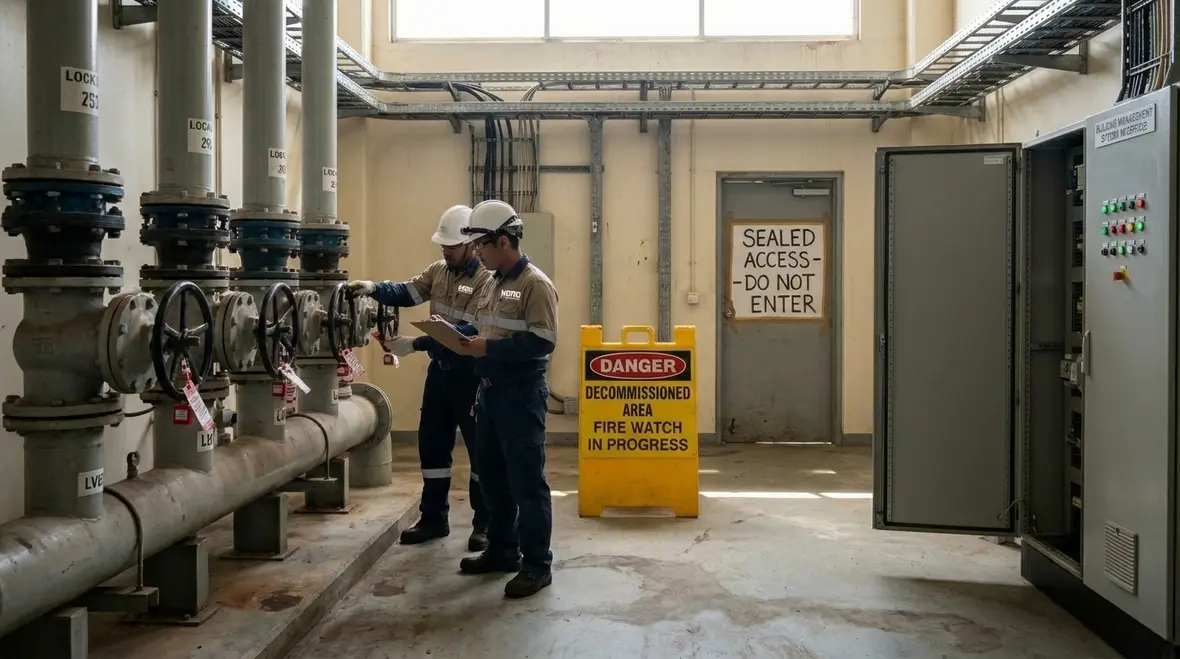
As teams move from isolation to physical removal, they must also manage interfaces, such as alarm connections, fire detection ties, and building management systems. Otherwise, the building might flag faults, create nuisance alarms, or worse, delay response during an incident. With careful planning, that risk drops sharply.
Kord Fire Protection acts as a vital partner here, because it can coordinate both the decommissioning phase and the replacement phase under one controlled plan. That reduces handover gaps, avoids repeated contractor visits, and keeps stakeholders focused on outcomes rather than logistics.
Replacement planning that actually fits the risk
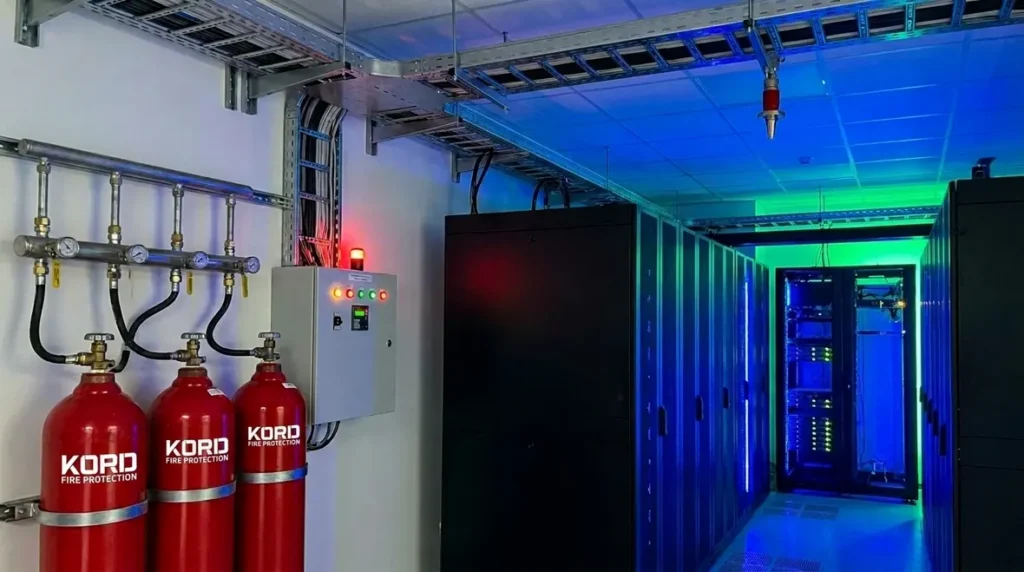
Replacing a fire suppression system is not just swapping old hardware for new hardware. It requires a risk based design that matches the occupancy, hazards, ceiling voids, plant changes, and water supply constraints where relevant. If a facility upgrades equipment, stores different products, or changes workflows, the fire scenario can shift. Therefore, the replacement design must reflect the current reality, not the reality from a decade ago.
During planning, teams typically validate the following:
- Protection objectives: what the system must achieve for the specific hazard
- System type and layout: choose suppression strategies that suit the environment
- Detection and actuation alignment: ensure detectors, pipework, valves, and controls work as one system
- Hydraulic and supply checks: confirm capacity and performance where water based systems apply
- Interface testing: verify alarm panels, control rooms, and building management connections
And yes, sometimes the building manager asks for “the same thing, just newer.” That request usually sounds simple. Yet “same” often ignores hidden changes that happened over years of renovations, added racking, or altered storage practices. So, Kord Fire Protection helps clients translate their operational needs into a design that holds up under scrutiny.
Commissioning, verification, and paperwork that saves time
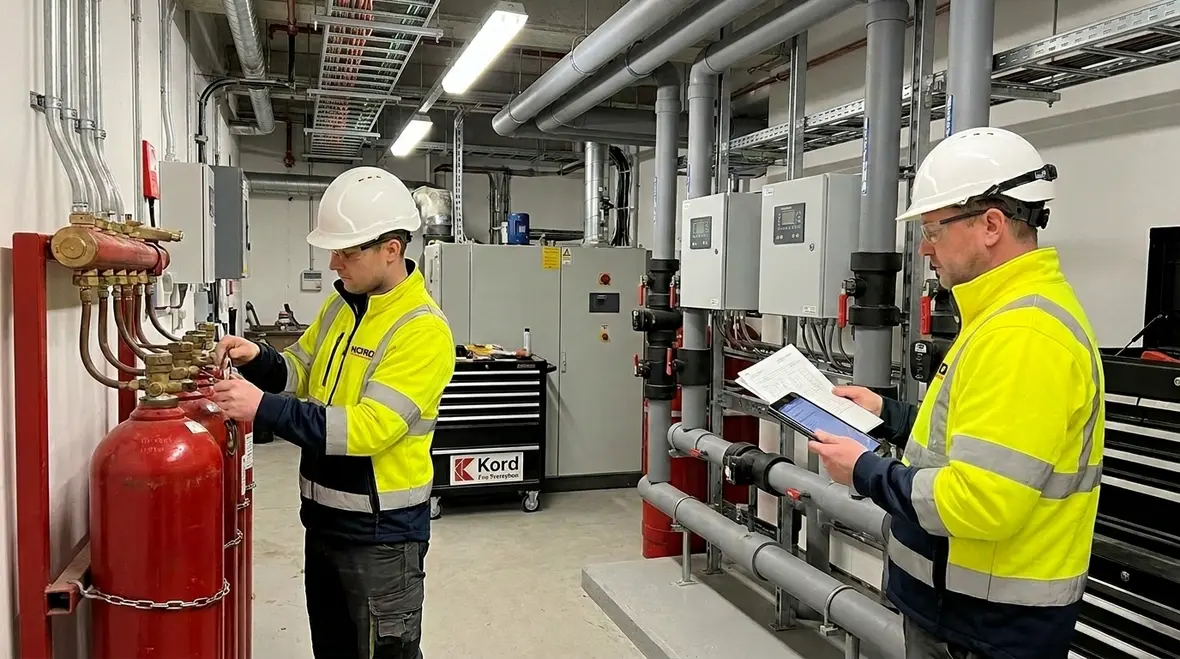
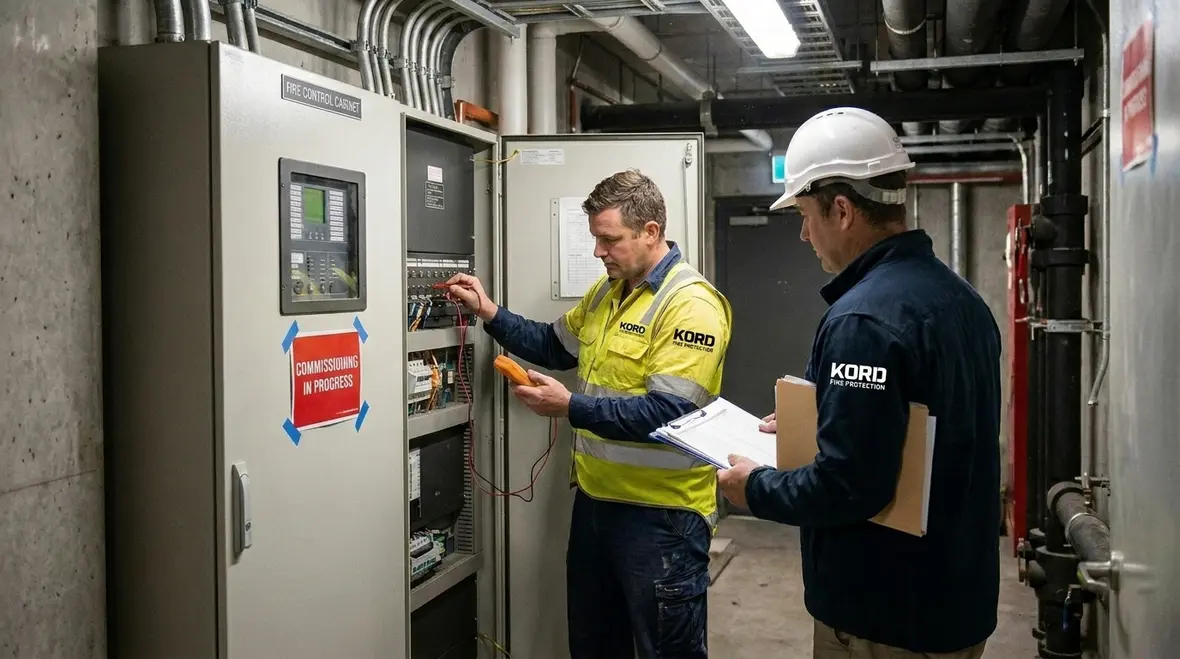
After installation, the work must prove it can perform. That means commissioning, functional testing, and evidence based verification. If testing is rushed, faults can surface later, and the facility pays twice. First in extra troubleshooting. Then in time lost during compliance checks.
A well managed commissioning process typically includes:
- Functional tests: verify actuation, flow or discharge behaviour, and control logic
- Alarm integration checks: confirm signals to monitoring systems and local indicators
- Documentation pack: deliver manuals, test reports, and as built details
- Handover support: provide staff guidance for basic understanding and safe operation
This is where a partner matters. Kord Fire Protection brings a systematic approach that keeps information accurate from day one. It also helps clients structure their documentation in a way that aligns with how inspectors and insurers expect to see proof. In other words, the paperwork becomes a tool, not a pile of stress.
What good paperwork looks like in practice
Good records do more than satisfy a checklist. They show what was removed, what replaced it, who verified it, and when each step happened. They also make life much easier when a site manager changes, an insurer requests evidence, or a future upgrade needs a clean baseline. Without that clarity, teams end up playing detective with folders, email chains, and half remembered conversations. Nobody enjoys that genre.
How Kord Fire Protection supports industrial and retail sites
Across Australia, industrial, retail, and commercial facilities rarely operate in the easy lanes. Sites run production, serve customers, and manage contractors all at once. Therefore, service providers need flexibility, coordination skills, and safety discipline.
Kord Fire Protection supports clients through the full lifecycle of compliance driven change, including system assessment, decommissioning, replacement coordination, and commissioning verification. To make the process smoother, it can also help plan around trading hours, shutdown windows, and operational priorities.
Typical site outcome with a coordinated partner
Before | After |
Multiple contractors, fragmented timelines | One coordinated plan, fewer handover gaps |
Unclear records and delayed documentation | Evidence ready documentation pack from commissioning |
Higher disruption risk during shutdown | Staged works with safeguards and clear communication |
Because when the job runs clean, the facility stays focused on customers and production. The fire safety team handles the rest, like the calm professional who knows exactly where the fire extinguishers are stored, even in the middle of chaos.
FAQ on fire suppression decommissioning and replacement in Australia
Final call to action
When a site needs compliance driven system decommissioning and replacement in Australia, the safest path is a managed, evidence ready approach. Kord Fire Protection can guide the entire job from assessment through commissioning, so disruption stays controlled and records stay clear. If outdated equipment is on the radar, act early, plan properly, and keep your facility protected. Contact Kord Fire Protection today for a site consultation and a practical replacement plan.