Halon Alternatives for Australia with Kord Fire Protection
Quick Answer: Companies across Australia increasingly replace Halon with clean agent systems and safer, modern fire suppression options. The best choice depends on enclosure size, risk class, airflow, occupancy, and discharge limits. Kord Fire Protection can help assess hazards, select compliant agents, and maintain systems so they work when seconds matter.
In Australia, many facilities now look for halon alternatives for Australia as regulations tighten and older systems age out. Halon used to be valued for clean discharge and electrical safety, but it also carries environmental harm that no one wants on their compliance report. So, what should industrial, retail, and commercial sites use instead? This article lays out modern, practical options and explains how a strong partner like Kord Fire Protection can guide the process from design to commissioning to ongoing service. And yes, the right plan can feel less like a fire drill and more like a well rehearsed play, without the panic and the smoke machine.
If your team is also reviewing broader protection upgrades, it is worth exploring fire suppression systems early in the planning process so replacement decisions line up with the site’s actual risk and operating conditions.
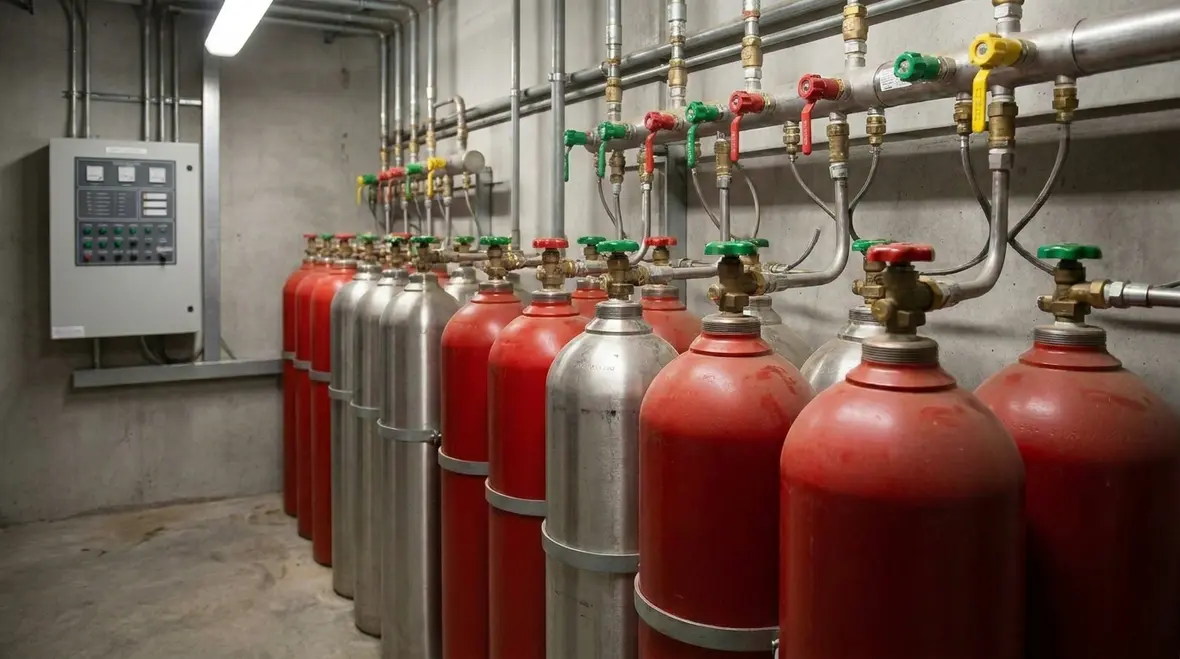
Why Halon is being phased out across Australia
Halon earned its reputation because it extinguished fires without leaving residue, which helped protect sensitive equipment. However, its environmental impact drove phase out programs in many countries, including Australia. As a result, owners face two pressures: compliance and reliability. Additionally, cylinders and components can become harder to source, and system performance can drift when maintenance falls behind.
That combination creates a tricky spot for facilities managers. A legacy system may still exist in the plant room, but the bigger question is whether it still fits today’s legal, operational, and maintenance expectations. The answer is often less comfortable than the old nameplate suggests. If replacement parts are scarce, service knowledge is fragmented, or documentation is patchy, the system can become a confidence problem long before it becomes a full emergency problem.
Meanwhile, risk management expectations have evolved. Facilities now want suppression that supports safety goals, meets standards, and still protects valuable assets. Therefore, many operators shift toward clean agent alternatives or other suppression methods that match their hazard profile. In other words, the conversation is no longer just about what worked years ago. It is about what will work reliably now, under real operating conditions, with modern compliance demands sitting squarely on the table.
What to use instead: clean agents and modern options
When a site needs rapid knockdown with minimal cleanup, modern clean agents often lead the shortlist. Yet clean does not mean one size fits all. Different agents have different design constraints, concentration ranges, and expected agent behavior in real rooms. That is why a decision that looks simple in a brochure can turn into a fairly serious engineering exercise once the actual space, airflow, and occupancy are examined.
Common clean agent directions
- HFC clean agents for example FM-200 type systems: Used when the area has tight enclosure and the hazard is suitable. They typically use engineered nozzles and concentration limits.
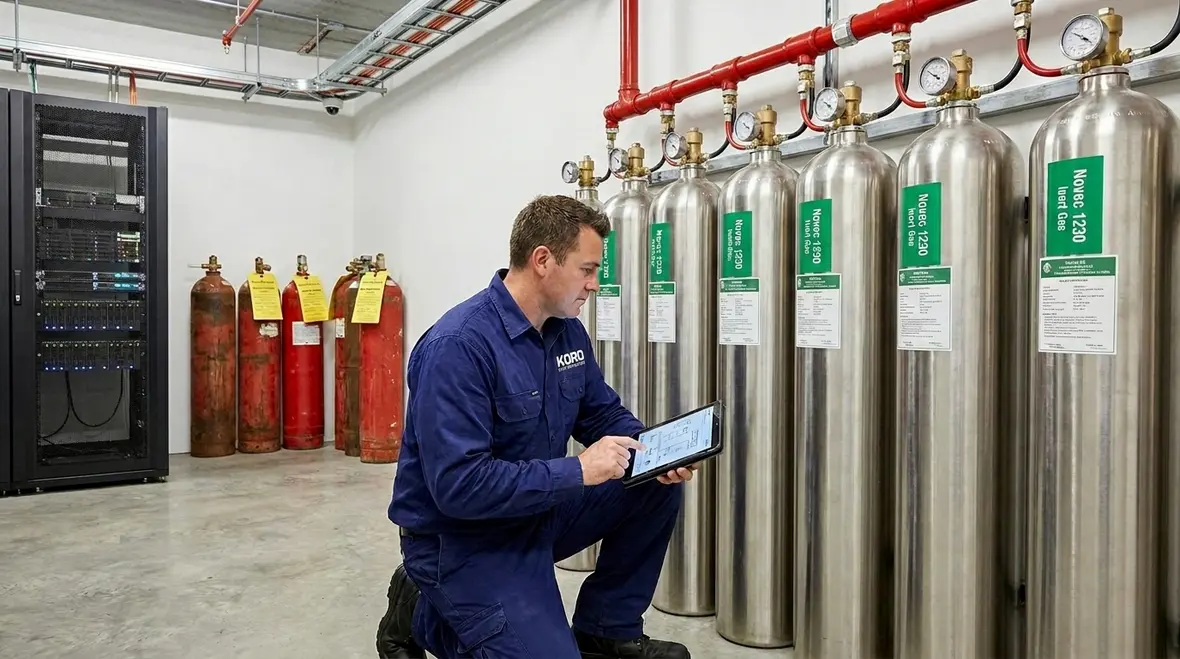
- Novec type agents as a modern HFC alternative: Often chosen for lower residue and short term environmental considerations, while still supporting high value spaces.
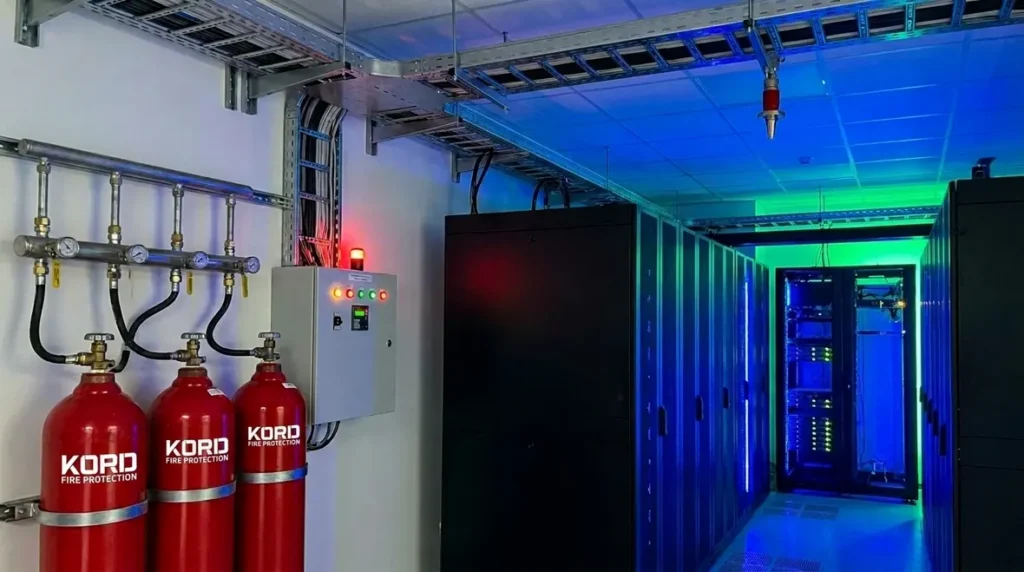
- Inert gas systems using argon, nitrogen, or blends: These reduce oxygen concentration. They can be a fit where clean agent gases are not ideal, but they require careful room integrity and calculated oxygen reduction.
Each option brings its own trade offs. Some systems shine in enclosed electrical rooms and data spaces, while others suit larger enclosures or situations where long term storage stability matters more than compact cylinder footprint. The practical point is simple: the agent should suit the room, the hazard, and the people who may still be nearby when the alarm goes off. If one of those three is ignored, the design starts wobbling before installation even begins.
Where other suppression methods can outperform clean agents
Not every hazard needs gas. For example, some industrial and retail risks benefit from targeted approaches like water mist, foam for flammable liquid hazards, or special extinguishing designs for cooking risk and specific process hazards. Consequently, the best solution often blends detection type, suppression method, and operational safeguards like ventilation control, door closure logic, and safe release timing.
This is where a lot of upgrade projects become more interesting than expected. A facility may begin by asking for a direct Halon replacement, then discover that another technology actually fits the hazard better. That is not a design failure. It is good engineering. If the process uncovers a safer, more maintainable, and more effective option, that is exactly what the review was supposed to do.

How to choose the right system for industrial and commercial hazards
A competent selection process starts with hazard truth, not vendor promises. First, Kord Fire Protection typically reviews the space use, fuel type, ignition source likelihood, and enclosure characteristics. Next, it checks things like ceiling height, leakage rate, HVAC behavior, and whether the area can maintain the designed agent concentration long enough to achieve control.
Then the design team looks at operational realities. For instance, a storage area in a retail back of house can behave differently at different times of day. Also, some facilities keep doors open during peak operations, which can make a sealed enclosure strategy fail. Therefore, the selection must match how the site actually runs, not how it runs on paper.
That practical lens matters because suppression performance depends on details people rarely celebrate in project meetings. Door hold opens, transfer grilles, cable penetrations, extraction fans, and temporary fit outs can all change the way an agent behaves. A beautiful specification is not much comfort if the room leaks like a gossip chain. Good design closes that gap by testing assumptions before the discharge ever needs to happen.
Key factors that drive correct engineering
- Room integrity: Leakage and airflow strongly affect agent effectiveness.
- Enclosure volume and geometry: Nozzle placement and distribution matter.
- Detection and actuation: Fast, reliable detection reduces agent loss during early growth.
- Occupant safety: Design must include safe discharge, exposure limits, signage, and interlocks.
- Maintenance access: Cylinders, valves, and detection devices must be serviceable without major downtime.
A thorough review also helps prevent expensive surprises later. It is far easier to address room sealing, shutdown logic, or cylinder placement during design than after installation crews have packed up and left. The best projects are usually the ones where the awkward questions get asked early, while everyone still has time to fix them without sighing loudly at the ceiling.
Compliance and safety considerations that keep operations moving
Fire suppression is not a set and forget decision. Even after installation, compliance depends on correct commissioning, documentation, and routine inspection. Additionally, personnel training matters because staff must understand how to evacuate, how to respond to alarm signals, and how to treat a discharge event as an emergency, not a nuisance.
In practice, safety also includes system interlocks and procedure alignment. A clean agent discharge can only do its job if ventilation control, door logic, and any shutdown sequences operate as designed. Otherwise, the agent can dissipate before it can control the fire. So, facilities should treat the entire system, not just the suppressant cylinders.
For site leaders, that means maintenance planning should be folded into daily operations rather than treated as a once a year interruption. Testing windows, staff drills, record keeping, and contractor coordination all influence whether the system remains dependable. The paperwork may not be glamorous, but it is often the difference between a confident audit and a very long afternoon in a meeting room.
| Site priority | What the design team checks |
Industrial control rooms, server suites, and high value equipment | Enclosure integrity, concentration targets, detection response, and safe discharge timeframes |
Retail back of house and storage risk | Air leakage from traffic, HVAC operation, fuel load mapping, and maintenance scheduling |

Why Kord Fire Protection becomes a vital partner
Choosing halon alternatives for Australia becomes easier when the facility has a partner who can connect engineering to real world operations. Kord Fire Protection supports clients across industrial, retail, and commercial environments, where each site has its own rhythm, its own risks, and its own maintenance windows.
First, Kord Fire Protection helps assess what the existing system does today and what it must achieve after replacement. Then it supports system selection, installation planning, commissioning, and ongoing service. Additionally, Kord Fire Protection focuses on documentation and testing so the facility stays ready for audits and emergencies, not just paper compliance.
That kind of support matters because upgrades affect more than hardware. They touch training, shutdown plans, service access, and the way staff respond under pressure. And here is the part that people often forget: a new suppression system still needs coordinated change management. Staff must understand what will happen, what alarms mean, and how to handle after discharge cleanup and inspections. Kord Fire Protection helps make that transition smoother, so operations do not turn into a comedy show with no punchline.
For organisations managing multiple sites, that consistency becomes even more valuable. A partner that can align assessments, upgrades, testing expectations, and service records across different facilities makes future planning easier. It also gives stakeholders a clearer view of where risk sits now and what should be tackled next, which is a lot better than crossing fingers and hoping the old cylinders stay in a good mood.

FAQ
Final call to action for facilities planning an upgrade
Facilities that plan for halon alternatives for Australia should act with clarity and speed, because risk never waits for project timelines. Kord Fire Protection helps organisations evaluate hazards, select the right clean agent or suppression method, and keep systems compliant through commissioning and service. If your facility is considering a replacement or upgrade, reach out to Kord Fire Protection. They will help turn a complex decision into a controlled plan that protects people, assets, and operations.