Fire Extinguisher Compliance Penalties in Australia
Quick Answer: In Australia, failing to service and maintain fire extinguishers can trigger non compliant building risks, insurance problems, and enforcement action. Depending on your state and the size of your business, penalties can include fines and mandatory rectification. Our team at Kord Fire Protection helps keep your sites audit ready, even when deadlines try to run away from you.
Fire safety regulators take fire extinguisher systems seriously, and fire extinguisher compliance penalties can become very real when businesses ignore service requirements. In the first 100 to 150 words, let’s say it plainly: if your extinguishers are due for inspection, testing, maintenance, or replacement, you do not just risk paperwork. You risk exposure, enforcement, and operational disruption. And yes, the extinguisher that “looks fine” can still be the one that fails at the worst moment. For businesses also reviewing broader maintenance planning, fire extinguisher services should be part of the same conversation. In the rest of this article, third person explains what can happen across Australian industrial, retail, and commercial sites, and how Kord Fire Protection can act as a vital partner to keep compliance steady.
Why servicing matters for Australian workplaces
Fire extinguisher maintenance does not exist to create jobs for people who like clipboards. It exists to confirm the extinguisher works when someone pulls the pin under pressure. Over time, components can degrade. Pressure can drop. Seals can fail. Hoses can crack. Even tamper indicators can mislead teams into thinking everything is still within limits. Therefore, servicing and inspections protect people, property, and business continuity.
In industrial facilities, risks often increase because equipment sees vibration, heat cycles, dust, and frequent movement of forklifts or stock. In retail and commercial environments, risks shift toward quick access, clear signage, and consistent readiness across many locations. Consequently, servicing becomes a repeatable control, not a “once in a while” task.
What regular servicing actually confirms
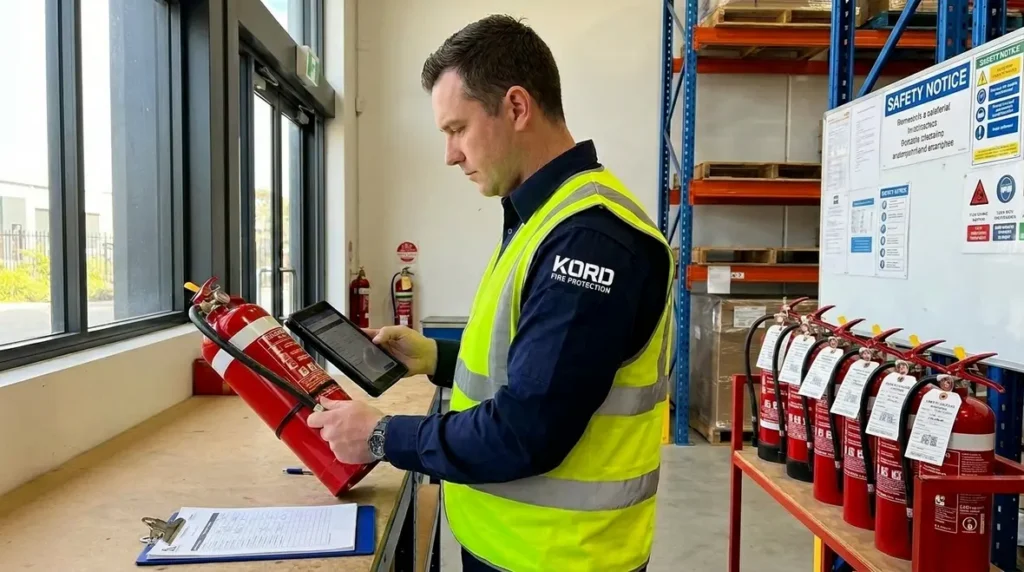
A proper service visit checks more than whether the extinguisher is physically hanging where it should be. It helps confirm pressure status, visible condition, accessibility, legibility of labels, general suitability for the hazard, and whether the unit is approaching a replacement or test milestone. That matters because a workplace can look tidy and still be carrying silent defects. Compliance is often lost in small details, and unfortunately small details have a talent for becoming very large problems once an emergency starts.

What happens if a business ignores required servicing
When a business does not keep extinguishers serviced, the consequences stack up. First, an internal team may miss issues that a trained technician would catch. Next, audits can identify missing service tags, overdue inspections, incorrect mounting, or units that do not match the hazard. Then, if an incident occurs, investigators will often look for evidence that safety measures were maintained.
Enforcement action can include notices to comply and required rectification within set timeframes. Depending on the jurisdiction and the severity, regulators may pursue penalties for non compliance. Meanwhile, insurers can refuse to respond fully if documentation shows poor maintenance. So even if “nothing happened,” the risk keeps compiling like unpaid parking tickets. They may not hurt today, but they always show up later.
Where the real business pain shows up
The obvious concern is legal exposure, but that is not the only cost. Businesses can also face disrupted operations, delayed certifications, awkward conversations with landlords or principal contractors, and a rush of urgent remedial work that costs more than planned servicing would have. When multiple extinguishers across a site are overdue, the clean up process can turn into a calendar mess very quickly. A missed date does not stay a missed date for long. It becomes a chain reaction of follow up actions, bookings, sign offs, and questions no one wanted on a Friday afternoon.

Common compliance gaps that lead to enforcement action
Different sites make different mistakes, yet certain gaps show up again and again across Australia. Here are the ones that tend to trigger problems during inspections and audits.
- Overdue servicing: Extinguishers reach the due date, and the site keeps operating as if time does not matter
- Missing or damaged signage: Staff cannot confirm extinguisher type or location during a fast emergency
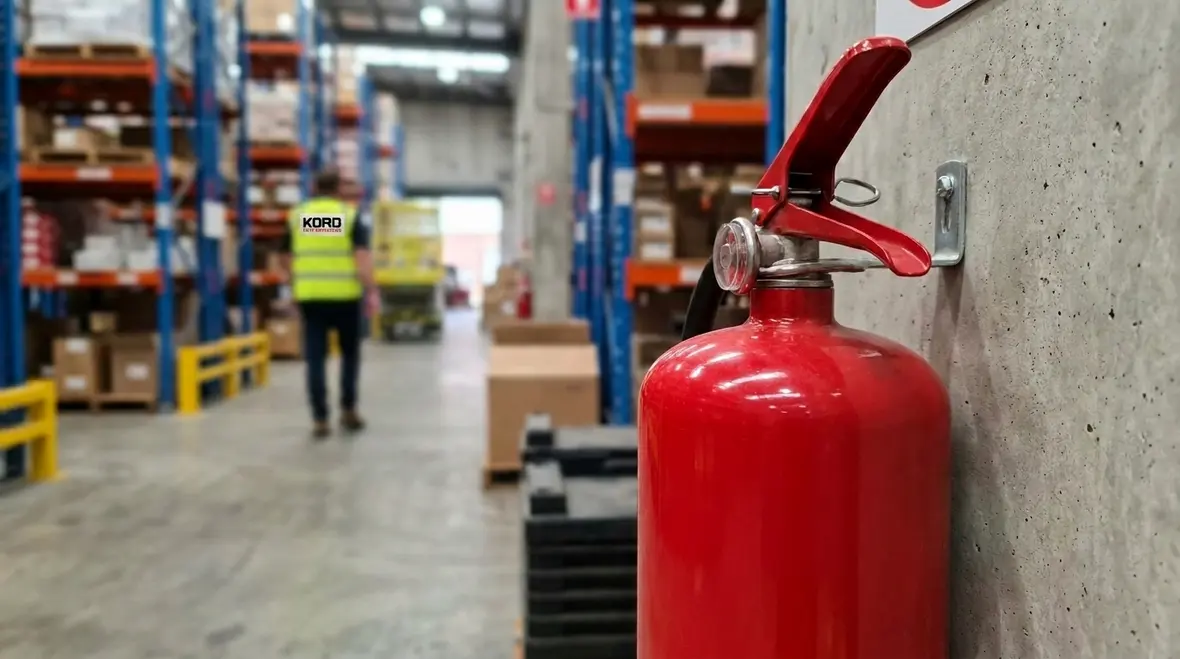
- Incorrect placement: Units sit behind obstacles, too close to hazards, or mounted in ways that block access
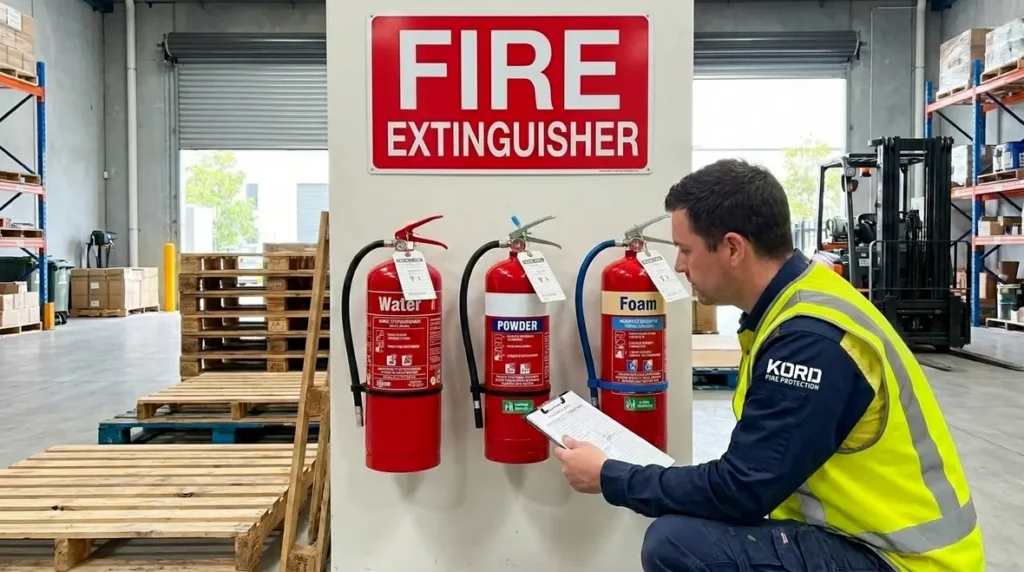
- Wrong extinguisher for the hazard: A mismatched unit can lead to ineffective response
- Discharge path blocked: A cabinet, shelving, or internal layout prevents quick use
- Inadequate records: Service history does not match what auditors expect to see
Therefore, the best approach uses more than a basic check. It uses a method that verifies hazard suitability, placement, condition, and documentation together. When these pieces align, regulators and insurers see a coherent safety system, not a collection of lucky guesses.
Why small gaps become audit headaches
A single missing tag might sound minor until it is paired with a blocked extinguisher, an out of date service entry, and a staff member who is not sure which unit handles which fire class. That is how avoidable issues start looking systemic. Auditors are not simply checking whether something red is attached to a wall. They are looking for evidence that the business manages fire protection in a deliberate, repeatable way. If the system appears casual, enforcement pressure tends to rise with it.

How inspections and documentation connect to penalties
Auditors do not only look at whether an extinguisher exists. They assess whether it has been serviced and maintained according to required timeframes, and whether the site can demonstrate that control. As a result, records matter as much as the device. A missing tag can look like neglect, even if the extinguisher recently received attention.
In many organisations, document handling becomes the weak link. The technician may perform work, but the service history might not be entered correctly, or the tag might not reflect the actual date. Additionally, teams sometimes rely on memory rather than a schedule. That is risky, because compliance calendars do not forgive human optimism.
Kord Fire Protection helps sites keep records usable for audits. This means technicians can provide clear service notes, and facilities teams can access the information they need without digging through folders like it is 2009 and paperwork is a hobby. When documentation stays accurate, the likelihood of non compliance findings drops significantly.
Documentation should be easy to defend
Good records do not just exist for the sake of administration. They make it easier to answer the questions that arrive after an inspection, during a lease review, or in the middle of an insurance claim. Can the business show the due date, the service date, the work completed, and the current status of each extinguisher? If the answer is yes, the conversation stays much calmer. If the answer is maybe, everyone suddenly becomes very interested in spreadsheets.
How Kord Fire Protection supports industrial and commercial sites
Fire safety work succeeds when it fits how businesses actually operate. Kord Fire Protection positions itself as a partner that coordinates service across multiple assets and locations. That matters for retail chains, commercial offices, warehouses, and industrial sites with many extinguisher types and hazard zones.
Because different sites carry different risk profiles, Kord Fire Protection can help maintain a practical compliance routine. They support the full cycle: scheduling, on site servicing, and updating service records so that teams remain ready for inspections. In addition, they assist with identifying units that need attention sooner rather than later, so rectification does not arrive as a surprise on a busy week.
In business terms, this reduces downtime, reduces chaos, and reduces the chance that fire extinguisher compliance penalties land because someone forgot a date. And honestly, nobody enjoys that kind of administrative horror story. Kord Fire Protection helps keep it boring in the right way, which is to say, boring for the auditors and safe for the people.
Practical steps to avoid future non compliance
Businesses can reduce risk quickly when they build a simple system around extinguisher maintenance. The aim is consistency, not heroics.
- Use a service calendar that links each extinguisher to a due date and a responsible person
- Assign an internal spotter who checks tags and locations monthly, then flags issues early
- Verify hazard matching for each area, especially where manufacturing processes change
- Keep access clear so extinguishers remain reachable during routine operations
- Update records after every visit so the paperwork matches what is installed
- Plan for replacements rather than waiting for devices to fail or become obsolete
Then, coordinate with a service provider that understands multiple industries and understands that the schedule must respect real operations. Kord Fire Protection can help establish that rhythm so compliance stays on track across facilities, not just on one site that “always gets done first.”
A practical system beats a heroic scramble
The strongest compliance programs are usually the least dramatic. They rely on routine checks, visible accountability, sensible scheduling, and prompt follow through when something needs replacement or repair. That is what keeps audits manageable and emergency readiness credible. Businesses do not need a cinematic rescue plan. They need a maintenance rhythm that survives staff leave, shifting priorities, and the occasional week where everything else catches fire metaphorically.
FAQ
Final word and next step
Fire safety compliance should run like a reliable conveyor, not like a last minute scramble. When fire extinguisher compliance penalties are on the table, the answer is simple: maintain servicing, keep records accurate, and plan replacements before problems appear. Kord Fire Protection helps industrial, retail, and commercial facilities across Australia stay audit ready with consistent service and clear documentation. Book a visit with Kord Fire Protection today and keep your sites safe, compliant, and calm.