Fire Alarm Installation vs Commissioning in Australia, Kord Fire Protection
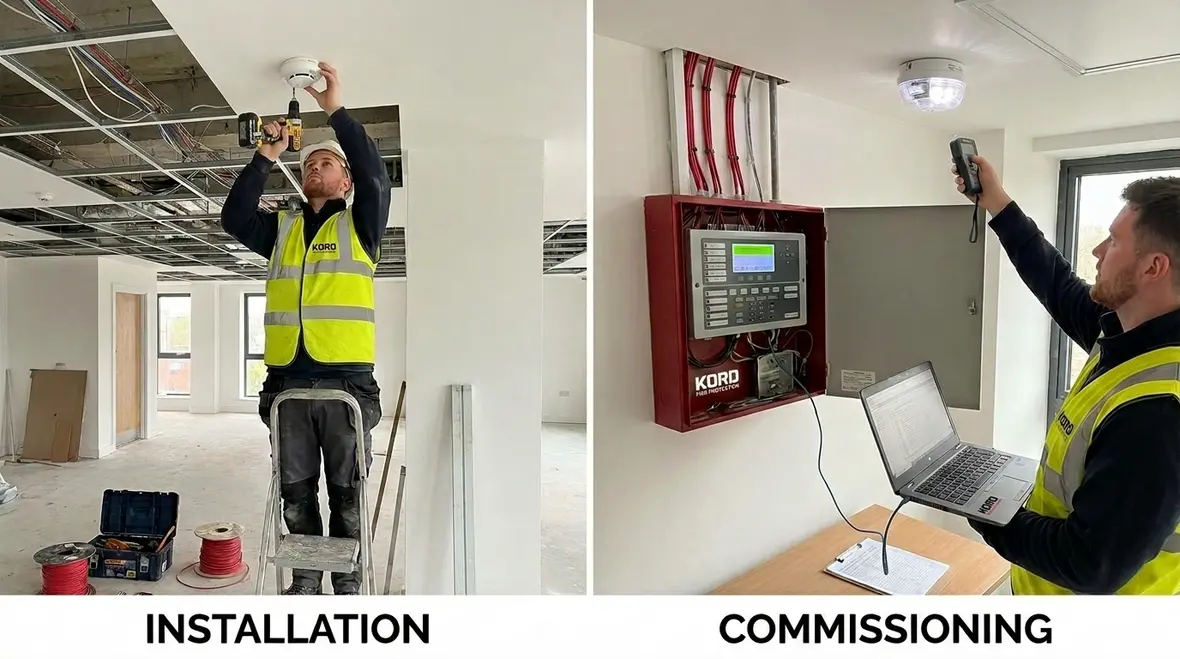
Quick Answer: Installation means fitting and wiring fire alarm devices so the system can physically work. Commissioning means testing, calibrating, programming, and documenting performance to prove the system meets required standards. In other words, installation builds the machine, while commissioning proves it’s ready to protect people and property.
Fire safety is the sort of thing people only think about when the test button is pressed. And even then, it’s often treated like a button for “checking boxes,” not “protecting lives.” At Kord Fire Protection, teams support the full fire alarm setup journey for industrial, retail, and commercial facilities across Australia. They ensure the system is installed correctly, then commissioned properly, so it performs when it matters most. Because a fire alarm that isn’t proven is like a smoke-filled punchline: loud, but not helpful.
For businesses planning broader life safety upgrades, it also helps to understand how alarm work fits into complete fire alarm systems planning, especially when installation, programming, and compliance expectations all need to line up from day one.
1) What installation actually does on site
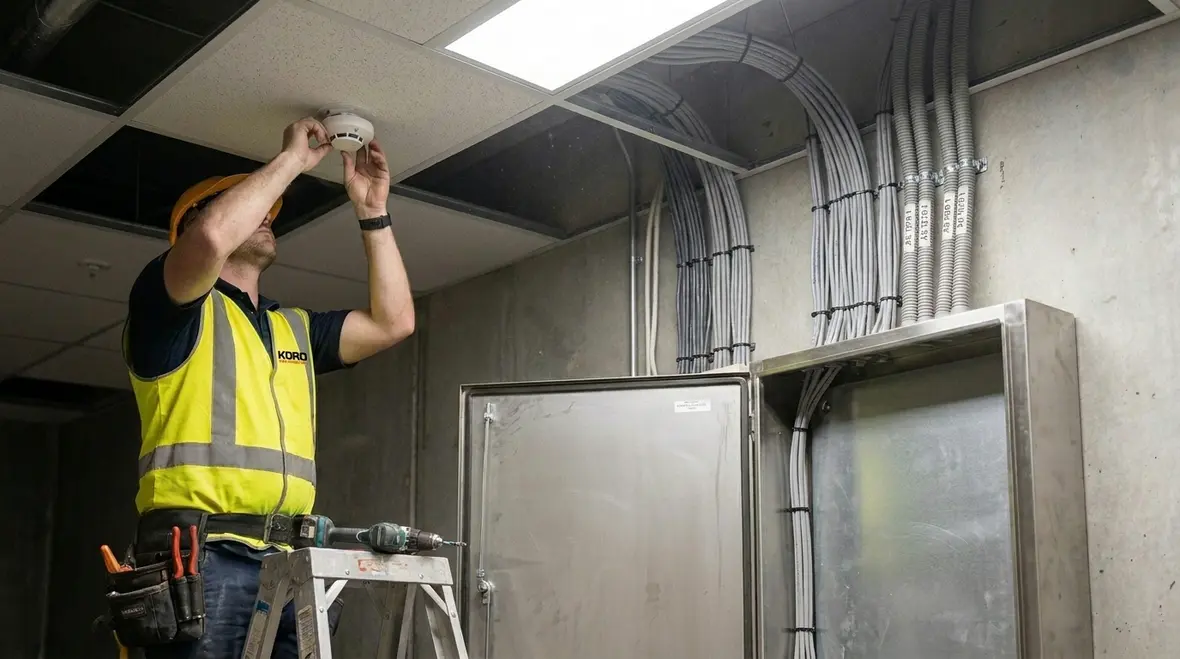
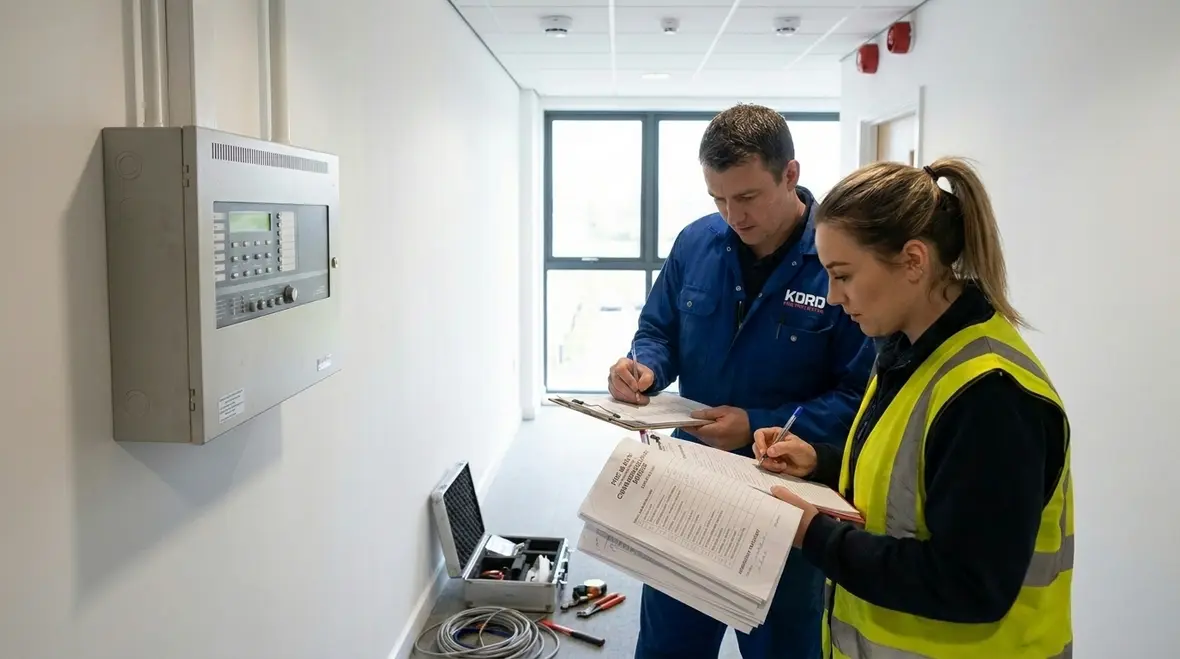
Installation focuses on the physical work that turns a design into a working system. First, technicians confirm device locations, routing paths, and mounting heights. Then they install components such as call points, detectors, sounders, and control panels. After that, they wire devices using approved methods, connect field devices to the panel, and tidy and label cabling so faults can be found fast.
That might sound straightforward until you remember that real sites are never as tidy as the drawings. Ceiling voids get crowded, access panels seem to hide for sport, and service routes somehow become everyone’s favourite place to run “just one more cable.” Good installation work keeps all of that chaos under control. It protects the design intent while still adapting to what the building actually gives the team on the day.
Installation is where workmanship starts telling the truth
In industrial and larger commercial environments, installation also needs to handle practical realities: vibration near plant equipment, dense ceiling spaces, busy service corridors, and work schedules that cannot stop for long. As a result, installation must follow the project plan, maintain segregation requirements where needed, and keep workmanship consistent. Otherwise, the system may run, but it may not run the way it should.
This phase is also where seemingly small choices make a big difference later. A detector mounted slightly off position, a cable label skipped because “we’ll remember it,” or a device looped into the wrong pathway can all create headaches during testing. Installation does not get full credit just because gear is on the wall. It gets credit when every physical element supports reliable alarm performance later.
2) What commissioning proves when the system is live
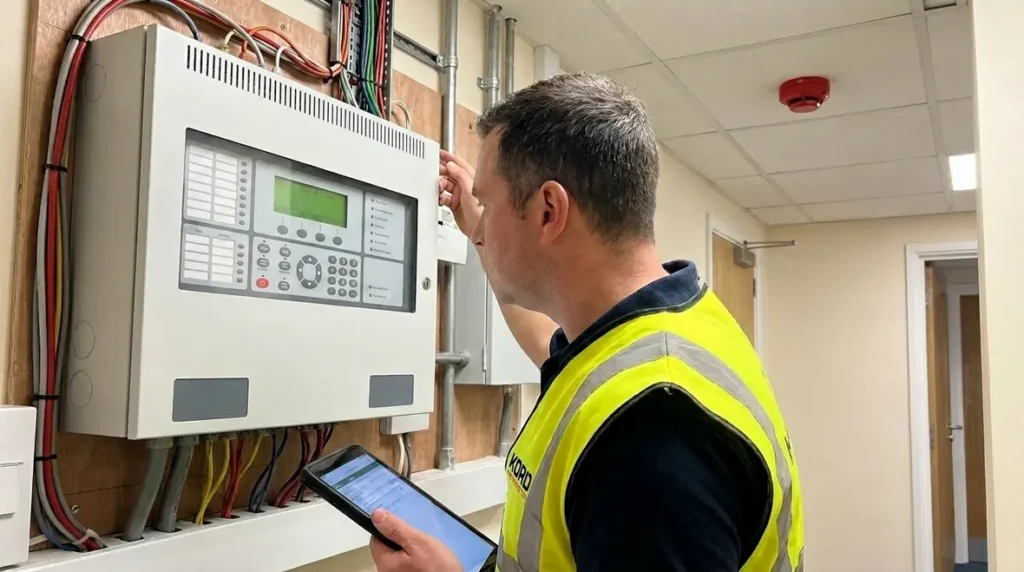
Commissioning checks that the fire alarm system performs exactly as intended. While installation puts the pieces in place, commissioning verifies behavior: the panel receives signals, the correct zones report correctly, outputs activate, and the right responses occur under simulated fault and alarm conditions.
Therefore, commissioning typically includes functional testing, verification of signaling circuits, and checks of sounder levels and audibility where required. It also covers device sensitivity and configuration settings, plus confirmation of any interlinked services such as door releases, lift recall, or smoke control interfaces. In retail and facilities with complex layouts, this is where “it should work” becomes “it does work,” with results recorded for stakeholders.
Commissioning also includes documentation and handover. That paperwork matters because an auditor or future maintenance team should be able to understand what was tested, what passed, and what remains. Without it, the next emergency becomes a mystery thriller, and nobody wants that genre.
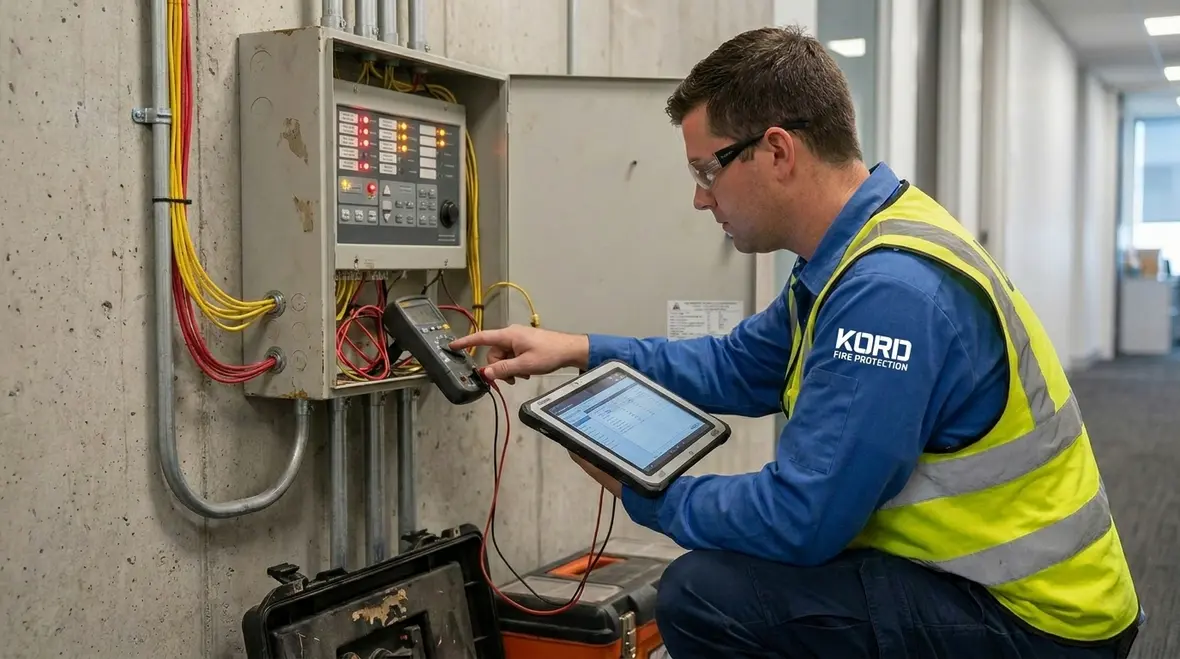
Commissioning is the proof, not the promise
That distinction matters more than many projects expect. A system can look beautifully installed and still fail if the responses are not programmed correctly, the zones do not align with the as built layout, or linked outputs behave in the wrong order. Commissioning exposes those issues before the building relies on the system for real. It is the moment where assumptions get replaced by evidence.
3) Key differences between fire alarm installation and commissioning
Both activities support life safety, yet they do not do the same job. Installation is about building the system. Commissioning is about proving the system. They also usually happen in different phases, and they involve different kinds of evidence.
To make it simple, the table below shows the practical contrast, and how teams can plan better across industrial, retail, and commercial facilities.
Step | What it focuses on | What “good” looks like |
Installation | Mounting devices, routing cabling, connecting circuits, and powering panels | Clean workmanship, correct wiring, secure mounting, proper labeling |
Commissioning | Testing and verifying programmed responses, circuit integrity, and performance | Documented results, validated sequences, and confirmed alarm signaling |
Even when the same technician does both, the mindset changes. Installation asks, “Can we build it correctly?” Commissioning asks, “Can we prove it works under real conditions?” And yes, that’s different. Fire safety doesn’t care about good intentions.
Why projects stumble when the line gets blurred
One common project mistake is assuming that because the panel lights up, the job is basically done. It is not. Another is pushing commissioning into a rushed final window after every other trade has already chewed through the schedule. That approach tends to create avoidable defects, repeated call backs, and stressed site teams trying to interpret what should have been documented from the start.
4) Why the fire alarm setup matters to the final outcome
A good project plan treats the fire alarm setup as one connected workflow instead of separate chores. For example, if the design specifies detector types, spacing, and coverage, installation must reflect those choices exactly. If mounting heights or spacing rules are missed, commissioning may fail testing, and the team then spends extra time correcting issues.
Moreover, commissioning results depend on proper setup choices made earlier. Panel configuration, zone programming, device mapping, and sounder coordination all influence how the system responds. If the system is installed with incorrect device labeling or misrouted cabling, commissioning might detect faults that point to deeper problems, like wrong zone assignment or circuit continuity issues.
In practice, Kord Fire Protection works to keep the chain intact: design intent, installation execution, and commissioning verification. This reduces rework, tightens timelines, and helps facilities meet compliance expectations without last minute stress.
One workflow beats two disconnected handovers
When teams think of installation and commissioning as separate chores, problems often get passed forward instead of solved early. When they treat them as linked stages in one outcome, issues are spotted faster, responsibilities stay clearer, and the final handover is far less dramatic. That is good for compliance, good for operations, and very good for everyone who would rather not spend Friday afternoon chasing a mystery fault.
5) Commissioning steps that reduce risk in Australian facilities
Across Australia, facilities face different layouts and risk profiles. Therefore, commissioning often includes checks that speak directly to the environment.
Common commissioning steps can include:
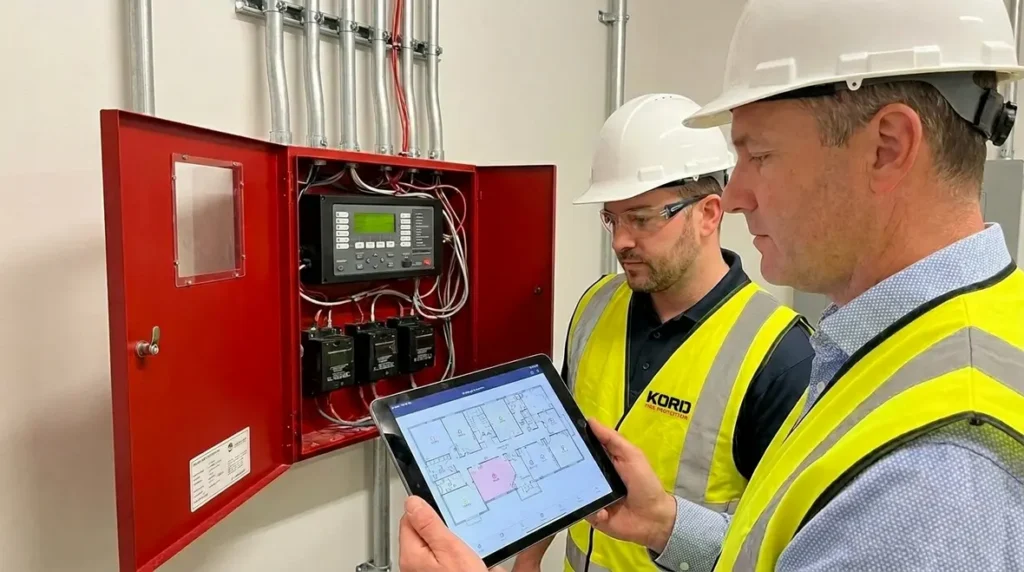
Confirming panel programming matches the as built layout, including zones, device addresses, and alert types
Testing alarm initiation across devices and verifying the correct outputs operate in sequence
Checking fault conditions so the panel shows the right alerts and the system behaves safely
Verifying audibility by checking sounder performance and, where required, sound pressure levels
Reviewing interconnections, such as door hold releases or building management integration, and recording results
Providing documentation, test sheets, and a clear handover so ongoing maintenance is straightforward
In industrial settings, commissioning may also focus on how alarms function around noisy areas, ducted spaces, or complex ceiling voids. In retail, it may focus on ensuring coverage across high-traffic zones, back-of-house areas, and store communication needs. Either way, commissioning turns the system into a dependable part of the facility’s safety plan.
6) How Kord Fire Protection becomes a vital partner for the job
Hiring a contractor for only one phase often creates handover gaps. Someone installs, someone else commissions, and suddenly the facility owns the “translation problem.” That’s where Kord Fire Protection brings real value: they align installation quality with commissioning expectations, so the system is not only built, but validated.
They support businesses across industrial, retail, and commercial facilities, and they handle the details that slow down projects. They also keep communication clear with site teams, because no one wants fire alarm work to become the next “surprise interruption” that ruins the day.
Additionally, Kord Fire Protection treats documentation as part of the service. As a result, facilities gain confidence during audits and future maintenance planning. The goal is simple: a fire alarm system that performs consistently, not one that merely looks correct.
What clients really gain from a joined up approach
The real benefit is not only technical accuracy. It is smoother coordination, fewer avoidable delays, cleaner records, and greater confidence that the system handed over will behave properly when it matters most. In plain terms, that means less guesswork for the facility team and fewer nasty surprises once the building is occupied and busy.
FAQ
Conclusion
When installation and commissioning run as two disconnected phases, risk quietly grows. When they run as one coordinated outcome, facilities gain confidence, smoother timelines, and cleaner documentation. Kord Fire Protection partners with industrial, retail, and commercial sites across Australia to deliver a dependable fire alarm setup that gets built right and proven properly. If this job is on your calendar, reach out to start planning the next steps today.