Fire Alarm Installation vs Commissioning in Australia
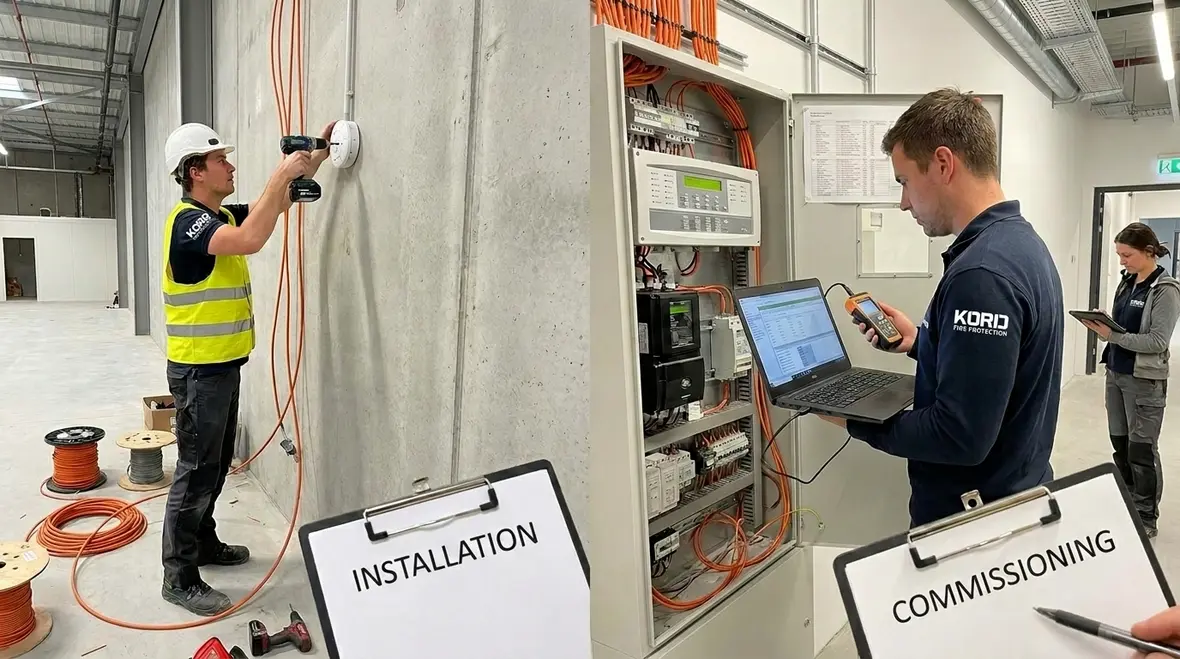
Quick Answer: Fire alarm installation is the full buildout: cables, devices, panels, wiring paths, and system layout. Fire alarm commissioning is the end-stage proof: tests, settings verification, documentation, and performance checks so the system works exactly as intended. In short, install builds it; commissioning proves it.
In Australia’s industrial, retail, and commercial facilities, a solid fire alarm setup does not end when the devices get mounted. Kord Fire Protection helps clients move from “looks installed” to “functions safely,” by supporting the full lifecycle from design intent through commissioning evidence. Think of it like the difference between setting a microwave to “cook” and actually confirming the food reaches a safe temperature. One is action, the other is proof.
If you are also reviewing how systems hold up after handover, it is worth exploring fire alarm systems early, because understanding the full system context makes the installation-versus-commissioning difference much easier to spot before project closeout gets messy.
Fire alarm installation vs commissioning: what the teams actually do
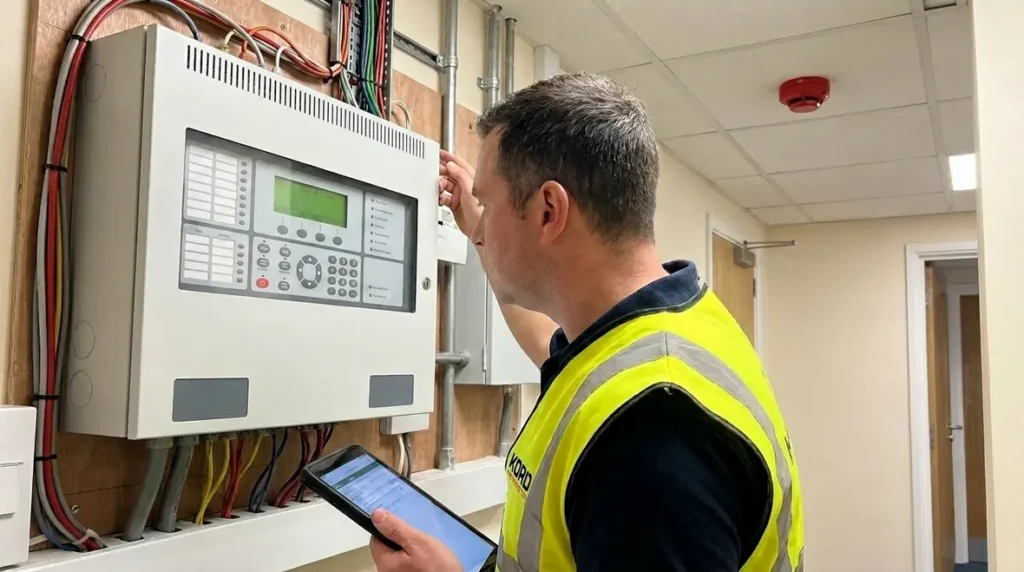
Installation typically begins after the system design is agreed. After that, teams physically deliver the fire alarm setup. They install the control panel, program the initial configuration, run cabling, mount detectors, fit call points, and connect sounders and any integration points. Next, they label devices, tidy cable routes, and ensure the system meets the site’s layout and compliance requirements.
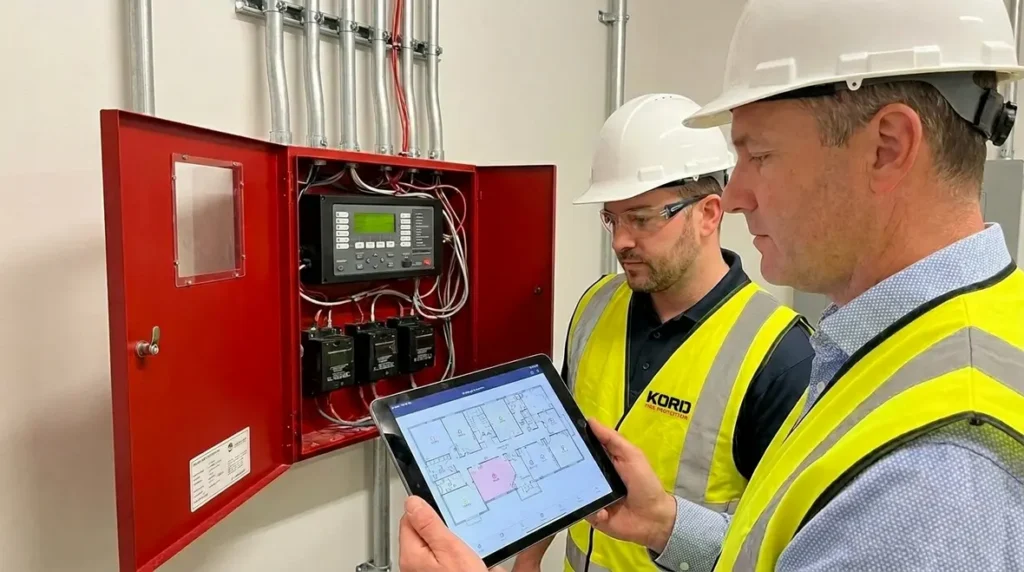
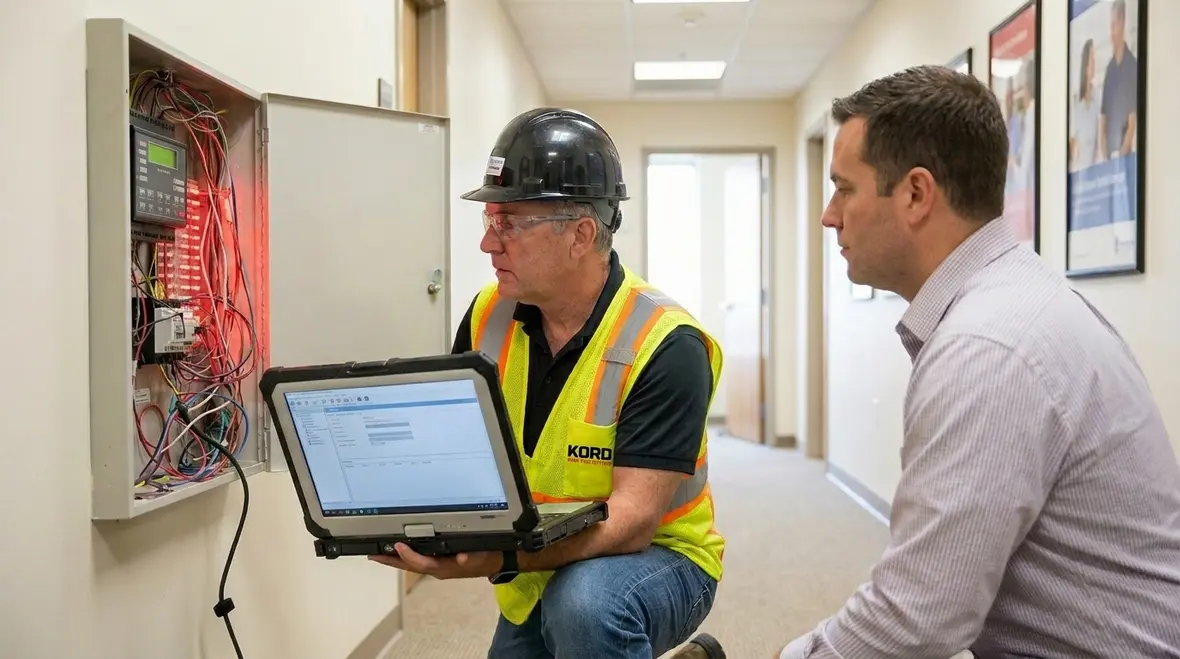
Commissioning, however, is not just “checking it works.” Commissioning follows a plan that focuses on system performance and verification. It includes device testing, signal verification, alarm routing checks, and confirmation that the panel and settings behave as designed. During this stage, the team confirms not only activation but also the right behavior for each event type, such as alarm zones, fault conditions, and any monitored outputs.
Now for the joke, because it helps the brain remember: installation is “build the stage,” commissioning is “run the show with real actors,” and nobody wants the spotlight to fail during opening night. In safety terms, commissioning prevents that scenario.
Key differences in scope, timeline, and outcomes
Build completion vs performance proof
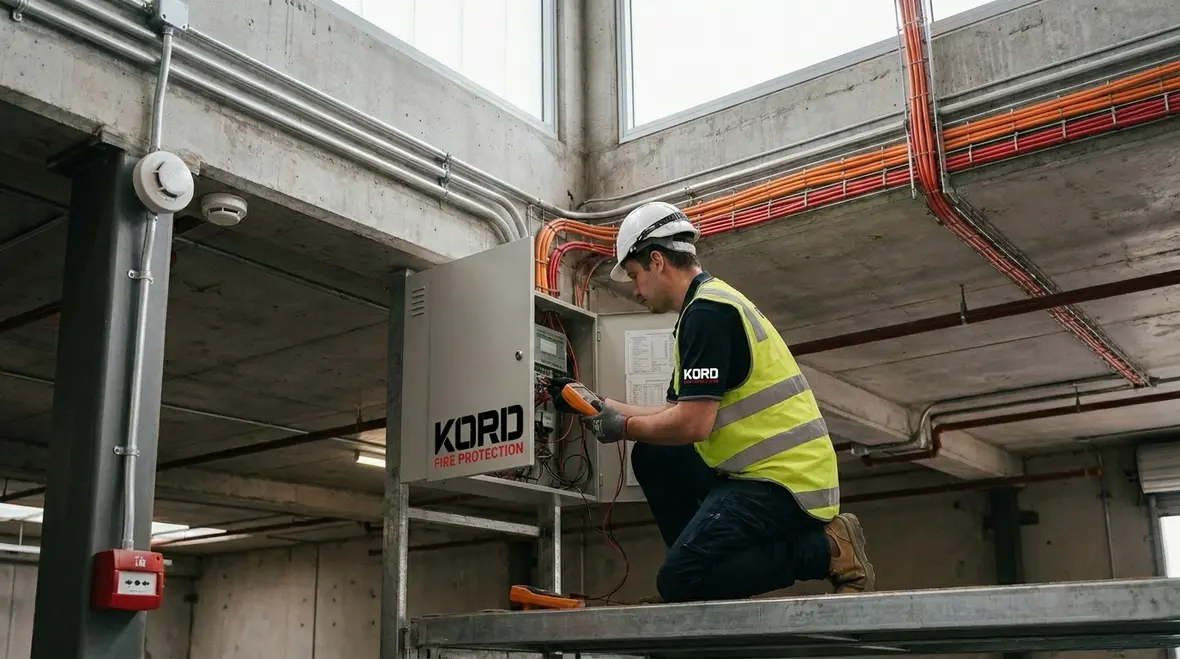
Installation focuses on scope and build. It produces physical outputs: devices in place, wiring complete, panel connected, and the system ready for functional checks. Therefore, the timeline often depends on access, cable routes, construction progress, and coordination with other trades. If a retail fitout changes layout late, installation will feel it immediately because detectors and call points must align with the final plan.
Commissioning focuses on outcomes and proof. Instead of measuring progress by installed devices, it measures performance by verified behavior. For example, commissioning confirms the response of each initiating device type, that zones report correctly, and that sounders and interfaces trigger at the right thresholds. It also verifies that fault signaling operates as expected, because faults do not take a break during business hours.
In practice, both phases rely on good communication. Consequently, commissioning benefits from a clean as-built record from installation, plus clear acceptance criteria agreed by the client and relevant stakeholders. When those pieces are missing, everyone starts speaking fluent “we thought someone else handled that,” which is a dialect no project wants near final handover.
How installation choices affect commissioning results
Small install decisions, big downstream consequences
Installation decisions can either make commissioning smoother or turn it into a detective story. If cable segregation is not handled correctly, fault signals and interference can complicate tests. Likewise, if device placement does not match the intended coverage, the commissioning team may find delayed recognition or unexpected zone behavior.
Similarly, correct device addressing and labeling reduces confusion during verification. When installers follow consistent methods for documenting circuits, loop maps, and device IDs, commissioning teams can run tests faster and with fewer interruptions. On the other hand, missing records often lead to extra site visits, which nobody budgets for unless they enjoy paying premium prices for time.
Furthermore, integration details matter. Many facilities connect fire alarms to door releases, lifts, ventilation systems, and building management interfaces. Therefore, installation must ensure wiring and interface points align with the agreed sequence of operations. Then commissioning can validate that each action happens in the right order under alarm conditions.
This is also where disciplined project teams quietly save everyone’s nerves. A careful install gives the commissioning stage a fighting chance to stay focused on verification instead of mystery solving. A messy install, by contrast, asks the commissioning team to prove performance while simultaneously reverse-engineering what happened in the first place. That is less “quality assurance” and more “forensic drama with clipboards.”
What fire alarm commissioning checks in industrial and commercial sites
Verification that goes beyond a quick beep test
Commissioning usually starts with verification of the system configuration and readiness. First, the commissioning team checks panel settings, loop supervision, zone mapping, and software configuration against the approved design. Next, they carry out functional tests across alarm zones and sounder outputs.
For industrial environments, they often pay extra attention to coverage and nuisance risk. This includes testing detectors under realistic conditions, ensuring alarm thresholds and sensitivity arrangements align with the site’s hazards and maintenance plan. For retail spaces, commissioning may focus on predictable audibility across open areas, corridors, and back-of-house zones, plus reliable operation of call points in practical locations.
Additionally, commissioning validates monitored outputs and fault reporting. It confirms that the system behaves properly not only when an alarm occurs, but also when something goes wrong quietly in the background. That matters because a safety system should not be dramatic only when sirens activate. It should also be honest about faults, interruptions, and abnormal conditions long before an emergency arrives.
- Fault conditions register correctly, including open circuits and short conditions.
- Alarm signals trigger the right actions, such as evacuation signals and any required interface outputs.
- Silencing, reset behavior, and control functions operate per the system design.
- Documentation supports safe handover, including test results and as-built references.
After that, the system moves into handover with evidence that stakeholders can rely on. This matters in Australia because sites often face audits, insurance reviews, and operational risk reviews, and those teams want clear proof, not guesses. A nice-looking panel and a confident shrug are not the same thing as verified performance, no matter how optimistic the shrug may be.
Where Kord Fire Protection becomes a vital partner
From practical coordination to cleaner handover evidence
Kord Fire Protection acts as a dependable partner across the full fire alarm lifecycle. Instead of handing clients a “best effort” handover, the company helps align installation deliverables with commissioning requirements from the start. As a result, projects experience fewer surprises during verification.
During the process, Kord Fire Protection supports practical coordination across facilities with different demands. For industrial sites, it considers hazard behavior and interface complexity. For retail and commercial environments, it focuses on audibility, responsiveness, and minimizing disruption while tests run. Importantly, the company also helps clients organize documentation and acceptance evidence so commissioning outputs make sense to operations managers and compliance stakeholders.
In short, Kord Fire Protection helps transform a fire alarm setup into a verified safety system that performs when it matters. And yes, that is the part where everyone stops saying “it should work” and starts having something they can stand behind.
Best practice handover: making sure the system stays correct
Verified today, still reliable after the site changes
Commissioning ends with trust, but trust needs upkeep. Therefore, a strong handover includes clear operating instructions, a maintenance-aware view of detector performance, and a documented test history. Kord Fire Protection’s approach emphasizes that the system should remain aligned with the site, even when tenants change shelving, plants move in warehouses, or fitouts evolve.
After handover, scheduled testing and ongoing maintenance help prevent slow drift into failure states. Also, any modification to the facility should trigger a review of zone mapping, device coverage, and interface behavior. This keeps the fire alarm setup consistent with the original intent, rather than turning it into a safety system that only works “in theory.”
If a client wants a simple rule to remember: if something changes in the building, the alarm system should be reviewed, not guessed at. Building changes are normal; ignoring their safety impact is not.
Need help separating installation from commissioning on your site? Kord Fire Protection helps industrial, retail, and commercial facilities across Australia move from build to verified performance, with clear evidence for handover and ongoing safety. If your project is underway or nearing acceptance, reach out to Kord Fire Protection to discuss scope, timelines, and what commissioning tests will confirm. Get a safety system you can trust, not one you hope works.