Halon Essential Use Exemption in Australia Guide
Quick Answer: In Australia, halon remains tightly controlled. Under a halon essential use exemption, certain systems can still operate when authorities agree the risk of replacing the agent is greater than the risk of continuing use. Timing, documentation, and inspection rules decide whether use continues or stops.
In many facilities, halon is not a “grandfathered” artifact like a relic from a museum. Instead, it is a regulated fire protection agent that survives only through strict rules and paperwork. For organisations working across industrial, retail, and commercial sites, the practical question becomes simple: When can halon still be used in Australia?
That is where the halon essential use exemption comes in. Early in this guide, and then again throughout the rest of the article, Kord Fire Protection focuses on how the exemption works in real life, why it exists, and what it means for ongoing operations. In other words, it keeps businesses from guessing while regulators expect evidence. And yes, the paperwork can feel like a villain in a spy movie, but it does not have to slow the project.
For facilities already managing broader fixed protection responsibilities, it also helps to understand how these obligations fit alongside fire suppression systems planning across the site. Halon never sits in a vacuum. It is part of a larger protection strategy, and that strategy only works when service, records, and site risk all line up.
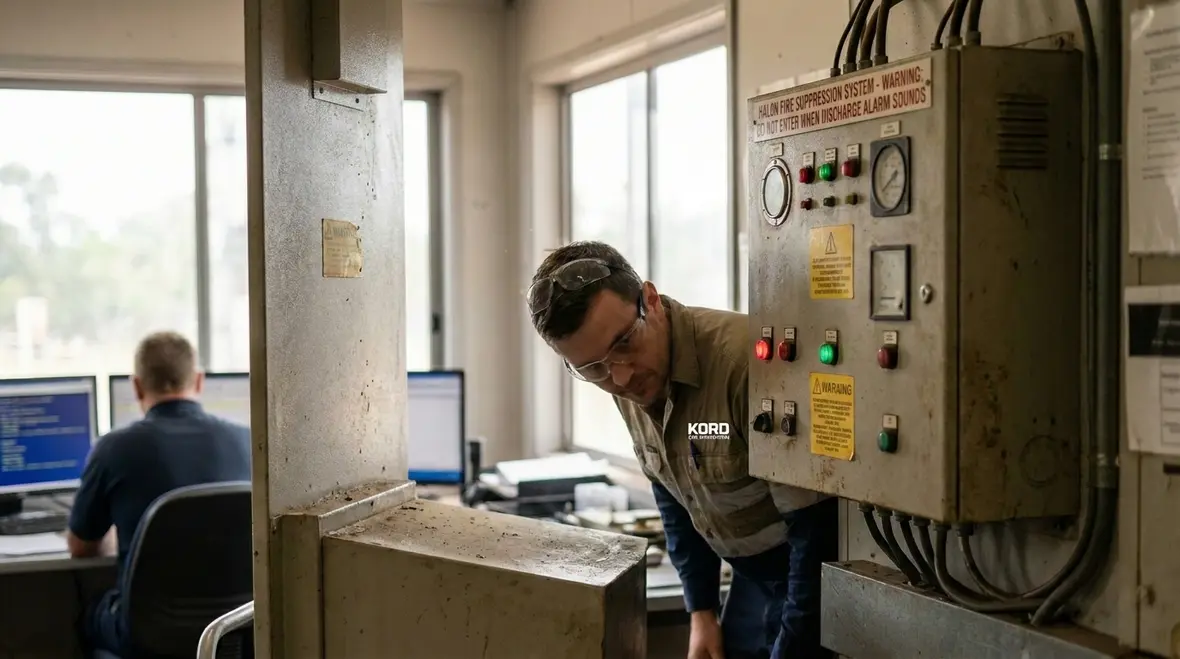
How the halon essential use exemption shapes approvals
Australia’s approach follows international commitments, so halon cannot be treated like a normal consumable. Regulators allow limited use when three ideas align: the hazard remains high, suitable alternatives do not protect the same way, and the facility can prove it has a responsible plan. Therefore, the halon essential use exemption acts like a controlled pass, not a blank cheque.
For businesses, the exemption usually does not remove obligations. Instead, it shifts attention to maintenance, system integrity, record keeping, and risk management. Kord Fire Protection often supports this stage by helping organisations translate technical requirements into audit-ready evidence. That matters because many delays happen when documentation lags behind field reality.
Further, approvals can involve time limits, conditions, or review triggers. For example, a facility may receive permission for continued halon operation, yet still need to show that test schedules and inspections occur as required. Consequently, operational continuity depends on good housekeeping, not luck.
Why evidence matters more than assumptions
The phrase “we thought it was fine” has never rescued anyone from a compliance problem. If a regulator or auditor asks how the system is maintained, who services it, what condition it is in, and whether alternatives have been assessed, the answer has to exist in documents, not just in someone’s memory. A site may have a perfectly capable system and still create headaches if the evidence trail is patchy.
That is why approval management tends to be less dramatic than people expect and more repetitive than they hope. It is not usually about one heroic submission. It is about consistent records, service reports that make sense, and proof that the protected risk has been reviewed with care. Boring? Occasionally. Important? Absolutely.
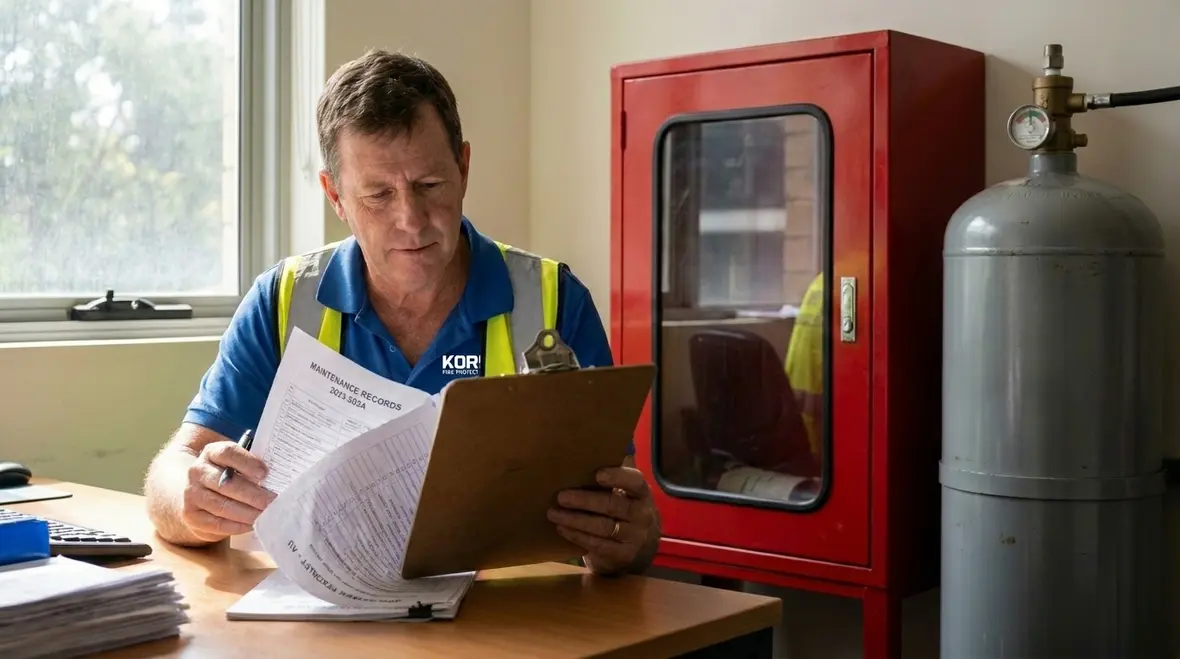
When continued halon use still makes sense for business
In day to day terms, halon may still be permitted when the system still performs an essential protective function and when replacement creates unacceptable risk or feasibility problems. Fire protection professionals typically look at scenarios where other extinguishing methods struggle to match performance.
Common examples include hazards with sensitive equipment, where discharge clean-up, downtime, and protection goals make alternatives hard to deliver without major disruption. Moreover, certain confined spaces or specific protection design approaches can make halon’s characteristics unusually valuable.
Importantly, continued use is not a “set and forget” approach. Regulators and insurers often expect a plan that reduces dependence over time. So the practical path usually includes ongoing maintenance, verified leak tightness, and scheduled system checks. Kord Fire Protection helps owners and facilities teams coordinate those tasks so the exemption stays credible rather than theoretical.
And yes, organisations still have to treat it like a living system. If it looks like it needs attention, it probably does. Halon does not wait for calendars.
The business case is really about controlled risk
Most businesses are not trying to keep halon out of nostalgia. They are trying to avoid creating a bigger problem while solving the first one. If a replacement path introduces major downtime, redesign complications, equipment vulnerability, or uncertain performance in a critical hazard, then the question becomes whether continued use is temporarily the lower-risk option. That is a practical decision, not a sentimental one.
The exemption process exists for exactly that reason. It gives organisations a way to justify continued operation while still being pushed toward disciplined maintenance and future planning. So even when halon remains on site, the expectation is movement, review, and accountability rather than comfortable neglect.
What permits and conditions typically require in Australia
Special permits do not work like a simple approval email. They rely on a chain of evidence: system identification, intended use, maintenance history, and proof that alternatives have been considered. In practice, authorities often want clear details that show the facility understands both the benefits and the constraints.
Often, conditions can include requirements such as maintenance frequency, discharge test planning, and documentation retention. Additionally, facilities may need to show how they manage technicians, servicing companies, and spare components. If procedures drift, compliance can drift with it.
To reduce risk, Kord Fire Protection can become a vital partner by managing the operational side of compliance. That includes coordinating service schedules, ensuring that records remain consistent and accessible, and aligning testing practices with the permit conditions. When a regulator asks for “proof,” Kord Fire Protection helps produce it without the frantic late night search through folders labeled “maybe.”
Also, permit reviews can happen when system changes occur. A modification to equipment layout, process hazards, or detection architecture can trigger reassessment. Therefore, businesses should plan ahead before any work that touches the fire protection strategy.
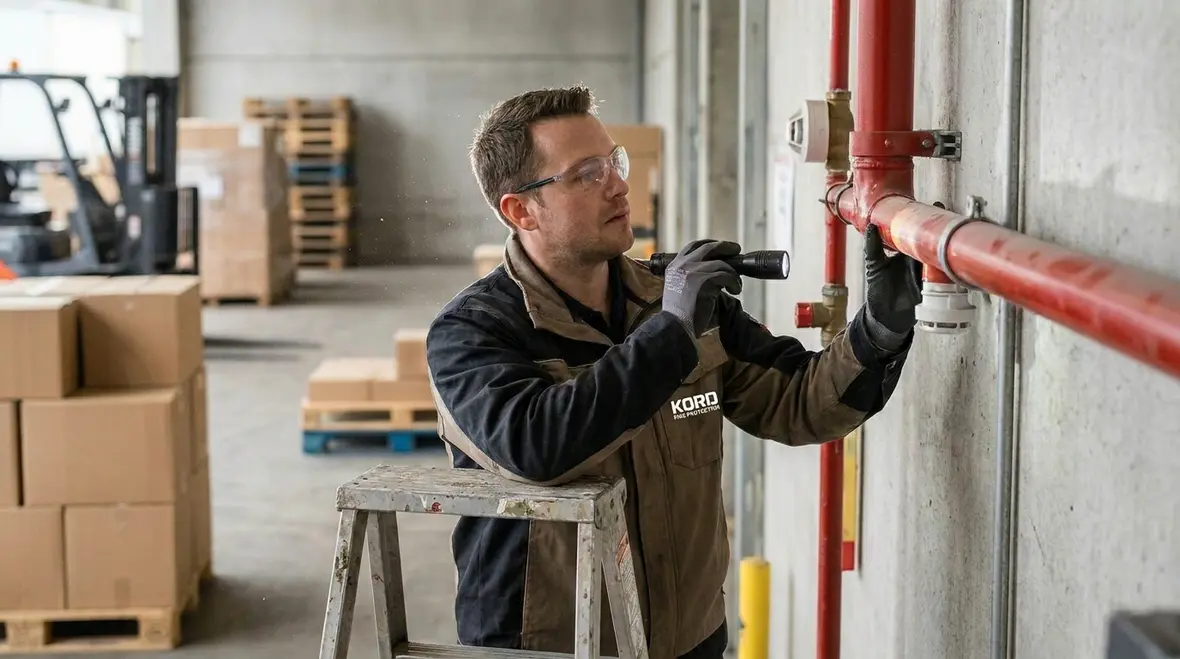
Common permit weak spots facilities overlook
One weak spot is assuming that because servicing occurred, the documentation must be good enough. Those are not the same thing. Another is making site changes without checking whether the original protection intent still holds. Even something that looks minor operationally can matter if it changes enclosure conditions, asset arrangement, or detection response.
A further issue is fragmented responsibility. If operations owns one part, maintenance owns another, and compliance owns the filing cabinet nobody trusts, then permit conditions can quietly fall through the cracks. Good programs usually have one clear workflow, one accountable owner, and one place where the evidence lives.
How facilities can plan for compliance without losing uptime
Large sites operate on timelines that do not care about regulatory lead times. Thus, a strong compliance plan protects operations and keeps risk visible. The most effective approach starts with system mapping and a clear record of what exists, where it sits, and how it performs.
Then, teams should build a practical timeline for inspections, service, and any permit related submissions. After that, they should confirm internal responsibilities so that someone owns the process end to end. Otherwise, tasks scatter across departments like a pack of loose cables.
In addition, facilities should run a feasibility review for alternatives, even when an exemption exists. This does not automatically mean replacing tomorrow. Rather, it shows the organisation actively considers safer long term options. Kord Fire Protection supports that review by providing technical service guidance that connects hazard protection goals with real-world maintenance constraints.
Finally, training matters. Staff should understand what the system does, what to do after a minor event, and how to report faults quickly. When people respond well, the system stays in a reliable state, and the compliance posture holds steady.
A practical workflow that keeps sites moving
- Map every halon protected area and confirm the current asset layout.
- Review service records so inspection dates, findings, and actions match.
- Schedule upcoming maintenance early enough to avoid permit pressure.
- Assign one internal owner to track submissions, conditions, and follow-up.
- Document any proposed site change before it touches the protection strategy.
- Keep operators and maintenance staff trained to report faults fast.
Choosing a partner for halon systems and ongoing service
Special permits demand more than technical skill. They demand traceability. That is the difference between servicing a cylinder and managing a compliance obligation. Kord Fire Protection positions itself as that vital partner by focusing on evidence driven service for industrial, retail, and commercial facilities across Australia.
Instead of treating compliance as a one-off submission, Kord Fire Protection helps teams maintain a steady workflow: planned inspections, clear reporting, and records that match what regulators expect. This reduces the risk that an otherwise sound installation faces trouble due to missing documentation.
Moreover, Kord Fire Protection supports facilities during system reviews and change management. When equipment updates happen, the fire protection strategy must still align with the approved intent. Therefore, the right partner checks the details early, not after the schedule slips.
Because if the system fails during an audit, it does not matter that someone meant well. Regulators do not grade intent; they look at proof.
What strong halon compliance looks like
- System identity and location recorded clearly
- Maintenance performed to the correct schedule
- Test and service documentation stored consistently
- Conditions tracked, not just assumed
- Change control managed before alterations
How Kord Fire Protection helps
- Service planning aligned with permit obligations
- Audit ready records and reporting
- Technical support during reviews and updates
- Reliable coordination across site teams
- Clear communication that keeps work moving

FAQ on halon special permits in Australia
Next steps: secure ongoing protection with Kord Fire Protection
For industrial, retail, and commercial facilities, halon decisions carry real operational weight. Kord Fire Protection helps teams understand how approvals and the halon essential use exemption work in practice, then supports ongoing service, records, and change management so compliance stays steady. If a permit review is coming, or if documentation needs tightening, contact Kord Fire Protection today and build a plan that keeps your protection ready and your audits calmer.